Israel’s Prime Minister Benjamin Netanyahu is defying international pressure and refusing to pull troops out of Lebanon, Syria, or Gaza — even after the United States and Iran reached a ceasefire deal.
Story Snapshot
- Netanyahu declared Israeli forces will stay in security zones in Lebanon, Syria, and Gaza “for as long as necessary” to protect Israel.
- Defense Minister Israel Katz backed Netanyahu and said the Israel Defense Forces (IDF) will remain in those zones “without a time limit.”
- Iran specifically demanded an Israeli withdrawal during U.S.-Iran negotiations, but Netanyahu said that demand was rejected.
- Netanyahu told President Trump and other senior U.S. officials directly that Israel will not leave the security zones.
Netanyahu Draws a Hard Line on Security Zones
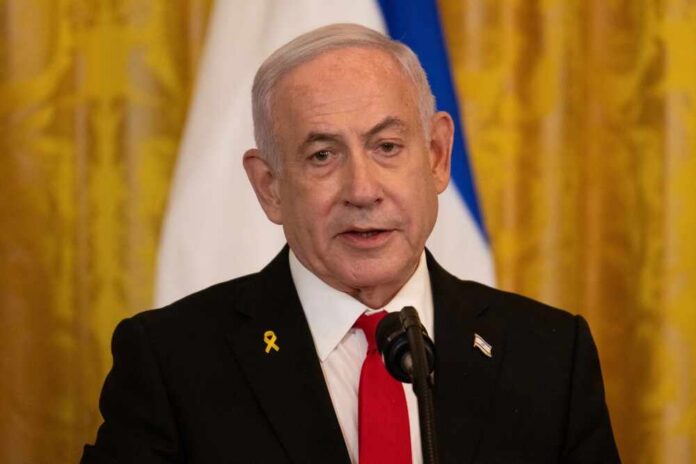
Speaking at a press conference in Jerusalem, Netanyahu made Israel’s position crystal clear. “We established deep security zones around the State of Israel. We did this in Gaza, in Lebanon, and in Syria,” he said. “And I want to make it clear: we will remain in these security zones for as long as necessary to protect our country.” The statement came just hours after Washington and Tehran announced a memorandum of understanding aimed at ending the broader regional conflict.
Defense Minister Israel Katz echoed Netanyahu’s stance with even stronger language. “Prime Minister Benjamin Netanyahu and I are pursuing a clear policy under which the Israel Defense Forces will remain in the security zones in Lebanon, Syria and Gaza for an unlimited period of time, in order to protect the border and Israeli communities from jihadist elements,” Katz said in a formal statement. Katz also warned that if Iran attacked Israel over its Lebanon operations, Israel would respond with “full force.”
Iran Demanded Withdrawal — Israel Said No
Netanyahu confirmed that Iran pushed hard for an Israeli pullback during the U.S.-Iran negotiations. He said Iran specifically demanded Israel leave those security zones as part of the deal — and that demand was flatly rejected. “That did not happen,” Netanyahu said. He added that he believed “our American friends respect that.” The U.S. and Iran signed their memorandum of understanding after Pakistani officials helped broker the preliminary agreement, with a formal signing set for Switzerland.
Netanyahu also briefed President Trump and other top American officials on Israel’s position before the deal was finalized. Katz separately told U.S. Secretary of Defense Pete Hegseth that Israel would not withdraw. Israel’s cabinet ministers are united on this point — they are demanding Netanyahu hold the line and keep the Israel Defense Forces in southern Lebanon regardless of outside pressure.
Why Israel Says the Zones Are Non-Negotiable
Israel’s security rationale goes back to the October 7, 2023, Hamas attack, which exposed gaps in border defense. Since then, Israeli leaders have pushed forward to create physical buffers against Hezbollah in Lebanon, Hamas in Gaza, and armed groups in Syria. The Israel Defense Forces have been striking Hezbollah command centers, storage facilities, and rocket launch sites across southern Lebanon to push fighters farther from Israeli communities in the north.
VP @JDVance says some people within Bibi’s cabinet very **personally** attack the President. I went over their public statements and found no such quotes.
National Security Minister Itamar Ben Gvir:
“Trump’s agreement does not bind us. Israel is not subordinate to the United… https://t.co/ekic1glJAi— גיא עזריאל Guy Azriel (@GuyAz) June 18, 2026
Israel has also expanded operations beyond the Litani River and designated a large area stretching to the Zahrani River as an active combat zone. Israeli military officials say operations are ongoing — raids, clearing missions, and strikes where needed. The IDF’s position is that residents of southern Lebanese villages where Israeli forces are present are not returning until the political situation is resolved. From Israel’s perspective, holding these zones is the only reliable way to stop drone and rocket attacks on Israeli civilians.
Pressure Builds, but Israel Holds Firm
France called for an emergency United Nations Security Council meeting and described Israel’s expanding operations as “unacceptable.” Lebanese Parliament Speaker Nabih Berri, a key Hezbollah ally, claimed Lebanon was covered by the ceasefire terms and that Israel must withdraw. U.S. Secretary of State Marco Rubio spoke with both Lebanese President Joseph Aoun and Netanyahu about de-escalation. Washington has called on Hezbollah to halt all attacks on Israel as a condition for restraint on Israel’s side.
Despite all the pressure, Netanyahu’s government is not budging. Israel’s consistent message — delivered to Trump, Hegseth, Rubio, and foreign leaders — is that no outside agreement will force a withdrawal until Israel decides its borders are secure. For a nation that watched terrorists pour across its border on October 7, 2023, that position is rooted in a hard lesson: when Israel pulls back before threats are neutralized, those threats return stronger than before.
Sources:
[1] Web – Benjamin Netanyahu Vows to Keep Israeli Security Forces in Lebanon
[2] Web – IDF pushes north of Lebanon security zone; Netanyahu says Israel …
[3] YouTube – Netanyahu says military taking control of strategic areas
[4] Web – Netanyahu vows to keep troops in Lebanon despite US-Iran deal
[5] YouTube – Netanyahu orders military to expand operations into Lebanon as …
[6] Web – Netanyahu: Israel won’t withdraw troops from Lebanon, Syria, Gaza
[7] Web – Israel vows to hold security zones deep in Lebanon, but key …
[8] Web – Israeli Prime Minister Benjamin Netanyahu says Israeli forces will …
[9] Web – “The state of Israel must not accept the ceasefire between the United …
[10] Web – Israeli Prime Minister Benjamin Netanyahu visited parts of southern …
[11] Web – Berri to Asharq Al-Awsat: Lebanon Included in Ceasefire Deal
[12] Web – Israel has agreed to a 10-day ceasefire in Lebanon, a truce that …
[13] Web – Lebanon: Military Strikes, Negotiations, and Where it Goes From Here
[14] Web – Are Evacuation Orders Unlawful Under International Law? A Case …
[15] Web – Lebanon: Israeli military’s deliberate destruction of civilian …
[16] Web – Lebanon: Israel Radically Expands Use of Unlawful Mass …
[17] Web – Protesters gathered in Downing Street to demonstrate against Israeli …
[18] Web – War in Lebanon – 2024-26 – Timeline – Israel Legal Advocacy Project
[19] Web – Israel/Lebanon/Hezbollah Conflict in 2006
[20] Web – Israeli air strikes hit Deir Qanoun al-Nahr in southern Lebanon on …
[21] Web – Israel Has Physically Divided Gaza With Over 25 Kilometers of …
[22] Web – Israel Expands its Security Zones on All Fronts – The Soufan Center
[23] Web – Israel’s Gaza Ground Invasion and the Return of “Strategic Depth”
[24] Web – The Illegality of Israel’s Military Offensive in Gaza – Just Security
[25] Web – Israel is creating buffer zones in the occupied Palestinian …
[26] Web – Preserving Israel’s Doctrine of Defensible Borders
[27] Web – Israel’s ethnic cleansing of West Bank Palestinian communities
[28] Web – Study on the Legality of the Israeli Occupation of the Occupied …
[29] Web – Israel claims it is no longer occupying the Gaza Strip. What does …
[30] Web – Is #Israel establishing a permanent military foothold in southern …