Israel’s strike on Beirut’s southern suburbs has put a fragile regional deal at risk and again exposed how civilians pay the price when leaders choose force over restraint.
Quick Take
- Israel struck Dahiyeh, a dense southern Beirut district long linked to Hezbollah.
- Israeli officials said the attack answered Hezbollah fire into northern Israel.
- The strike came as the United States and Iran were said to be close to a deal.
- Reports said there was no warning before the attack, and apartment buildings were hit.
Why The Beirut Strike Matters
Israel said the strike targeted Hezbollah-linked infrastructure in Dahiyeh, the southern Beirut area many reports describe as a Hezbollah stronghold.[1][5] The attack mattered because it hit deep inside Lebanon’s capital at the very moment Washington and Tehran were said to be closing in on an understanding. That timing raised the stakes fast and made the strike about more than one building.
The Israeli government framed the move as retaliation. Reports said Prime Minister Benjamin Netanyahu’s office linked the strike to Hezbollah attacks on northern Israel, and Israel’s defense minister said the strikes answered fire from Hezbollah into Israeli territory.[2][4] That is the core Israeli argument: protect Israeli civilians, answer direct threats, and make clear that cross-border fire will not go unanswered.
What The Reports Say About The Target
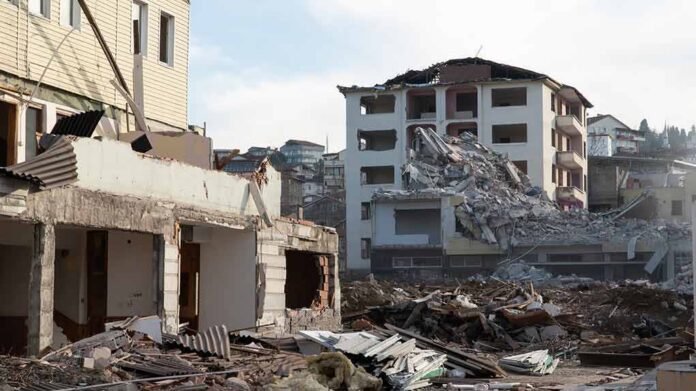
Multiple reports described Dahiyeh as a crowded residential area, not an open military zone.[1][2] One account said two apartment buildings appeared to have been hit, while another said a five-story building with retail space took heavy damage.[1][2] That matters because the more packed the area, the more likely an airstrike risks civilian harm, even when the target is described as military.
Lebanon’s state media and health officials reported people killed and wounded in the broader round of strikes.[2][3] Those casualty reports strengthen the argument that the operation had real human costs, not just military ones. For families trying to live in peace after repeated conflict, the sight of smoke rising over Beirut only deepens the fear that calm can vanish without warning.
The Wider Gamble Behind The Strike
The strike also landed in the middle of a bigger regional gamble. Reports said the United States and Iran were close to signing a memorandum of understanding, and one report said the attack could threaten that process.[1][2] That is why this event matters beyond Beirut. A single strike can now ripple into diplomacy, trigger retaliation, and widen an already dangerous cycle.
Israel responds to drone attacks with strikes on Hezbollah Beirut stronghold. The IDF struck a Hezbollah terrorist command center in Beirut's Dahieh district in response to Hezbollah fire toward Israel. https://t.co/ABOjMyfssC
— Real Politik (@RealPolitikSion) June 14, 2026
Israel’s critics will say the attack showed reckless force in a dense city neighborhood and put civilians in the line of fire.[1][2] Israel’s defenders will say Hezbollah hides among civilians and uses areas like Dahiyeh as cover.[5] Both points reflect the same ugly truth: when armed groups operate from population centers, normal people become the shield and the target at once.
For Americans watching from afar, the deeper concern is simple. Every new round of escalation makes a wider war more likely, and wider war means higher energy risk, more instability, and more pressure on U.S. policy. If the reported deal with Iran was meant to reduce tension, a strike in Beirut sent the opposite message and raised new doubts about whether calm can last.
Sources:
[1] Web – Israeli Military Strikes Beirut Suburbs in the Lead-up to Anticipated …
[2] YouTube – Israel strikes Beirut’s southern suburbs as Iran and US close in on …
[3] Web – Israel strikes Beirut suburbs for 1st time since ceasefire was … – …
[4] YouTube – Israel strikes Hezbollah stronghold in Beirut suburb
[5] YouTube – Multiple explosions rock southern Beirut as Israel launches new …