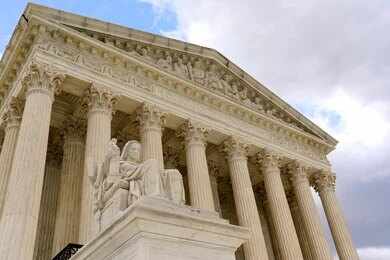
The Supreme Court just turned Louisiana’s voting map into a warning label for the rest of America’s elections.
Story Snapshot
- The Court struck down Louisiana’s second majority-Black district as an unconstitutional use of race in redistricting.[10]
- Justice Samuel Alito’s opinion rewrites how Section 2 of the Voting Rights Act works, making it far harder to prove voting discrimination.[3][4]
- Both parties can now hide racial map‑making behind “partisan” goals, fueling fears that the system is rigged by political elites.[3]
- Critics warn the ruling could “bleach” Congress and statehouses and deepen the gap between voters and those who rule them.[18]
What The Court Did In Louisiana v. Callais
In April 2026, the Supreme Court ruled 6–3 that Louisiana’s new map, which added a second majority-Black district, was an unconstitutional racial gerrymander.[3] Justice Samuel Alito wrote that because the Voting Rights Act did not require Louisiana to create that extra majority-minority district, the state had no “compelling interest” in using race so heavily when it drew the map known as SB8.[10] The Court said race clearly dominated the mapmakers’ choices, so strict scrutiny under the Equal Protection Clause applied.[10]
Justice Alito’s opinion did more than strike down one map; it reset the rules for Voting Rights Act cases nationwide.[3][4] For forty years, courts followed the Thornburg v. Gingles framework, which focused on whether minority voters were large enough, politically united, and usually blocked by the majority.[4] Callais keeps those ideas but adds new hurdles, demanding that challengers prove not just bad effects, but that state officials intentionally drew districts to weaken minority voters because of their race.[3][4]
How The New Test Makes Discrimination Harder To Prove
The decision now requires that any example maps offered by plaintiffs match all of a state’s “political objectives,” including protecting current officeholders.[3] That rule lets both parties claim they are only guarding incumbents and partisan goals, even when race clearly shapes who those incumbents are. The Court also said that challengers must show racial bloc voting cannot be explained by party, forcing them to separate race from politics in places where those often overlap.[3]
In states like Louisiana, most white voters back Republicans and most Black voters back Democrats, which makes race and party almost the same thing in practice.[5] Critics argue this new standard is like asking people to prove water is wet without mentioning liquid. Justice Alito also said old discrimination and general social inequality should carry “much less weight” and that plaintiffs must bring strong evidence of current, intentional racial bias in voting.[3] That move pushes the law back toward an intent test Congress tried to relax in 1982.[3][5]
Why Both Sides See A Rigged Game
Justice Elena Kagan’s dissent warns that the ruling turns Section 2 into “all but a dead letter,” since proving intentional discrimination at this level is rarely possible.[13] Civil rights groups, including the NAACP Legal Defense Fund and Brennan Center for Justice, say the Court has “eviscerated” or “demolished” the Voting Rights Act, allowing states to use partisan gerrymandering as a blanket excuse to sideline Black and Latino voters.[2][18] They expect Republican-led states in the South to redraw maps and erase hard-won minority districts.[3][18]
At the same time, many conservatives cheer the ruling as shutting down racial engineering in maps and forcing states back toward traditional principles like compactness and county lines.[20] They argue that Democrats abused race-conscious redistricting to lock in safe seats and grow their power.[20] The deeper problem for both sides is trust: many Americans, right and left, already believe political insiders carve districts to protect themselves, not the public. Callais feeds that view by telling states they can sort voters by party, knowing party often follows race.[3][5]
From One State’s Map To A National Power Shift
Analysts warn the decision could spark a “gerrymandering frenzy” as southern states race to redraw maps before elections.[18] Louisiana has already moved to erase one majority-Black district even after early voting began, and Alabama rushed to court to claim the “benefit” of Callais and keep a map that a lower court found intentionally discriminatory.[18] Similar moves are expected in South Carolina, Florida, Arkansas, and Mississippi, with experts estimating Republicans could gain several extra seats in the U.S. House.[3][18]
It took 95 years for Congress to enforce the 15th Amendment’s prohibition of racial discrimination in voting through the Voting Rights Act. In 2013, the Supreme Court gutted a key provision of the VRA in Shelby County v. Holder.
Now, the Louisiana v. Callais decision makes the… pic.twitter.com/G5XyYOWGi6
— Congresswoman Jennifer McClellan (@RepMcClellan) June 26, 2026
For older conservatives, this looks like the latest proof that courts long let liberals play racial politics with maps while ignoring problems like immigration, crime, and rising costs. For older liberals, it confirms their fear that “America First” politics mean shrinking civil rights and making it easier to push poor and minority communities out of power. Underneath those different views is a shared anger: a sense that the Supreme Court and both parties keep changing the rules of voting to help themselves, while the American Dream feels further away.[1][5]
Sources:
[1] Web – The Supreme Court Just Californicated Our Elections
[2] Web – Louisiana v. Callais (Callais v. Landry) | American Civil Liberties …
[3] Web – Louisiana v. Callais: How the Supreme Court Gutted the Voting …
[4] Web – What Louisiana v. Callais Means for the Voting Rights Act
[5] Web – Louisiana v. Callais (24-109) – SCOTUSblog
[10] Web – How Callais broke the Voting Rights Act and weaponized the equal …
[13] Web – [PDF] 24-109 Louisiana v. Callais (04/29/2026) – Supreme Court
[18] Web – U.S. Supreme Court Again Sides with Plaintiffs Who Brought Racial …
[20] YouTube – Supreme Court rejects racial gerrymandering claim in South Carolina