America’s food producers just got a new federal “shield” against government lawfare — but no one yet knows if it works.
Story Snapshot
- The U.S. Department of Agriculture (USDA) launched the **Farmer and Rancher Freedom Framework** to fight “agricultural lawfare” and protect property rights.
- The plan rests on four pillars: **Protect Producers, Preserve Land and Liberty, Purge Burdensome Regulations, and Partner for Agriculture’s Future**.
- A new **lawfare reporting portal** lets farmers and ranchers flag federal overreach, yet there is no public data showing how cases are handled.
- Supporters say this is real relief for family farmers, while critics point to agency backlogs and staff cuts that could undercut the promise.
USDA rolls out a “freedom framework” against agricultural lawfare
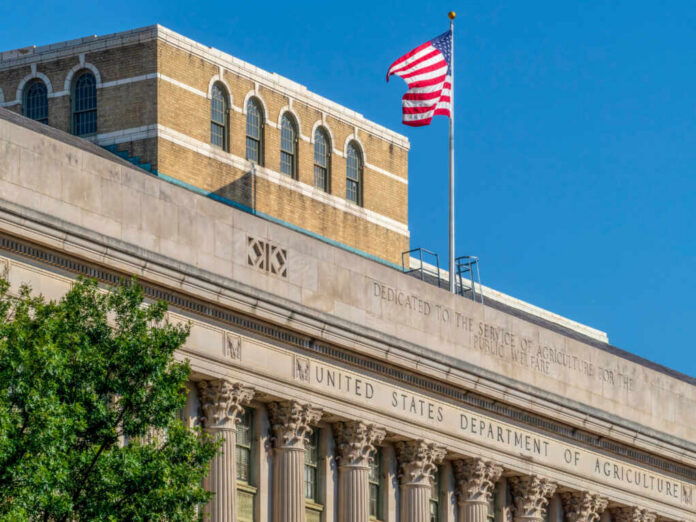
On February 11, 2026, Secretary of Agriculture Brooke Rollins stood at USDA headquarters and announced the **Farmer and Rancher Freedom Framework**, calling it a bold plan to protect America’s agricultural heritage and defend producers from politically motivated lawfare. USDA defines “agricultural lawfare” as the use of government legal and regulatory systems to unfairly target farmers and ranchers. The agency says the framework formalizes ongoing efforts to end this weaponization of government, restore fairness in rural America, and lower production costs.
The framework is built around four clear pillars that match long‑running complaints from both conservative and liberal producers about federal overreach. **Protect Producers** pledges to shield farmers from internal bureaucracy and biased enforcement actions. **Preserve Land and Liberty** focuses on stopping unnecessary federal projects and eminent domain takings that threaten private property rights. **Purge Burdensome Regulations** promises to cut costly rules and rebalance environmental laws with “common sense.” **Partner for Agriculture’s Future** aims to coordinate federal, state, local, and industry allies to fight lawfare and raise public awareness.
New lawfare portal and broad eligibility, but no track record yet
To move beyond speeches, USDA launched a dedicated online portal where producers can report suspected lawfare and federal intimidation involving land rights or enforcement actions. Farmers and ranchers are told to visit the lawfare site to submit their experiences of overreach. One outreach post describing program details says even **urban growers, backyard farmers, herbalists, and flower growers** can participate and are eligible to apply through local USDA Farm Service Agency offices. This wide net suggests USDA wants small and non‑traditional producers to feel protected, not just large commodity farms.
For many producers, the portal feels like long‑overdue recognition that legal pressure and permitting fights can destroy a farm just as surely as drought or disease. R‑CALF USA, a major family‑farmer advocacy group, praised the framework as a “meaningful step toward defending family farmers and ranchers from legal and regulatory actions that threaten private property rights, food security and the survival of independent producers.” At the same time, USDA has not yet shared public data about portal usage, case types, or outcomes. There is no independent audit to show whether reports are taken seriously or if bad behavior inside government is being corrected.
Backlogs, staff cuts, and vague promises on regulation
Critics in Congress and farm country argue that strong words on lawfare do not fix deep operational problems. In a House Agriculture Committee hearing, Representative Jim Costa pressed USDA Undersecretary Fordyce on backlogs in the Farm Service Agency in California. Fordyce admitted she did not have current data on the number of approved but unpaid cases, even though the framework claims to reduce bureaucracy and speed help to producers. For farmers still waiting on checks or loan approvals, talk of “freedom” can feel hollow when basic paperwork is stuck.
Concerns extend beyond paperwork to frontline enforcement. In separate testimony on rising screwworm cases, USDA officials said one key animal health division had lost about a quarter of its staff since the current administration began. At the same time, serious livestock disease threats were increasing, suggesting that cuts and deregulation may weaken needed protections even as the framework promises safety and security. The pillar titled “Purge Burdensome Regulations” offers no public list of specific rules to be changed or an impact study to show how environmental safeguards will be kept while red tape is trimmed. That vagueness leaves many unsure if the plan targets truly abusive rules or simply clears the way for powerful interests.
Why this fight over “lawfare” matters beyond farm country
Supporters and skeptics alike see the lawfare framework as part of a bigger struggle over who really runs the country. For decades, farmers have accused federal agencies and big corporations of teaming up to control land, markets, and credit, often at the expense of small, independent producers. Lawsuits over discrimination, eminent domain fights, and battles over environmental rules have fueled the belief that an elite class uses complex legal tools to push ordinary people off the land while claiming to protect them. In that light, USDA’s promise to “confront and unwind years of systemic lawfare” speaks directly to fears shared by many on both the right and the left.
A nation that values freedom must also defend those who steward its land.
Today, @USDA and @SBAgov took a historic step to strengthen the Farmer & Rancher Freedom Framework.
Proud to stand with @SBA_Kelly, President Trump's Special Envoy @johnrich, and the farmers and ranchers… pic.twitter.com/4qi642xsl2
— Secretary Brooke Rollins (@SecRollins) July 2, 2026
At the same time, the very word “lawfare” is politically loaded. Legal scholars have not defined it as a formal category, and some worry it can become a catch‑all label for any rule someone dislikes instead of a precise tool to root out real abuse. The framework’s close tie to the Trump Administration’s agenda, and the presence of political allies and celebrities at announcement events, adds to concern that this might be another public‑relations move rather than a structural fix. Until USDA releases hard data on portal results, regulatory changes, and impacts on land security and farm costs, many producers will keep asking a simple question: is this a real shield against the deep state, or just another promise from a government they no longer trust?
Sources:
facebook.com, foodmarket.com, cpac.org, instagram.com, agwomenconnect.com, michiganfarmnews.com, usda.gov, farmershotline.com, rightoncrime.com, x.com, columbialawreview.org