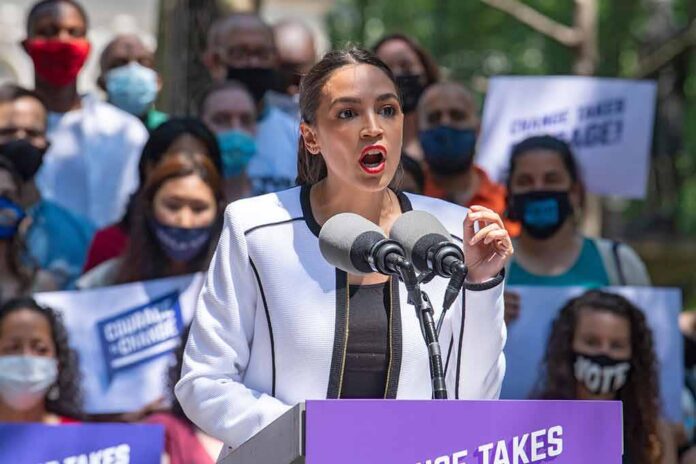
A rally built to spotlight affordability and labor rights instead became a test of political alliances and message control in Wisconsin.
Story Snapshot
- Francesca Hong rallied in South Milwaukee with Ilhan Omar and Hasan Piker days before the primary.
- Hong framed her campaign around cost of living, labor rights, and working-class power.
- Livestreams with Piker raised tens of thousands of dollars for Hong’s campaign.
- Coverage highlighted both coalition-building and controversy over Piker’s past remarks.
Who Appeared And What Hong Emphasized
Francesca Hong, a Democratic Socialist running for Wisconsin governor, held a rally at South Milwaukee High School with United States Representative Ilhan Omar and commentator Hasan Piker on August 2, 2026, days before the primary election. Hong focused her message on affordability, labor rights, and Wisconsin’s history of worker protections and “sewer socialism,” pitching a campaign centered on economic stress and working-class politics rather than personality. The event was designed to show momentum and to tie her platform to a local, historic reform tradition.
Hong’s team promoted the alliance as proof of a broad coalition. After the rally, Hong said the real risk for Democrats was not building the widest coalition possible. She argued Republicans attack Omar and Piker because they fear losing, signaling she sees these surrogates as strengths with key voters. Supporters described the event as channeling online energy into on-the-ground organizing and turnout in a high-stakes primary.
Money, Messaging, And The Digital-To-Field Pipeline
Hong’s fundraising spiked through digital media. A June 29 appearance on Hasan Piker’s livestream brought in more than $57,000 ahead of a key deadline, with reporting across outlets putting the combined total from two streams near $92,000. The campaign presented this as evidence of grassroots support responding to an affordability message. Broadcast coverage noted that Piker’s on-the-ground push and online reach helped draw attention and a younger audience to Hong’s effort in Milwaukee.
Media framing stressed both momentum and controversy. Local television and newspaper reports confirmed the rally details and Hong’s message, while also underscoring criticism of Piker for past comments that critics called antisemitic or anti-American. That focus risked crowding out policy content like universal child care or limits on corporate power, which the campaign linked to lowering family costs. This push-pull mirrors how modern campaigns trade attention for narrative risk.
What Is Established And What Remains Unclear
The record clearly shows who attended, what was said on stage in broad terms, and how much money the streams raised. The record does not prove whether Hong’s coalition is socioeconomically broad or mainly mobilizes aligned progressives. Reporting to date does not include detailed donor files, voter-file analysis, or post-rally polling that would show persuasion beyond the base. That gap leaves the coalition claim more rhetorical than measured for now.
Democratic socialist Francesca Hong, the frontrunner in Wisconsin’s gubernatorial primary, held a rally Sunday in South Milwaukee featuring U.S. Rep. Ilhan Omar and radical streamer Hasan Piker; two figures notorious for extreme anti-American remarks that Hong has repeatedly… pic.twitter.com/iJSuewFuMy
— The Heartland Post (@HeartlandPostWI) August 3, 2026
Voters across the spectrum share concerns about rising costs, elite power, and a political class that seems more focused on survival than solutions. This rally sits inside that larger fight over who can lower costs and who can be trusted to do it. Supporters saw a working-class push tied to Wisconsin’s reform past; critics saw extremism by association. The facts on the ground are set; the next test is whether the message moves votes or just moves money.
Sources:
townhall.com, youtube.com, seehafernews.com, jsonline.com