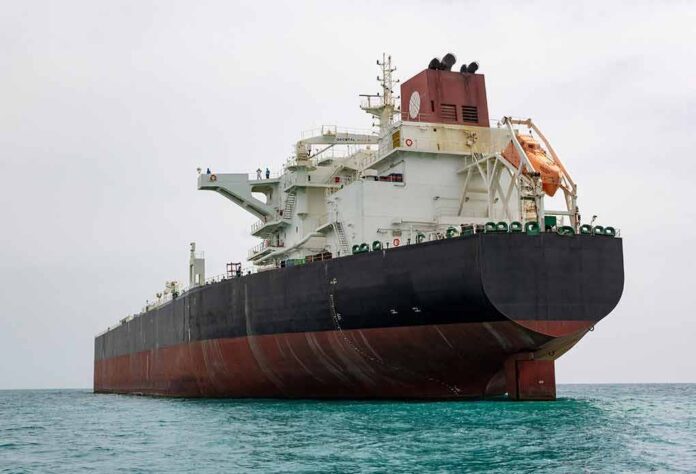
Twelve sailors were hurt when a Panama-flagged tanker was struck by a projectile in the Strait of Hormuz, underscoring how one hit in a narrow waterway can threaten global trade and workers far from any frontline.
Story Highlights
- India says 12 crew were injured when MT On Peace was hit off Oman; 11 are Indian nationals.
- Omani authorities evacuated the injured to Khasab for treatment, according to India’s foreign ministry.
- The tanker carried 19 crew in total, including 17 Indians, reports say.
- Attacks in Hormuz often aim to disrupt shipping rather than sink ships, raising risk and costs.
Confirmed Facts From India’s Government
India’s Ministry of External Affairs condemned the strike on the Panama-flagged MT On Peace, saying the vessel was hit by a projectile while transiting the Strait of Hormuz on Tuesday, October 6, 2026. The ministry said 12 crew members were injured, including 11 Indian nationals. Reports citing the same statement say the ship had 19 crew on board, 17 of them Indian. India called attacks on commercial shipping and seafarers unacceptable and urged safe navigation through international waters.
Omani authorities assisted in rescue and evacuation after the strike. The injured were taken to Khasab, Oman, for medical treatment, according to accounts based on India’s statement. The reports did not describe the severity of injuries or list names of the injured. The type of weapon, the launch point, and the attacker were not identified in the available reports. Authorities did not release ship logs, damage photos, or exact position data in public sources referenced here.
Where The Strike Happened And Why It Matters
The Strait of Hormuz is a narrow chokepoint between the Persian Gulf and the Gulf of Oman. Much of the world’s oil and gas moves through this passage. A single strike can raise insurance rates, change routes, and slow cargo schedules. Maritime analysts say attackers in this region often seek disruption more than destruction, making no fixed pattern by ship type or flag, which adds uncertainty for owners and crews. When tankers are hit, the ripple can reach fuel prices and shipping costs worldwide.
Several expert reviews describe recent Hormuz incidents as “grey-zone” coercion. These acts sit below open war yet carry real risk for crews and cargo. Lloyd’s List reporting notes that targets vary and that the goal often appears to be to show that no transit is fully safe. That pattern forces ship operators to weigh longer routes, armed guards, or convoy timing. Each option can add cost and delay, which trade partners and consumers eventually pay through higher prices or tighter supply.
How This Fits A Broader Pattern At Sea
India’s account of a projectile strike and quick medical evacuation tracks with past Hormuz incidents where rapid response limited loss of life but still caused alarm. Analysts have mapped cycles of attacks, threats, and rerouting in the waterway over the past decade. The effect is often the same: push risk onto crews, drive up insurance, and pressure governments to react without tipping into all-out conflict. That dynamic empowers whoever can create doubt at low cost while making global shipping shoulder the burden.
Legal scholars have argued that certain attacks on flagged vessels in this corridor can rise to the level of an “armed attack” on the flag state, depending on method and effect. That view highlights why many governments respond fast to tanker incidents. They see a strike not only as harm to a ship, but as a challenge to freedom of navigation. India’s statement used that frame, calling for the safety of civilian crews and the protection of commerce through international waterways.
What We Know And What Is Still Unclear
Based on India’s statement and aligned reports, the key facts are firm: a projectile strike hit MT On Peace off Oman, twelve crew were injured, eleven of them Indians, and Omani teams helped evacuate the injured to Khasab for treatment. The total crew numbered nineteen, including seventeen Indians, according to these reports. The public sources used here do not identify the weapon or the attacker. They also do not provide ship data, logs, or medical details.
🇮🇳🇴🇲 India says 12 crew, 11 of them Indian, were injured when the Panama-flagged tanker MT On Peace was hit by a projectile in the Strait of Hormuz off Oman. Oman evacuated the injured to Khasab. India's Ministry of External Affairs condemned the attack. (MEA; PTI via The Hindu)
— Defense Politics Asia (@DefensePolitics) October 6, 2026
For people across the political spectrum, the stakes are clear. When a single hit in Hormuz can shake routes and prices, everyday families feel it at the pump and in the store. Seafarers, many from working-class backgrounds, carry outsized risk for choices made far above their pay grade. Governments pledge to keep lanes open, but attacks keep coming. The pattern feeds the sense that distant decisions and opaque power plays leave workers and consumers to absorb the cost.
Sources:
economictimes.indiatimes.com, news.abplive.com, tribuneindia.com, indiatoday.in, ua.news, theweek.in