
A routine state police training flight ended with a deadly midair collision that killed a small-plane pilot near Carlisle, Pennsylvania.
Story Snapshot
- Federal officials said a Bell 407 helicopter and a Cessna 150 collided near Carlisle around 7:50 p.m.
- Pennsylvania State Police leaders said the helicopter crew was training when the crash happened.
- The Cessna pilot died; two state troopers were injured and are expected to recover.
- National Transportation Safety Board investigators will lead the probe into how the collision occurred.
What Happened Near Carlisle Regional Airport
Federal Aviation Administration officials reported that a Pennsylvania State Police Bell 407 helicopter and a Cessna 150 airplane collided in midair near Carlisle Regional Airport at about 7:50 p.m. The helicopter was operating over a grassy area by the runway. Both aircraft were flying under visual rules at a non-towered airport, where pilots self-announce and separate. The National Transportation Safety Board will lead the investigation into the sequence and causes of the crash.
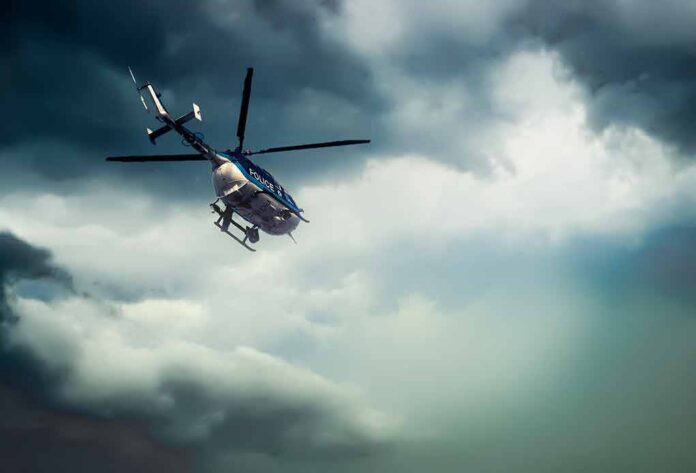
Pennsylvania State Police leaders said the helicopter was on a routine training mission when the collision occurred. Acting Commissioner George Bivens identified the troopers aboard as Corporal Bryce Corman and Trooper Jason Mills. He described how the Cessna “veered hard to the right at the last moment” and struck the helicopter from the rear, damaging the tail rotor and main rotor. Officials said the troopers were transported for treatment and are expected to recover.
Casualties and Immediate Response
Officials confirmed the Cessna pilot was killed. Early reports indicated the pilot was the sole known occupant of the small plane. Emergency crews responded quickly, secured the scene, and moved the injured troopers to a hospital in Hershey. Authorities did not immediately release the identity of the deceased pilot, pending family notification. Local, state, and federal agencies coordinated to preserve evidence and prepare for the federal investigation that follows a fatal aviation accident.
Reporters at the scene and state leaders echoed that the crash happened in seconds and left debris near the airport environment. The state police helicopter crew survived with injuries that doctors deemed stable. The focus shifted quickly to safety steps, protection of wreckage, and witness outreach. Federal investigators typically gather flight-track data, weather information, and any available radio calls to build a timeline in the first days after such a collision.
How Investigators Will Approach the Case
National Transportation Safety Board teams generally examine pilot actions, visibility, aircraft performance, and traffic pattern use at non-towered airports. Investigators often assess whether “see and avoid” limits, radio coordination, or local procedures played a role. Past National Transportation Safety Board findings in helicopter-airplane collisions have pointed to visual separation limits and pattern conflicts when no controller is sequencing traffic. Those cases show how several small factors can line up to produce a single tragic result.
This footage shows the moments surrounding the mid-air collision between a Cessna 150 and a Pennsylvania State Police Bell 407 near Carlisle Airport on Wednesday evening.
The impact looks extremely violent, killing the Cessna pilot and injuring the two state troopers aboard the… pic.twitter.com/9Wn0qoR2lt
— Aviation Reporter (@TripppleSeven7) August 20, 2026
Federal records systems help the process move fast. The National Transportation Safety Board maintains a searchable docket and case files that collect photos, interviews, and technical exams. The board’s aviation query tools show how investigators later assign probable cause and list any contributing factors. Those records will eventually document the Carlisle crash, from initial witness notes to rotor and airframe analysis. That public trail lets families and communities see how officials reached their final findings.
Why This Matters Beyond One Tragic Night
Safety around small airports relies on trust, clear calls, and everyone doing their job without a controller to separate traffic. When that system breaks down, even for seconds, lives are at risk. People across the political spectrum worry when basic public safety depends on thin margins. This case will test whether training plans, airport procedures, and flight culture are strong enough. Clear answers, shared publicly, help rebuild confidence that government and aviation leaders are doing the hard work.
Sources:
inquirer.com, nbcnews.com, facebook.com, ntsb.gov