EU governments agreed to renew Russia sanctions for three years while removing two billionaires from the blacklist, exposing the power politics behind a system meant to punish aggression.
Story Snapshot
- EU envoys backed a three-year renewal covering about 3,000 listings while delisting Alisher Usmanov and Mikhail Fridman.
- Ukraine’s leaders called the delistings unacceptable and urged tighter pressure on Moscow instead.
- France and Slovakia pushed the delistings as part of a package that broke a weeks-long renewal stalemate.
- The fight shows how unanimity rules let a few governments reshape broad sanctions policy.
What Deal EU Envoys Reached And Why It Matters
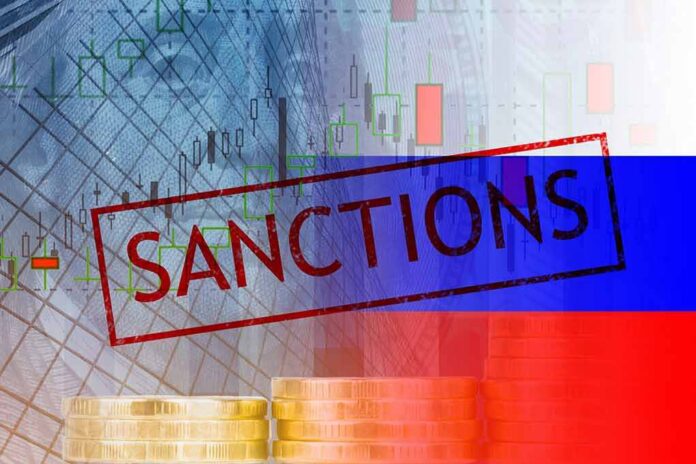
European Union envoys in Brussels advanced a package to keep asset freezes and travel bans on roughly 3,000 Russia-linked people and entities for three years, while dropping measures on Alisher Usmanov and Mikhail Fridman. Diplomats framed the move as a compromise to safeguard the larger regime after weeks of deadlock. The trade-off keeps broad pressure in place but opens a political and moral fight over whether two wealthy figures gained relief through leverage, not clear new facts.
Member states must approve sanctions by unanimity, which gives each capital veto power. France and Slovakia pressed to delist Usmanov, and Luxembourg’s position tied Fridman’s case to that demand, deepening the standoff until a package emerged. The deal’s three-year horizon is unusual and aims to avoid repeat brinkmanship. But the very need for a bargain signals how national interests can override a simple “punish aggression” rule when the clock and legal risks mount.
Kyiv’s Objections And The Message To Moscow
Ukraine’s leadership condemned the delistings. Foreign Minister Andrii Sybiha said removing the two men is unacceptable and sends the wrong signal to Moscow when pressure should rise, not fall. President Volodymyr Zelenskyy urged a straight rollover of individual sanctions without “political delisting,” arguing escalation by Russia requires tighter limits, not relief. Kyiv’s view is plain: every step that looks like leniency weakens deterrence, rewards influence, and chips away at unity that helps Ukraine survive.
The core dispute is not only about two names. It is about whether the sanctions system is a firm rule set or a bargaining chip. Ukraine’s concern echoes a broader fear on both the right and the left: powerful interests can bend rules when the stakes touch money and diplomacy. If oligarchs can outlast or out-lawyer a listing, people wonder whose side the system is on. That doubt grows when decisions arrive through late-night deals rather than clear, public evidence.
Legal Reviews, Veto Leverage, And A System Under Strain
European Union sanctions require periodic, meaningful reviews. Courts have struck listings when the Council relied on stale or thin evidence rather than current facts, which pressures officials to refresh files or risk annulment. Governments also fear mass expiry if one veto stalls renewal. That fear increases leverage for holdouts to extract concessions, like delistings, to unlock the entire package. The result can be outcomes that look tactical rather than principled, feeding public distrust.
Volkov Calls Lifting Sanctions Against Fridman a Mistake, Having Himself Asked to Lift Sanctions Against Fridman
Today, European Union diplomats, according to Reuters, agreed to lift sanctions against Mikhail Fridman and Alisher Usmanov in exchange for extending the remaining… pic.twitter.com/gycvzCtphi
— Sota News (@sotanews) September 22, 2026
Supporters of the compromise say keeping thousands of listings for three years preserves the main pressure on Russia while resolving a legal and political logjam. Critics reply that laws must bite the powerful to mean anything. Both points can be true. A sanctions machine this large will grind through court tests and state bargaining. The test now is whether Europe keeps the focus on cutting funds and comfort for war-makers, without carving out exceptions that erode the purpose.
Sources:
euperspectives.eu, reuters.com, euronews.com, globalbankingandfinance.com, france24.com, yahoo.com, nashaniva.com