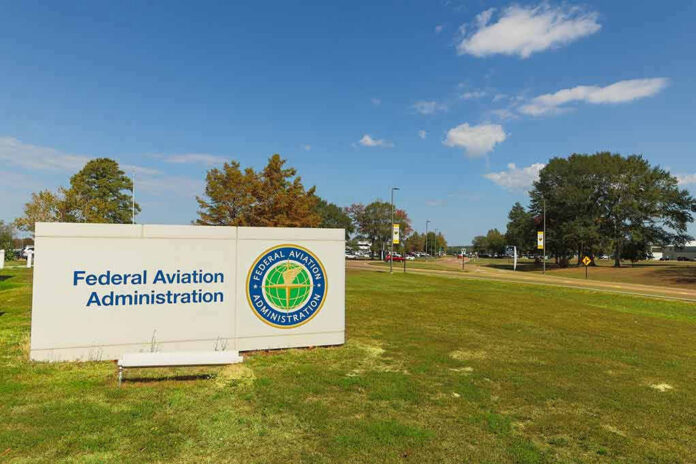
The Federal Aviation Administration said President Trump’s planned D.C. arch would not harm Reagan National Airport flight paths, if it has red safety lights.
Story Snapshot
- The Federal Aviation Administration’s study found no substantial adverse effect on Reagan National operations.
- The agency said the arch needs red obstruction lights, a common safety step for tall structures.
- Experts still warn the arch could add complexity in already crowded airspace near runway approaches.
- The finding is preliminary, and a fuller Federal Aviation Administration review is still underway.
What The Federal Aviation Administration Decided So Far
The Federal Aviation Administration said the proposed 250-foot arch, tied to President Trump’s initiative, would not interfere with the airport’s airspace or navigation facilities. The review found no adverse impacts to operations at Ronald Reagan Washington National Airport and called for red obstruction lights on the top of the structure. Reporters described those lights as normal for tall objects near airports. The preliminary review focused on airspace use and procedures, not design or politics, and judged routine flights could continue safely.
The Federal Aviation Administration’s early green light is not final. The agency is conducting a more complete study that could change the outcome, depending on refined data or construction plans. The Associated Press and others reported that officials flagged the need to review crane heights and staging during construction. Those temporary factors can alter risk near runway paths. Until the final letter is issued, the project carries conditions and open items that the sponsor must satisfy.
Why This Hits A Nerve In Washington
Washington’s airspace is tight, layered, and full of landmarks. Pilots follow narrow routes along the Potomac River and pass close to the Pentagon and bridges. Aviation experts told National Public Radio the arch itself likely poses little direct risk, but it adds another variable in a busy corridor. That can shrink margins for pilot error on visual approaches and missed approaches, where seconds and feet matter most during low-altitude turns.
Newsrooms mapped the proposed site near the north approach to Runway 19 and highlighted how aircraft cross the area at a few hundred feet above ground on final. Analysts argued that, even with lights, a tall new object can raise cockpit workload and reduce options if something goes wrong. This is not a formal hazard finding, but it explains why safety voices remain cautious despite the Federal Aviation Administration’s early comfort with operations and lighting mitigations.
How Federal Aviation Administration Reviews Usually Work
Federal rules require studies for structures over 200 feet or near protected airport surfaces. The agency’s process asks whether a proposal would cause a substantial adverse effect on a significant volume of flights. Many tall structures get cleared with mitigations, such as lights or markings, when modeling shows standard procedures can continue. A “hazard” label comes only when impacts cannot be reduced and would limit routine operations in a meaningful way.
The Trump administration, always so concerned about "freedom" and "common sense," was perfectly happy to push a 250-foot arch just two miles from a main airport runway, where planes land every minute. Aviation safety experts, people who actually understand flight paths and risk,…
— frakmaga2025 (@FrakMAGA2022) September 17, 2026
This case follows that pattern so far. The Federal Aviation Administration said normal flight procedures at Reagan National would not need to change, with lighting in place, and that operations would not be adversely affected. Critics counter that D.C. traffic is already complex and that the arch sits near key approach corridors. Both can be true: complexity can rise while the agency still finds no substantial adverse effect under its rules. The final determination will settle that question for good.
What To Watch Next
Watch for the Federal Aviation Administration’s final study and determination letter. That document should confirm the no-adverse-effect finding or explain any new limits, such as height changes, lighting specs, or construction-phase rules. Also track any court actions and reviews by planning bodies. If crane heights or staging exceed thresholds, the sponsor may need extra approvals. Clear, public documentation would help calm claims of political pressure and show how the safety math actually works.
Sources:
cbsnews.com, npr.org, cyprus-mail.com, nytimes.com, govinfo.gov