
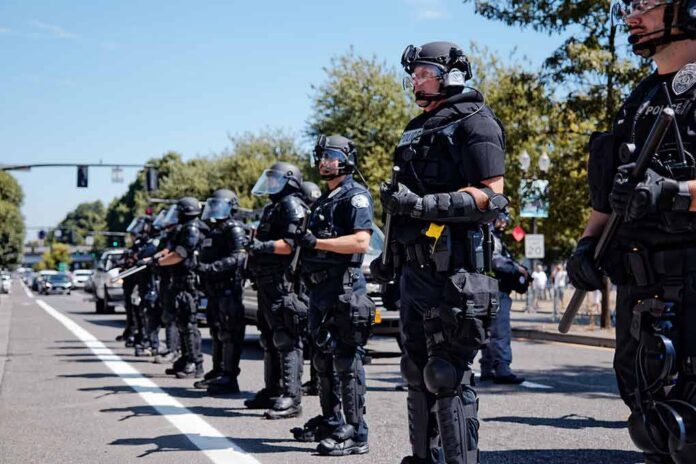
New York City just scrapped a 500‑officer protest-and-counterterrorism unit and will replace much of its protest role with an unarmed civilian team.
Story Snapshot
- Mayor Zohran Mamdani disbanded the NYPD Strategic Response Group and reshuffled counterterrorism duties.
- The city will create a civilian-led dialogue division plus a 30-officer First Amendment Support Team.
- Police union leaders warn the change raises risks at protests and for officers.
- Officials say security will not be weakened and crowd tactics like kettling and tear gas are restricted.
What Changed And Why City Hall Moved Now
Mayor Zohran Mamdani and Police Commissioner Jessica Tisch said New York City disbanded the New York Police Department’s Strategic Response Group to split protest response from counterterrorism. City Hall argued that people using their First Amendment rights should not face the same posture used for terror threats. The administration framed the move as a campaign promise now fulfilled. They said counterterrorism functions shift to the Intelligence and Counterterrorism Bureau, keeping those duties intact.
The mayor’s team described a new structure for protests. A civilian-led Community Dialogue and De-escalation Division will take the lead in communication, planning, and outreach. That unit will not carry weapons or have arrest powers. Inside the police department, a 30-officer First Amendment Support Team will coordinate with the civilian division to handle logistics and de-escalation. Officials said this model aims to reduce confrontations and build trust before tensions rise.
How The Police Union And Critics See The Risk
The Police Benevolent Association said the decision endangers the public and officers. Union leaders argued that waiting until a demonstration turns violent before acting makes injuries more likely. They warned that removing or restricting tools such as tear gas, long guns, and crowd-control tactics could slow response during fast-moving unrest. They said political pressure, not safety data, drove the change and that frontline cops will bear the cost if events spiral.
Commissioner Tisch pushed back, saying she would not accept any plan that weakens security. She said about 500 Strategic Response Group officers will be reassigned across the department, with many moving to counterterrorism roles. She said police will still respond to civil disorder, violent outbreaks, or threats to critical sites. The city also announced tighter rules on protest tactics, including limits on kettling and chemical agents during First Amendment activity.
What This Means For Safety, Rights, And Accountability
Supporters claim the new model better protects speech rights and lowers the chance of clashes. They point to research and recent practice that say early dialogue and clear communication can reduce conflict at large events. They argue that mixing protest policing with counterterror duties sends the wrong signal and can escalate routine gatherings. They want specialized counterterror teams focused on threats, and protest teams focused on de-escalation and facilitation.
New York City Mayor Zohran Mamdani has announced plans to disband the NYPD's 500-member Strategic Response Group (SRG), a specialised unit responsible for responding to protests, major incidents and counterterrorism operations. The decision was announced on Monday alongside… pic.twitter.com/HGUmFYhsGa
— The UAE Times (@theuaetimes) November 16, 2026
Skeptics focus on a different risk: rare but dangerous shifts from peaceful protest to violence. They argue that speed, training, and equipment matter most in those moments. If police are kept back too long or lack tools, crowds can turn on bystanders and officers before order is restored. The union’s stance reflects that concern, and it will shape how rank-and-file respond under the new rules during tense events citywide.
The Big Picture For A City On Edge
New York is trying to thread a narrow path between two duties that both matter: protect free speech and stop real threats. The change moves force-heavy optics out of protests while keeping counterterror coverage in a different bureau. The test will come during the next high-stress march or crisis. Clear plans, steady leadership, and honest reporting on outcomes will decide if this shift eases tensions or leaves gaps that the public, and officers, cannot afford.
Sources:
lifesitenews.com, nbcnewyork.com, cbsnews.com, washingtonexaminer.com