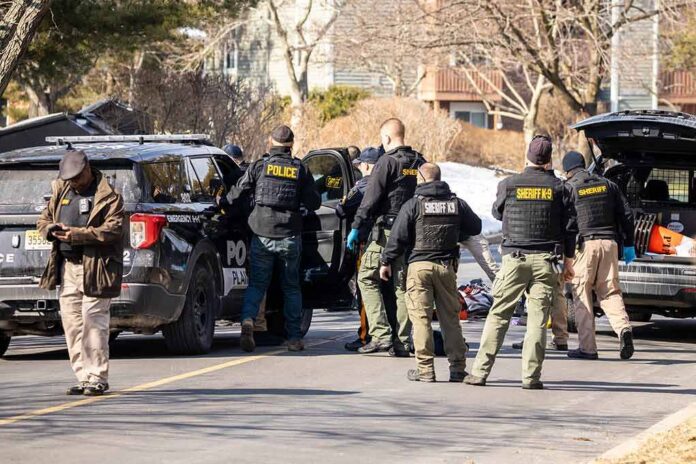
Four teenagers were arrested for the fatal shooting of 16-year-old Cameron Frierson after a Nashville high school football game, turning a community celebration into a crime scene.
Story Snapshot
- Police arrested four teens in Frierson’s August 21 shooting death near Pearl-Cohn High School.
- All four face criminal homicide and conspiracy charges in juvenile court, police said.
- The case highlights safety risks after school events in nearby streets and walkways.
- Juvenile confidentiality rules will limit public details as court steps proceed.
What Police Say Happened And Who Was Arrested
Metro Nashville Police said detectives arrested four teenagers after a six-week investigation into the August 21 killing of Cameron Frierson on Herman Street near 25th Avenue North, following a nearby high school football game. Police identified the suspects as Jon’quavous Johns-Collins, 18, who was 17 at the time, Marcelle Stem Jr., 17, Lil Tay Webster, 17, and Zachkeius Brown, 16. Authorities said all four were taken into custody and booked on criminal homicide and engaging in a criminal conspiracy, tied to the same incident.
Police reported the shooting call came just after 10:30 p.m., and officers found Frierson with multiple gunshot wounds on Herman Street. Investigators linked the attack to a group effort rather than a single shooter, which is why they added the conspiracy charge to the homicide counts, according to the department’s announcement. The arrests came six weeks after the killing, which police attributed to a methodical review of evidence and help from other units within the department.
Charges, Juvenile Court, And What The Public Will See
Local outlets reported that the four teens face criminal homicide and conspiracy in juvenile court, a venue that often shields case records from broad public release. Federal guidance and state practices restrict how much identifying information about juveniles can be shared unless a court transfers a case to adult status. That means the early, detailed timeline often comes from police statements, while many later court steps will unfold out of public view to protect minors’ records.
Because juvenile matters are limited by confidentiality laws, updates may arrive in short bursts rather than steady releases. Police and prosecutors will still have to meet court standards with evidence as hearings occur. The public may not see filings or hear full witness accounts until or unless a judge authorizes broader disclosure. This structure aims to balance community safety and the rights of young defendants during the legal process.
Safety After The Whistle: Risks Beyond School Grounds
Researchers have found that gun assaults against youth often rise during after-school hours in the areas around schools, not only on campus. That pattern matches the Nashville timeline here, which began after a Friday night game and spilled into nearby streets. City leaders and school communities often treat fall football as a unifying ritual. Yet the walk home can be the riskiest part, especially when crowds thin, lighting is poor, and beefs or group disputes move fast.
NASHVILLE, Tennessee — October 2, 2026 — Four teenagers have been arrested in connection with the August 21 fatal shooting of 16-year-old Cameron Frierson, a Hunters Lane High School junior who was shot shortly after a football game at nearby Pearl-Cohn High School.
According to… pic.twitter.com/4syW2ahl7H
— Police Incidents (@PoliceIncident) October 4, 2026
Parents and neighbors on both the left and right want the basics: safe streets for kids and real follow-through when violence strikes. This case shows how fast group conflicts can turn deadly and how slow the court process can seem. Police made arrests. Now courts take over. Communities can push for practical steps, like better lighting, clear exit routes, and adult presence along walking paths after games, while also demanding steady, facts-first updates from officials.
Sources:
nypost.com, nashville.gov, people.com, us.headtopics.com, fox17.com, wkrn.com