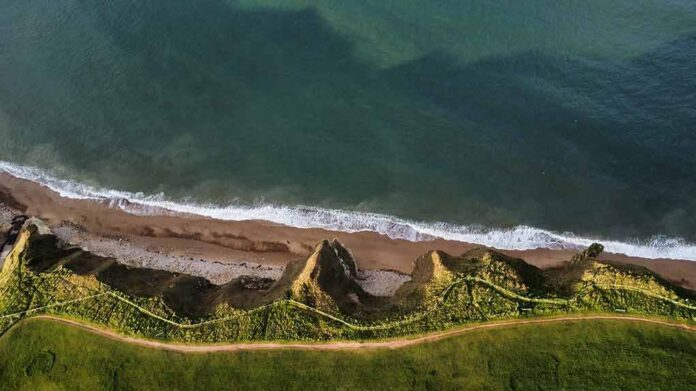
A beloved 90-foot landmark vanished between September 23 and 27, and park officials warn the cliffs that took it are still breaking apart today.
Story Snapshot
- The Hōlei Sea Arch at Hawaiʻi Volcanoes National Park collapsed into the Pacific Ocean.
- Officials say the exact time is unknown, but the fall happened between Sept. 23 and Sept. 27.
- The coastline is unstable from constant erosion; visitors are urged to avoid closed cliff areas.
- Recent storms likely added stress to rock already weakened by years of pounding surf.
What Park Officials Confirmed
Hawaiʻi Volcanoes National Park reported that the Hōlei Sea Arch was standing on Wednesday, September 23, and was gone by Sunday night, September 27. Officials said the exact time of collapse is unknown. The park linked the timing to a period when the area was closed during a tropical system, which limited direct observation. The agency emphasized that the surrounding coastal cliffs remain unstable and can fail without warning, and it urged the public to respect closures and stay back from edges.
National and local outlets echoed the park’s timeline and warning. Reports described the arch as centuries old and about 90 feet high, carved from ancient lava by waves over time. Coverage noted that recent storms brought heavy rain, strong winds, and swell to the Big Island around the same window, which can add force to already weakened rock. While the loss stings for visitors and locals, park staff stressed that such collapses are part of a natural cycle along this rugged coast.
Why Sea Arches Collapse
Geologists point to a simple process: waves chip at weak spots in coastal rock day after day. Over years, a cave forms, a hole widens, and a bridge of harder rock remains until gravity wins. This pattern, called differential erosion, explains why features like Hōlei rise and then fall as the cliff shifts inland. Without cameras running nonstop, the exact failure minute is often unknown. What looks sudden is usually the final step in a long, steady breakdown.
Strong storms can speed up that last step. High surf hammers the base. Rainwater seeps into cracks, then pressure builds as waves strike, prying rock apart. That does not create the weakness by itself, but it can be the push that finishes the job. Recent reporting tied the collapse window to rough weather near the park, consistent with past events on steep volcanic shorelines. Park guidance says more rock falls should be expected as the cliff face keeps retreating inland.
Safety, Access, and Public Risk
Park managers warn that the same forces that toppled the arch threaten anyone who nears cliff edges. These edges break straight down into the ocean. They can undercut from below and fail without noise or visible cracks on top. The park asks visitors to observe barriers and signs and to view the area from safe distances. Rescues are dangerous and drain limited staff and money, which many citizens feel are already stretched thin across federal services.
550-YEAR-OLD HAWAII LANDMARK COLLAPSES INTO THE PACIFIC
One of Hawaii’s most recognizable coastal landmarks is gone.
The Hōlei Sea Arch in Hawaiʻi Volcanoes National Park has completely collapsed into the Pacific after standing along the volcanic coastline for roughly 550… pic.twitter.com/XxVtwLkdIQ
— Michael Bradbury (@MrMBB333) October 3, 2026
Tourism will adapt, but safety rules may tighten near unstable zones. The arch drew many visitors, yet the park’s mission also includes protecting life and the landscape. Clear rules and clear communication help both goals. The park’s quick notice, firm warnings, and focus on known facts set a useful model: tell people what happened, what is still risky, and what comes next, without guesswork or spin.
What This Moment Says About Nature And Us
The fall of a famous landmark can feel like a shock, but it follows the coast’s design. Lava met ocean. Ocean carved rock. Rock returned to the sea. New shapes will form as the cliff moves. This is not failure of a system; it is the system. The task for officials is to share that truth and guard the public. The task for us is to hear the warning and keep a safe distance, even when the view is tempting.
Sources:
washingtontimes.com, hawaiipublicradio.org, cnn.com