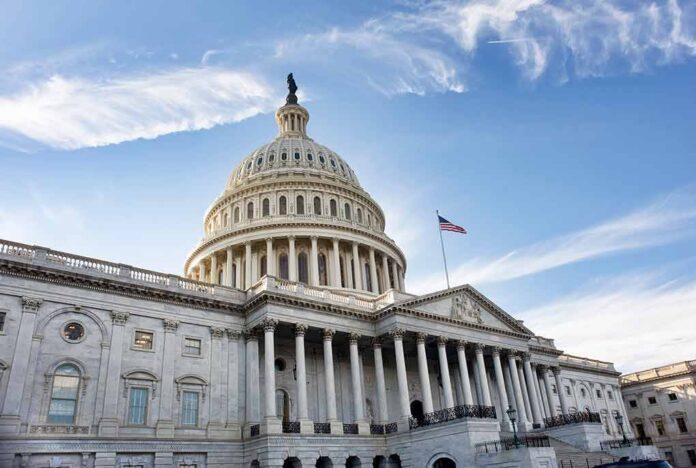
Grieving parents told Congress their children might be alive if local officials had honored federal immigration requests, turning policy into a human cost that neither party can ignore.
Story Highlights
- Angel parents linked loved ones’ deaths to local sanctuary policies during Capitol Hill testimony.
- U.S. Immigration and Customs Enforcement (ICE) cited a case where a detainer was ignored before a fatal shooting.
- Researchers found sanctuary policies did not raise overall crime and sometimes coincided with declines.
- The clash shows a gap between tragic case stories and population-level data that guide public policy.
Parents’ Testimony Forces Policy Into Personal Focus
Angel parents Jennifer Bos and Joe Abraham told lawmakers that Illinois sanctuary rules left their daughter’s alleged killer free before her death. They argued the state’s policies blocked cooperation with federal agents and turned a preventable risk into a tragedy. Other families, including Tammy Nobles and Jessica Gorman’s relatives, shared similar stories in House and Senate hearings. They pressed Congress for stronger local-federal coordination and warned that political fights were costing lives.
Parents asked why detainer requests, which flag people for pickup by federal agents, were not honored. The American Immigration Council explains a detainer as a nonbinding request to hold someone up to 48 hours so federal agents can take custody. Families said ignoring those requests let repeat offenders cycle back into the community. They called for clear rules, fast data sharing, and accountability when communication breaks down between local jails and federal authorities.
Specific Cases Cited by Enforcement Officials and Families
U.S. Immigration and Customs Enforcement pointed to a California case where a detainer placed with the Los Angeles Police Department was not honored. The suspect, a repeat immigration violator, later carried out a fatal shooting that left three victims, according to the agency’s account. In San Francisco, the Bologna family sued the city years earlier, alleging officials failed to alert federal authorities about a suspect’s status before a murder that killed a father and two sons.
In Chicago, police identified a suspect in the Sheridan Gorman killing after comparing images with U.S. Customs and Border Protection records, highlighting the value of federal data access during a fast-moving probe. Gorman’s parents called their daughter’s death preventable and blamed Illinois’ sanctuary posture for missed chances to hold the suspect earlier. Families said these patterns show a simple point: when communication and custody handoffs fail, the public pays a price.
What the Research Says About Crime and Sanctuary Rules
Peer-reviewed research and policy summaries paint a different, wider picture. A Proceedings of the National Academy of Sciences study found sanctuary policies did not increase violent crime and had no significant effect on property crime across jurisdictions studied. A 2022 analysis indexed by PubMed reported that, after 2014, both violent and property crime fell more in sanctuary counties than in non-sanctuary counties. A University of Texas at Austin summary echoed that pattern.
These studies do not claim zero risk. They focus on average outcomes across many places, not on preventing every single tragedy. That gap fuels today’s fight. Families point to real losses and system gaps, while researchers warn against shaping national rules from a small set of cases. Both are true at once: averages can look stable while individuals still face deadly failures in coordination.
Why the System Keeps Breaking Down
Local officials often avoid holding people only on immigration grounds because detainers are requests, not court orders. The American Immigration Council notes detainers are nonbinding and time-limited, which makes decisions complex for sheriffs and jailers. Some local laws also restrict when staff may share information or honor pickup requests. These rules seek to build trust with immigrant communities, but they can create gray zones when serious criminal charges are involved.
Families want a bright line: if someone is booked on serious charges, local jails should notify and transfer custody to federal agents quickly. Researchers urge targeted fixes that keep cooperation for dangerous offenders while avoiding broad measures that could chill crime reporting. Both sides agree on one thing many Americans share: a government that drops calls between agencies is failing at its most basic duty—keeping people safe.
What to Watch Next
Congress may press for standards that prioritize federal pickups for suspects accused of violent crimes. Lawmakers could also require public audits of detainers, notification times, and transfer outcomes, so failures do not disappear into bureaucracy. Transparent logs would let the public see where the chain breaks and who is responsible. That kind of sunlight would strengthen both safety and trust, while respecting local policing needs and community cooperation goals.
Sources:
foxnews.com, wjla.com, ice.gov, abc7chicago.com