

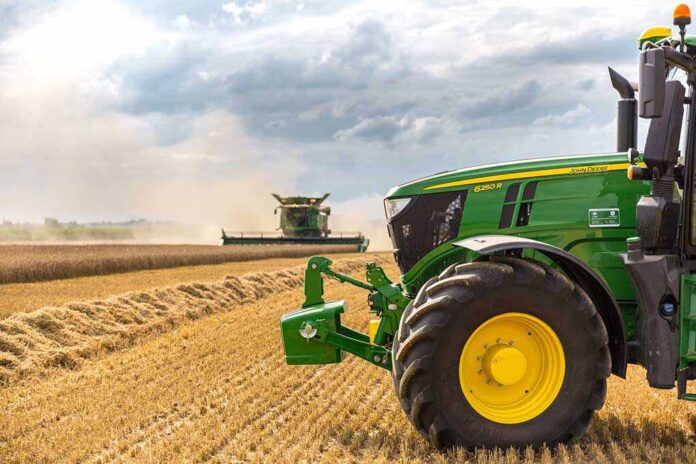
President Trump and the Department of Agriculture announced $8 billion in one-time payments to farmers to ease harvest fuel costs this season.
Story Highlights
- USDA said $8 billion will be available for one-time harvest payments to farmers to offset higher input costs, including diesel.
- President Trump tied the aid directly to rising diesel prices during a public event in Kansas.
- USDA will use the Commodity Credit Corporation and the Farm Service Agency to run the program.
- Payment rates and timing were not final at launch, with details due later in the fall.
What Was Announced and Why It Matters
The United States Department of Agriculture said it will make $8 billion available this harvest for one-time payments to American farmers facing higher input costs, including diesel. The department said the aid aims to counter “temporary market disruptions” and keep crops moving from field to market during peak harvest. President Trump highlighted diesel costs when he previewed the plan, framing it as direct help to producers during a costly and time-sensitive season.
USDA said the program will be administered under the Commodity Credit Corporation Charter Act and delivered by the Farm Service Agency. That structure is common for fast-moving farm support. It lets the department move funds without a new stand-alone spending bill. The announcement places the relief within long-running farm finance tools while answering immediate pressure from fuel and other inputs during harvest.
How Payments Will Be Calculated
USDA described a “simple, proportional” approach that relies on planted acres reported to the Farm Service Agency. The formula will draw on cost-of-production estimates from the Economic Research Service and on yield and price data used in crop balance sheets. This method is meant to scale support with farm size and modeled costs. USDA said commodity-specific rates will come in November, and methods for other eligible commodities will follow.
The department also pointed to a separate step aimed at fuel costs. Earlier in October, USDA said an executive order related to dyed diesel was expected to lead to about $640 million in combined federal and state savings across roughly 224.6 million harvested acres. That estimate concerns tax treatment and is distinct from the $8 billion in planned direct payments. The two figures should not be combined when judging program size.
Who Runs It and What Details Are Pending
The Farm Service Agency will handle applications and payments, according to USDA and independent reporting. The agency runs many farm programs and has county offices that work directly with producers. Reporters noted key details were not final at launch, including exact payment rates and the opening of the application window. Outlets also said payments were not expected before the election, placing the cash flow later in the season.
USDA invited specialty-crop producers and fishermen to send fuel-cost data for review, while saying Title I commodity payment rates would be set after further analysis. That leaves some producers waiting to see how they fit. This staggered rollout can cause confusion, but it also signals that USDA plans to tailor methods by sector once data arrive.
Why This Fits a Bigger Pattern
Farm relief often moves through the Commodity Credit Corporation, a federal financing arm that dates to the New Deal era. Administrations from both parties have used it to stabilize farm income during shocks. That history helps explain the tool choice here: it is fast, known to farmers, and easier to deploy during a narrow harvest window. The question now shifts from “if” money is available to “how” it will be allocated and measured against actual fuel burdens.
🚨🇺🇸 TRUMP DROPS $8B ON FARMERS
Kansas rally Monday: new USDA 'Harvest Fuel Relief' program offsets record diesel costs.
$8B in one-time payments. Two weeks before the midterms.
That's not farm policy — it's a taxpayer-funded campaign ad.
Source: https://t.co/BnP73wTBEV
— Tosh Petrovich (@inspiring_tosh) October 20, 2026
Producers across the political spectrum worry about rising costs that they cannot control. Diesel drives combines, trucks, and dryers, and price spikes hit cash flow when margins are thin. Supporters see this plan as a bridge to finish harvest and protect the food supply. Critics often ask for clear rules, transparent math, and proof the funds reach the people who need them most. USDA said more specifics will come with November rate sheets and guidance.
Sources:
facebook.com, usda.gov, upi.com