

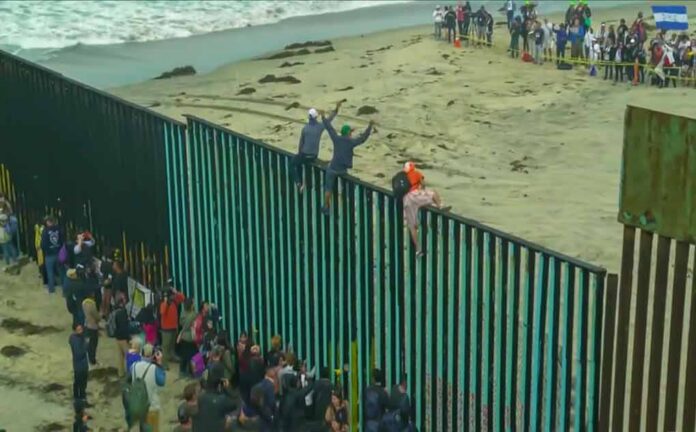
Tens of thousands of migrants forced their way into Spain’s North African enclave of Ceuta this summer, pushing Italy to demand Spain be suspended from Europe’s passport-free travel zone.
Story Snapshot
- About 60,000 migrants crossed into Ceuta, triggering alarm across European capitals.
- Italy called for Spain’s suspension from the Schengen open-border system.
- France and Germany tightened checks and pressed Spain to secure the European Union’s outer border.
- Spain sent troops to Ceuta as Prime Minister Pedro Sanchez called for “coexistence” and blamed trafficking gangs.
- The European Commission offered Frontex support while political tension between member states grew.
Migrant Surge Overwhelms Spanish Enclave
Roughly 60,000 people crossed into Ceuta, the Spanish territory that sits on Africa’s northern coast next to Morocco. The scale of the crossing shocked European leaders and quickly turned a local border problem into a continent-wide political fight. Spain’s government called the wave a breach of its territorial integrity and said human trafficking networks pushed people to cross by spreading false claims about changed migration rules.
President Emmanuel Macron of France ordered tighter checks at the French-Spanish border within hours of the surge. A French aide said Macron’s government stood ready to help Spain “should they request it,” including support through European Union channels. The quick French response showed how fast a crisis inside one country can spread pressure across the whole open-border area.
Italy Demands Schengen Suspension
Italy’s government went further than France, calling for Spain to be temporarily cut out of the Schengen zone, the system that lets people travel between most European Union countries without passport checks. Italian officials framed the surge as proof that Spain’s outer border controls had failed. Prime Minister Giorgia Meloni said her government was “prepared to take action — including through extraordinary measures — to defend our borders and ensure citizens’ safety”.
The Italian demand exposed a deep crack in European Union unity. Schengen depends on every member trusting that others guard the outside edge of the zone properly. When that trust breaks, as it did here, countries start reintroducing their own border checks, undoing decades of free movement built into daily European life.
Germany And France Press Spain On Border Duty
German Chancellor Friedrich Merz told Spain directly to secure the European Union’s external border, saying “the protection of the European Union’s external borders is crucial for combating illegal migration.” Merz also demanded that Morocco “take back the illegal migrants immediately,” pointing blame across the Strait of Gibraltar. His comments echoed a broader European Union view that frontline states like Spain carry a duty to the whole bloc, not just their own territory.
Spain Deploys Troops As Sanchez Calls For Coexistence
Spain sent military forces to Ceuta hours after migrants broke through the border by force, aiming to restore order in the enclave. Prime Minister Pedro Sanchez said Spain would set up a temporary center to manage the crisis and repeated that traffickers, not migrants alone, bore responsibility for the chaos. Sanchez has also urged “coexistence,” a message aimed at calming both anti-immigration anger and humanitarian concerns at once.
Brussels Offers Support Amid A Fractured Response
The European Commission said it would send more Frontex staff and funding to help Spain manage its sea and land borders, building on existing operations already running near Ceuta and the Canary Islands. That support reflects a long-standing pattern: Brussels tends to respond to border crises with money and staff rather than binding orders on member states, leaving the political fight over blame to national leaders.
The clash between Italy’s push to punish Spain and the Commission’s offer to help it shows how divided European Union governments remain on migration, even as they agree the current system is under real strain. For voters on both sides of the debate, the episode adds to a growing sense that European institutions struggle to act with one voice when a crisis actually hits.
#Italy has suspended the application of the EU's #Schengen free-travel regime with #Spain after tens of thousands of people attempted to enter the Spanish enclave of #Ceuta from #Morocco within the past 24 hours. The move follows a sharp diplomatic dispute after Italian Foreign… pic.twitter.com/QM7vSVbxS8
— Morocco World News (@MoroccoWNews) July 31, 2026
No independent tally has confirmed exact casualty figures tied to the crossing, and Spanish and Moroccan authorities continue coordinating on returns. The political fallout, however, is already reshaping how European Union countries talk about border control heading into further Schengen policy discussions.
Sources:
visahq.com, europarl.europa.eu, aa.com.tr, democrata.es, youtube.com, euaa.europa.eu, home-affairs.ec.europa.eu, migration-control.info, ynetnews.com