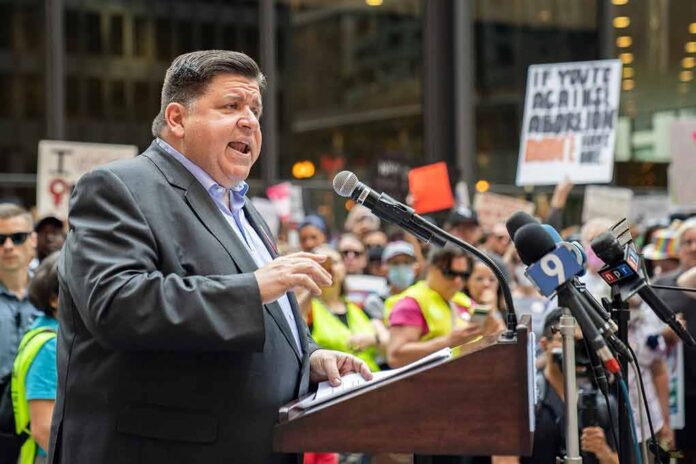
Illinois Governor JB Pritzker rejected President Trump’s offer to send federal law enforcement to Chicago after a violent weekend, setting up a high-stakes clash over who controls public safety in America’s cities.
Story Highlights
- President Trump pushed to deploy federal agents to Chicago after a spike in shootings.
- Governor Pritzker said Chicago faces no emergency that justifies military-style intervention.
- State and city leaders said there was little to no advance communication from Washington.
- The fight revives long-running tensions over federal power, policing, and local control.
What Triggered the Standoff
President Trump said he intended to send federal law enforcement to Chicago and Baltimore after a violent holiday weekend. He urged Governor Pritzker to request help and framed the move as a bid to reduce shootings and restore order. The Associated Press reported the plan and the push for state cooperation, which local leaders opposed. Trump’s comments followed reports of dozens shot over a single weekend, renewing public anger over safety and government response.
Chicago’s violent weekend placed new pressure on City Hall and Springfield. News accounts cited 41 to 58 people shot, depending on the outlet and timeframe covered, adding fuel to a national debate over crime and federal involvement. The numbers drew attention, but the core dispute centered on who has authority to act. The White House signaled urgency. Illinois leaders argued the situation did not meet the legal or practical standard for federal boots on city streets.
Pritzker’s Rejection and Legal Framing
Governor Pritzker said there is no emergency in Chicago that calls for armed military intervention. He argued that local police, with elected leaders, are working daily to improve safety and that crime has been trending down. He joined other Illinois leaders to reject any plan to deploy the National Guard or active-duty troops in the city. His office’s public statement emphasized civilian control of policing and warned against normalizing a military presence in urban life.
State officials also highlighted communication gaps. Pritzker and Chicago Mayor Brandon Johnson said there had been no meaningful outreach from the administration about a possible deployment. They called the idea unnecessary and said they had made no request for federal troops. That message underscored a core point: leaders in Illinois believe local consent and clear legal authority are required before any federal expansion of force within their communities.
What Federal Help Usually Looks Like
Federal help in cities often involves the Federal Bureau of Investigation (FBI), the Drug Enforcement Administration (DEA), the Bureau of Alcohol, Tobacco, Firearms and Explosives, and the Department of Justice. These agencies support gun, gang, and drug cases, task forces, and data tools. That model differs from a visible military-style presence. The Posse Comitatus Act limits using the military for domestic law enforcement unless Congress or the Constitution authorizes it, which is why governors often see troop talk as a red line.
Studies of past deployments show mixed or limited effects on violent crime. Some research finds no clear reduction in homicides or gun violence from National Guard deployments to cities. Other analyses point to long-term partnerships and targeted investigations as more durable ways to cut violence. These findings do not end the debate, but they inform why state and local leaders ask for investigators and prosecutors rather than soldiers when crime spikes.
The Stakes for Both Sides—and for Residents
For the White House, the move signals action on crime and border-linked enforcement. For Illinois leaders, it risks civil-military overreach and escalates tension in neighborhoods already on edge. Residents caught between fear of violence and fear of heavy-handed tactics see a familiar pattern: government leaders argue while families ask who will keep streets safe tonight, not months from now. That gap feeds the belief that powerful officials protect careers, not communities.
President Donald Trump said Tuesday, Sept. 1, 2026, that Chicago, Illinois, “will die” unless Mayor Brandon Johnson or Gov. JB Pritzker invite federal help after a violent weekend.
Chicago police counted 41 people shot and three killed in 22 incidents from Friday through… pic.twitter.com/qX9YmcbOD1
— AbateHate.com (@AbateHate_com) September 1, 2026
Both parties say they want safety, but they differ on the means and chain of command. The practical next steps are clear. If Washington wants to help, it can surge agents, analysts, and prosecutors to target the gun pipeline and the small groups driving shootings. If Springfield and City Hall want results, they can invite that support on their terms, set metrics, and report progress in public. Clear roles, strong data, and steady communication beat showdowns every time.
Sources:
cnn.com, stl.news, apnews.com, abcnews.com, gov-pritzker-newsroom.prezly.com, foxnews.com