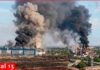
China’s deadliest coal mine explosion in years raises fresh questions about safety, secrecy, and accountability inside a regime that controls the narrative while families bury the dead.
Story Snapshot
- A gas explosion at Shanxi’s Liushenyu mine killed at least 82, with hundreds underground when it detonated [1]
- A carbon monoxide alarm reportedly sounded before the blast, signaling danger ahead of the tragedy [1]
- Chinese state outlets say company leaders were placed under “legal control measures” as the probe began [2]
- Officials vow a thorough investigation even as casualty figures and timelines shifted in early reports [2]
What Happened At The Liushenyu Mine
Chinese and international reports state a gas explosion struck the Liushenyu coal mine in Qinyuan County, Shanxi Province, on May 22, killing at least 82 miners [1]. State-linked television reported the blast occurred while 247 miners were working underground, with hundreds of rescuers mobilized through the night [2]. Early counts fluctuated as officials updated totals of the dead, the rescued, and the missing, reflecting a chaotic picture during the first day of operations and medical response [1].
Chinese broadcasters reported that by the morning after the explosion, 201 miners had been brought to the surface, while others remained unaccounted for as tunnels were cleared and ventilated [2]. The mine, described as a decades-old operation in the country’s top coal-producing province, was the scene of continuous rescue efforts as ambulances and supply trucks cycled through staging areas [2]. State media later held to a confirmed death toll of at least 82 as investigators secured the site and families sought answers [1].
Alarms, Accountability, And A Closed Information System
According to summaries of state reporting, a carbon monoxide sensor triggered an alarm before the explosion, indicating gas levels exceeded limits underground [1]. Officials said the cause remained under investigation, while signaling early accountability by placing mine company leaders under “legal control measures” pending findings [2]. The interplay of an apparent pre-event gas warning and post-event detentions points to possible management lapses, though public records released to date do not establish a final cause or specific violation [1].
State television emphasized an active response, asserting that rescue teams worked continuously and that authorities launched an immediate emergency operation [2]. That account aligns with reports that a large number of miners survived and received treatment. Still, casualty figures and timelines shifted across updates, limiting clarity on the speed and sequencing of alarms, evacuations, and ventilation actions inside the shafts before the blast [1]. With the official investigation ongoing, the public has not seen sensor logs, evacuation directives, or maintenance records that could validate or refute negligence claims [1].
Why This Matters For American Readers
Chinese media framed the disaster as a call for a thorough probe and accountability, consistent with a pattern where technical details emerge slowly and through state channels [2]. For Americans who value transparency and the rule of law, the unresolved questions matter: who saw the alarm, what steps were ordered, and when did supervisors initiate evacuation or power shutdowns? Without released logs, inspection histories, or a full accident report, the difference between preventable failure and unavoidable catastrophe remains unclear [1].
🇧🇩 সরকারের @PMO_Bangla68@trahmanbnp send heartfelt condolences to the government of The people's Republican of China and victims , people . 🇨🇳
We are deeply saddened by the coal mine explosion in Shanxi Province and the heartbreaking loss of so many lives. On behalf of the… pic.twitter.com/m0DwJsicOc
— Prime Minister of Bangladesh 🇧🇩 (@PMO_Bangla68) May 24, 2026
Energy security and human dignity are linked. When governments obscure records or control investigations, workers and families pay the price. Reports note China’s history of serious mining accidents, including recent fatal incidents in other regions, underscoring persistent enforcement gaps in a system that prizes output and centralized control [3]. American policy debates about reliable domestic energy, accountable companies, and transparent regulators should heed this lesson: robust safety, open records, and independent scrutiny save lives long before disaster strikes.
Sources:
[1] Web – 2026 Liushenyu coal mine explosion – Wikipedia
[2] YouTube – Rescue efforts underway after coal mine explosion in north China
[3] YouTube – At least 90 dead in gas explosion at coal mine in China