U.S. forces hit two Iranian launchers on Larak Island to stop an imminent mine threat in the Strait of Hormuz, according to Central Command and U.S. officials.
Story Highlights
- U.S. military struck two Iranian launchers on Larak Island near the Strait of Hormuz.
- Central Command said the action was limited, precise, and aimed at stopping an imminent mining threat.
- Iran-linked outlets reported casualties and promised retaliation after the strike.
- Regional tensions rose as Iran targeted U.S. sites in Jordan after the attack.
What The Pentagon Says Happened
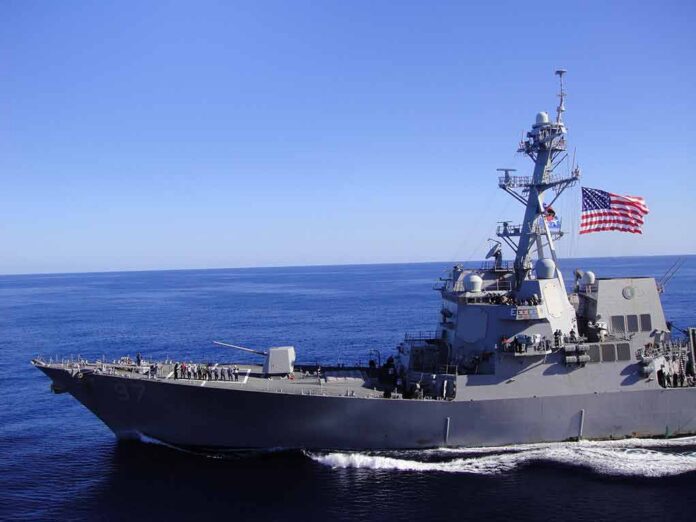
U.S. officials said American forces struck two Iranian launchers on Larak Island on August 30. The launchers were being prepared for mine-laying operations that could threaten ships in the Strait of Hormuz, a key route for global oil and gas flows. U.S. Central Command (CENTCOM) described the strike as a “limited, precise action” taken to counter an “imminent threat” from Iran’s Revolutionary Guard units operating near the chokepoint. The U.S. framed the mission as defensive and focused on preventing danger to shipping.
The strike location matters. Larak Island sits near the narrowest part of the Strait of Hormuz. About a fifth of the world’s traded oil can pass through that waterway in normal times. Disruptions there can spike fuel prices and strain supply chains far from the Middle East. By hitting launchers tied to sea mines, U.S. planners aimed to remove tools that can close lanes, damage tankers, and raise the risk of wider war at sea.
Iran’s Response And Rising Risk
Iranian state-linked outlets said several fighters and civilians were killed or wounded on Larak Island and vowed a response. Soon after, Iran targeted U.S. facilities in Jordan, a move that showed Tehran would answer a strike on its soil with regional retaliation. This cycle—strike and counterstrike—adds danger for American service members, commercial crews, and nearby allies. Each exchange also increases the chance that a misread signal or errant missile drags both sides into a larger conflict neither claims to want.
Both Washington and Tehran are working from familiar scripts. The U.S. says it acts to keep the sea lanes open and to protect ships from attack. Iran says it defends its territory and responds to foreign aggression. Independent proof often arrives later, after the public has already formed views from official claims and fast-moving news alerts. That pattern is common in maritime flare-ups around the strait and can blur key questions about timing, intent, and proportionality once the shooting starts.
Why This Matters At Home
American families feel the cost of turmoil in the Strait of Hormuz. Energy markets react fast to risk. When tankers slow or reroute, prices at the pump can jump. Higher fuel costs hit delivery fees, air travel, and grocery bills. People across the political spectrum already feel squeezed by past inflation and high energy costs. Many also believe elites in government make choices without clear accountability. Strikes that risk a wider war feed that concern, even when the stated goal is to stop an immediate threat to shipping.
🚨 BREAKING: U.S. LAUNCHES FRESH STRIKES INSIDE IRAN.
Explosions rocked key naval & IRGC targets in Bandar Abbas, Qeshm Island & Konarak.
CENTCOM cites threats to commercial shipping in the Strait of Hormuz. US embassies across the Middle East issued immediate SECURITY ALERTS.…— Nivesh Beyond (@niveshbeyond) September 1, 2026
Leaders in both parties say they support keeping vital sea lanes open. But voters on the right and left want proof that actions are smart, legal, and tied to a clear end state. They also want to know how a single strike fits into a broader strategy that lowers risk and protects American lives and wallets. This event shows how fast one precise action can trigger a chain reaction. It underscores why steady oversight and clear communication are not luxuries, but guardrails for power.
What To Watch Next
Watch for three signals. First, any new U.S. or Iranian strikes that change the map near the strait. Second, shipping data that shows rerouting or delays for tankers, which can hint at rising danger before headlines do. Third, official statements that define limits, like rules for self-defense at sea or thresholds for future action. Clear lines can slow escalation. Vague lines can invite tests that raise the risk for troops, mariners, and everyone paying an energy bill.
Sources:
facebook.com, reuters.com, english.news.cn