Scientists uncovered 368 hidden earthquakes beneath Antarctica since 2010, with 245 clustered at the shaky ocean edge of the Thwaites “Doomsday” Glacier.
Story Highlights
- Researchers reanalyzed seismic data and found 368 overlooked events, many at Thwaites’s marine edge.
- The pattern links many quakes to icebergs breaking, flipping, and hitting the glacier’s front.
- The timing aligns with faster motion at the glacier’s floating tongue in 2018–2020.
- Scientists say collapse this century is less likely, but retreat and long-term risks remain.
What The New Seismic Map Shows
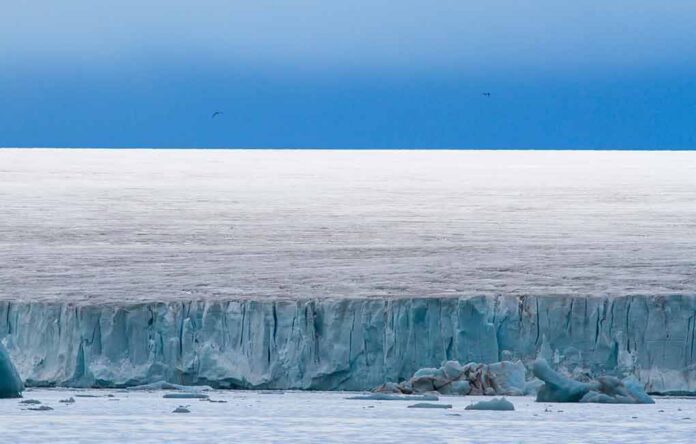
Researchers built a new method to scan years of Antarctic seismic records. They identified 368 small, long-period earthquakes from 2010 to 2023, most never listed before. About 245 of them cluster near the ocean-facing front of the Thwaites Glacier, a key plug that slows ice from West Antarctica into the sea. The signals match past work that tied similar quakes to calving and capsizing icebergs striking the glacier’s edge, which can jolt the ice like a bell.
Scientists call these “glacial earthquakes.” They are not faults opening in rock. They are shudders triggered when huge ice blocks break off, roll, and slam into the ice front. That activity lines up with known stress at the contact where warm ocean water undercuts floating ice. The study’s authors also report that quake counts rose during a period when the glacier’s floating tongue sped up between 2018 and 2020, linking the shaking to real changes in ice motion.
Why Thwaites Matters For Coasts
Thwaites is often labeled the “Doomsday Glacier” because it acts like a brake on a vast basin of ice. If that brake weakens, more ice can reach the ocean, raising sea levels over time. Past research shows signs of stress in the floating ice and complex terrain under the glacier that can guide warm water inland. Official summaries from the International Thwaites Glacier Collaboration say a full collapse is unlikely in the next few decades, yet retreat will continue and could speed up through this century and the next.
Other modeling work offers mixed, but clearer, guidance. One group found that a dramatic “cliff failure” chain reaction is less likely this century, suggesting a slower near-term response if the ice shelf vanishes. But they also stress that Thwaites is not stable and will likely keep losing mass, adding to long-run sea level rise. These new quakes do not prove an imminent break. They do map where the system strains, which helps planners judge risk windows for coasts.
The Signal, The Hype, And The Stakes
The reanalysis does two things at once. It shows Thwaites is more active than we thought, and it proves our tools can now catch what we used to miss. News headlines often turn that kind of technical gain into a forecast of doom. The science is more careful. The improved catalog helps sort which processes move ice, when they spike, and how ocean water and ice geometry team up to weaken the front. That is the level of detail local leaders need for levees, zoning, and insurance.
Hundreds of previously overlooked seismic events have been detected beneath Antarctica, including 245 near the marine edge of the Thwaites Glacier. Many appear to be glacial earthquakes caused when huge icebergs break off, capsize, and collide with the glahttps://t.co/o6ZdmYqb2F
— Michael W. Deem (@Michael_W_Deem) August 30, 2026
Americans across politics share a worry here: slow, high-stakes problems get studied and debated while little gets fixed at home. Coastal flooding costs hit homeowners, small towns, and taxpayers first. Washington often moves last. Better data on Thwaites can guide smarter, cheaper steps now, like raising critical roads, hardening water plants, and steering new housing away from flood zones. That protects working families without waiting on global deals or sweeping mandates.
Sources:
sciencedaily.com, local12.com, msn.com, d197for5662m48.cloudfront.net, thwaitesglacier.org, pmc.ncbi.nlm.nih.gov, meetingorganizer.copernicus.org