
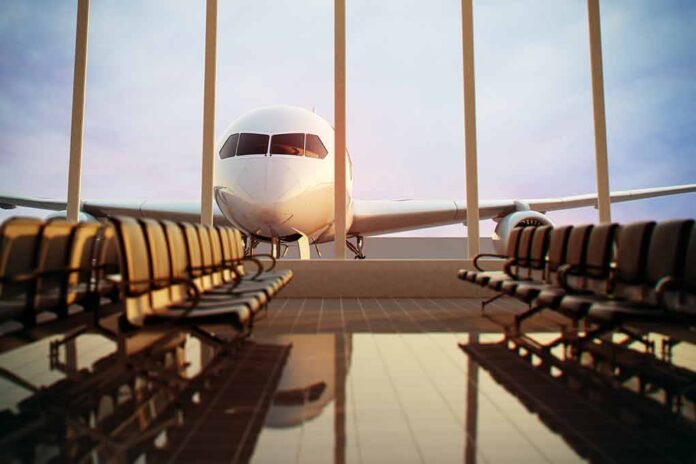
Masked federal officers detained passengers on a crowded Seattle jet bridge during boarding, jolting travelers and igniting a fresh fight over airport immigration enforcement.
Story Highlights
- Immigration officers detained passengers during boarding for Alaska Flight 1306 in Seattle.
- Port of Seattle and Alaska Airlines said they had no advance notice and are reviewing protocols.
- Video described in news reports showed officers restraining a person on the jet bridge.
- Officials condemned the operation as alarming and unusual inside a passenger area.
What Happened On The Jet Bridge
On Saturday morning around 8 a.m., immigration officers detained passengers during boarding for Alaska Airlines Flight 1306 from Seattle to Los Angeles. Alaska Airlines confirmed an incident with law enforcement in the jet bridge area during the boarding process. Reporting described video of masked officers restraining and removing at least one person as other travelers looked on. The Port of Seattle, which oversees the airport, confirmed immigration involvement and said the action happened during active boarding at the gate.
Contemporaneous coverage said the scene was distressing and caused a delay for the Los Angeles-bound flight. Some reports quoted witnesses who saw officers drag a person away from the aircraft entrance. Multiple outlets reported that two passengers were detained, though some accounts referenced at least one person taken into custody. The Port of Seattle and the airline both emphasized that they were not notified in advance of the operation and are assessing what occurred in their facilities and on the jet bridge.
How Officials And The Airline Responded
The Port of Seattle called the incident outrageous and said immigration enforcement actions at Seattle-Tacoma International Airport occur without the Port’s participation or prior knowledge. Port leaders said they are reviewing whether any airport protocols were bypassed and how to prevent passenger-area disruptions. Alaska Airlines said its team is also reviewing the event and reiterated that law enforcement carried out the action without airline involvement or warning. Both stressed passenger safety and reliable operations as top priorities.
Washington leaders and local advocates condemned the timing and location of the detentions. They warned that jet bridge arrests risk panic, disrupt travel, and could signal a broader shift to high-visibility operations in public spaces. Coverage highlighted concerns that tactics like these erode trust and will keep families from using airports for fear of sudden enforcement. These reactions arrived before any detailed federal case files were publicly released about the individuals detained during boarding.
What We Know About The People Detained
Reporting identified one detainee as Jasmine Nicolini Alvarez, whom immigration officials targeted for a visa overstay and a failure to self-deport after a 2019 authorization or order, according to a local television report. That report said she was held at the Northwest Immigration and Customs Enforcement Processing Center in Tacoma. The identity and specific immigration circumstances of a second reported detainee were not clearly documented in the available sources at the time of publication.
UPROAR GROWING SUNDAY: Masked ICE agents stormed a crowded jet bridge at Seattle-Tacoma International Airport Saturday morning, dragging two passengers away as they boarded an Alaska Airlines flight bound for Los Angeles. The chaotic confrontation, captured on video, unfolded in…
— Los Angeles Magazine (@LAmag) November 22, 2026
Published accounts did not include an arrest warrant, removal order, or a notice to appear for either detainee. Without those records, the public reporting supports what happened—an enforcement action during boarding—more firmly than it explains the legal basis for both detentions. That gap has led institutions closest to the incident, the Port and the airline, to focus on process and safety while they seek details from federal authorities about authority, timing, and coordination inside passenger areas.
Why This Matters Beyond Seattle
Airport enforcement is not new, but the setting and method here mark a visible shift with real-world costs for travelers and crews. Federal law does not bar immigration officers from entering an airport, yet making arrests on a domestic jet bridge raises questions about planning, risk, and necessity during live boarding. The Government Accountability Office has urged stronger immigration data and transparency, showing how reporting gaps can cloud events like this and fuel public conflict over enforcement practices.
For many Americans, this episode confirms a broader worry: systems built to serve the public often clash in ways that punish regular people. Travelers saw a law enforcement action unfold inches from their plane door, while the airport operator and airline said they were kept in the dark. That disconnect plays into a larger frustration shared across left and right—that powerful agencies act first and explain later, leaving families, workers, and paying customers to absorb the shock.
What Comes Next At The Airport
The Port of Seattle and Alaska Airlines are reviewing what happened and how to prevent unsafe disruptions during boarding. Key questions include how federal officers coordinate with airport operations, when and where passenger-facing arrests are appropriate, and what safeguards protect travelers and crews from sudden confrontations in tight spaces. Clearer notice rules, better timing away from active boarding, and defined roles could reduce risk without blocking legitimate federal enforcement.
This story is still about facts on the ground: two people detained during boarding, a flight delayed, and agencies now answering for how it unfolded. As records emerge, they should show the specific authority used and the reasons officers chose a jet bridge. Until then, the focus for airport leaders and airlines will be practical—keep planes moving, keep people safe, and make sure no one learns about an operation only when agents step into the aisle.
Sources:
cbsnews.com, seattletimes.com, kark.com, usnow.us, cbsaustin.com, gao.gov