
As Ukrainian drones rip into Russia’s oil export lifelines, stray aircraft crossing into NATO airspace are forcing Europe to confront the real cost of a forever war it helped fuel.
Story Snapshot
- Ukraine is openly targeting Russian oil ports and refineries to choke off Moscow’s war revenue.
- Major Russian export terminals in the Baltic and Black Sea have been forced to halt or cut back shipments.
- Some Ukrainian drones tied to this campaign have strayed into or near Baltic and Nordic airspace, raising NATO safety concerns.
- European leaders now face a self‑inflicted energy squeeze and rising risk on their own doorstep.
Ukraine’s Drone War On Russia’s Oil Money
Ukrainian leaders have been clear that long‑range drone strikes on Russian oil facilities are designed to hit the Kremlin’s wallet, not just its tanks, by cutting off export revenue that funds the invasion.[4][2] Ukrainian President Volodymyr Zelenskyy has said Ukrainian forces are using long‑range drones specifically against Russian oil refining and export assets, with recent strikes hitting the large Yaroslavl refinery and the Syzran refinery in Samara within hours of each other.[2][4] Kyiv argues that every barrel Russia cannot ship means fewer rubles for missiles landing on Ukrainian cities, and Western media confirm Ukraine has “stepped up” these attacks on ports, tankers, and refineries in recent months.[3][4] For a conservative American audience, the intention is easy to recognize: Ukraine is doing, by force, what sanctions and bureaucrats in Brussels failed to do—target the core of Russia’s petro‑state war machine, even if it rattles global markets along the way.
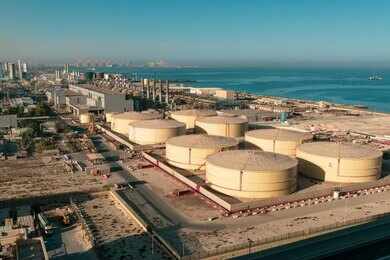
Reports from the ground and from regional officials in Russia show that these are not symbolic pinpricks but damaging strikes that Moscow cannot ignore.[1][3] Russian officials have acknowledged fires and damage at key sites, including the Ust‑Luga terminal on the Baltic Sea and the Tuapse Black Sea oil port, after waves of Ukrainian drones hit fuel storage tanks and loading racks.[1][3] A regional governor confirmed that facilities at Ust‑Luga were set ablaze in overnight attacks that Russian air defenses tried to repel, with dozens of drones reportedly intercepted.[1][4] Video and eyewitness accounts from Baltic ports and refineries show large fires and thick black smoke billowing over the coastline as emergency crews scramble to contain blazes at critical energy hubs.[6][7] This is the ugly reality of industrial warfare: when energy infrastructure becomes a battlefield, every pipeline, tanker, and terminal turns into a potential target.
Russian Export Capacity Takes A Major Hit
Independent reporting indicates that Ukraine’s drone and missile campaign has already knocked out a large share of Russia’s export capacity, at least temporarily, with real consequences for both Moscow and global energy markets.[3][8] Reuters data, summarized by multiple outlets, estimate that roughly 40 percent of Russia’s oil export capacity—about 2 million barrels per day—has been forced offline by attacks on major Baltic and Black Sea ports such as Primorsk, Ust‑Luga, and Novorossiysk, along with damage to the Druzhba pipeline route into Central Europe.[3][7] A separate Ukrainian strike on the Caspian Pipeline Consortium’s marine terminal near Novorossiysk led to fires in multiple oil tanks and disruption of flows that also carry Kazakh crude, highlighting how tightly Europe’s fuel security is tied to infrastructure now under drone assault.[5][7] One large Ukrainian missile and drone attack on Novorossiysk alone temporarily halted exports equivalent to roughly 2 percent of global oil supply and pushed international prices higher, underscoring the leverage Ukraine now holds over a market already strained by conflict in the Middle East.[8][3] For Americans still paying close attention to gasoline prices, this is a reminder that European and Washington policy choices overseas rarely stay “over there” for long.
Ukraine is not limiting itself to fixed infrastructure; its forces have also gone after Russia’s so‑called shadow fleet—tankers and ships used to skirt Western sanctions and price caps.[4][5] Zelenskyy has claimed that Ukrainian drones and missiles struck a Karakurt missile ship, a patrol boat, and at least one tanker tied to that shadow fleet near Novorossiysk, as well as two more tankers at the entrance to the same Black Sea port.[4] Ukrainian officials say these tankers “were actively used to transport oil” and that destroying or disabling them is part of a larger effort to enforce sanctions at sea when international institutions and European regulators have not.[4][5] Other reports describe sea drones hitting offshore loading structures near Novorossiysk, damaging equipment that services both Russian and Kazakh exports and prompting diplomatic friction with Kazakhstan, which depends heavily on Russian routes.[5] In effect, Kyiv is forcing Moscow’s customers—and by extension European governments—to confront the reality that doing business with Russia’s energy sector carries wartime risk, not just political baggage.
Stray Drones, NATO Airspace, And Europe’s New Headache
As Ukraine pushes its drone campaign deeper into Russian territory and closer to Russia’s Baltic coastline, some of those unmanned aircraft have strayed into or crashed near NATO members, giving European leaders a new security headache of their own making.[2][3] Reporting from the Baltic region has described drones, identified as Ukrainian or tied to Ukrainian operations, entering the airspace or territory of Estonia and Latvia and crashing without causing casualties, consistent with spillover rather than intentional targeting.[2] In Finland, authorities reported tracking what appeared to be a group of drones near the city of Kouvola and later identified one crashed aircraft as a Ukrainian AN196 drone, again without injuries or significant damage on the ground.[2][3] These incidents have coincided with increased Ukrainian focus on Russia’s Baltic export infrastructure, including strikes on Primorsk and Ust‑Luga that sent smoke plumes visible from Finland and disrupted tanker loading across the Gulf of Finland.[3][4] Drone warfare operating at the edge of contested airspace, under dense Russian air defenses and electronic warfare, is inherently chaotic, and overflight of neighboring states—especially those in the North Atlantic Treaty Organization—turns every navigational error into a diplomatic issue.[1][2] Baltic officials now demand greater caution from Kyiv even as they continue to support Ukraine politically, and European publics are starting to notice that the same leaders who pushed aggressive sanctions and energy dependence on Russia are now coping with stray drones and higher fuel costs because of that entanglement.[3][5]
Ukraine's Drone Campaign Shuts Down Russian Oil Refinery — Syzran Offline for a Month as Kyiv Hits Deeper Into Russia
Ukraine struck the Syzran oil refinery in western Russia on Thursday, killing two people and forcing the facility offline for potentially a month.… pic.twitter.com/pIbI9YFjDS
— Unbiased Headlines (@UnbiasedHdlns) May 25, 2026
Western analysts sympathetic to Ukraine argue that these strikes are a legitimate way to hit Russia’s war economy, pointing out that Moscow has used its own missiles and drones against Ukrainian energy facilities since the early days of the invasion.[4][5] Think tank assessments describe a deliberate Ukrainian strategy to target ports, refineries, and pipelines that act as “gateways” for Russian energy exports, both to deny the Kremlin revenue and to impose real battlefield costs by stretching Russian air defenses and logistics.[5][7] At the same time, the public narrative often emphasizes dramatic images of burning terminals and reports of drones entering NATO airspace rather than detailed legal or technical analysis of each strike, leaving room for Moscow to cast Ukraine as reckless and for skeptics to question the long‑term wisdom of escalating attacks on energy infrastructure.[3][5] For Americans watching from a distance, the lesson is familiar: when globalist energy schemes, European dependence on hostile regimes, and high‑tech warfare mix, ordinary families end up paying the price at the pump while unelected bureaucrats and foreign ministries argue over whose drone crossed which border.
Sources:
[1] Web – Ukraine Hits Russian Black Sea Oil Terminal For Second Time In 4 …
[2] Web – Key Russian Oil Terminal Hit Again By Drones – Radio Free Europe
[3] Web – Ukrainian strikes hit key Russian oil infrastructure … – CBS News
[4] YouTube – Ukrainian drones strike Russian oil refinery and Baltic port | 7NEWS
[5] Web – Russia threatens Europe as Ukraine escalates strikes on Putin’s oil …
[6] YouTube – Ukrainian drones have DESTROYED one of Russia’s largest oil …
[7] Web – Quantifying Ukraine’s Strikes on Russian Energy Infrastructure
[8] YouTube – Russia, Ukraine trade drone strikes on cities and oil refineries