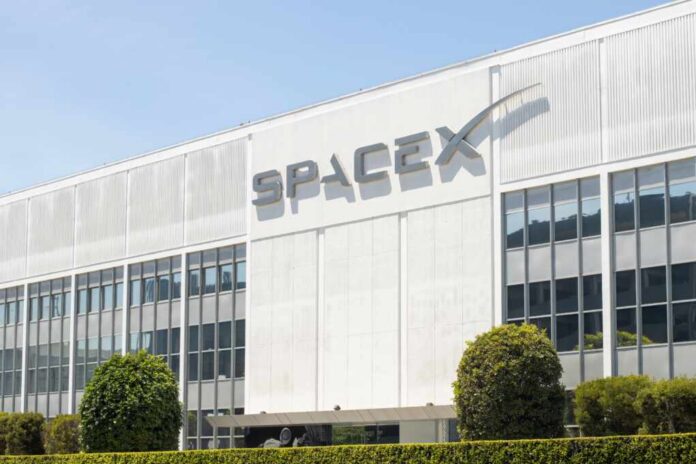
SpaceX has filed for what could be the largest initial public offering in history, targeting a valuation above $2 trillion — but a quarterly loss exceeding $4 billion buried in the fine print raises serious questions about whether AI-era hype is outrunning financial reality.
Story Highlights
- SpaceX filed for an IPO targeting a valuation above $2 trillion, with Goldman Sachs and Morgan Stanley leading the deal — potentially the largest public offering ever.
- The company reported $19 billion in 2025 revenue but also disclosed a net quarterly loss exceeding $4 billion, meaning investors are betting on future growth, not current profit.
- OpenAI and Anthropic are also expected to go public in 2026, creating a combined IPO wave that analysts estimate could represent a $4 trillion market event.
- Anthropic disclosed a projected $44 billion annualized revenue run rate and its first profitable quarter — though accounting methods that count revenue before partner cost-sharing may inflate those figures.
SpaceX Files for Historic Public Offering
SpaceX filed for a public listing on the Nasdaq exchange on May 21, 2026, with Bloomberg Television reporting the offering targets a valuation above $2 trillion. Goldman Sachs and Morgan Stanley are serving as lead underwriters, with investor marketing expected to begin within approximately two weeks of the filing. If completed at the reported valuation, the offering would surpass every previous initial public offering in stock market history, eclipsing Saudi Aramco’s 2019 listing.
The company reported $19 billion in revenue for 2025, providing a concrete financial foundation for the offering. However, Bloomberg’s May 21 coverage simultaneously disclosed a net quarterly loss exceeding $4 billion. That combination tells a straightforward story: investors are not being asked to pay for demonstrated profitability. They are being asked to price in years of future execution — on Starlink expansion, Starship payload capability, and a longer-term vision that includes what Elon Musk has described as 100 gigawatts of artificial intelligence compute capacity per year within three to four years.
Starlink Carries the Revenue Story
Analysts at ARK Invest have segmented SpaceX into four business units: Starlink satellite internet, launch services, xAI integration, and orbital compute infrastructure. ARK’s Mike Alves stated plainly that “Starlink is the revenue layer that makes the entire SpaceX vision viable.” Private secondary markets have reflected that confidence. A December 2025 tender offer on Forge Global priced SpaceX shares at $4,210 each, implying an $800 billion post-money valuation — and the Hiive private-share platform listed SpaceX stock at an estimated $1,287.50 per share with nine active orders as recently as May 23, 2026.
The wide spread between the $800 billion private-market pricing, over $1 trillion IPO-scenario estimates cited by Reuters, and the $2 trillion Bloomberg-reported filing target signals that valuation figures are still moving targets rather than settled market consensus. Capital.com, citing Reuters reporting from December 2025, noted that a full-scale flotation could raise well over $25 billion, while Business Insider reported a $75 billion capital raise as one scenario under discussion. SpaceX itself has not publicly confirmed an official IPO date or pricing range.
OpenAI and Anthropic Add Fuel to the Fire
OpenAI is expected to file confidentially for its own initial public offering, though no company-authored statement or Securities and Exchange Commission (SEC) submission has been publicly confirmed. Analyst Dan Ives, widely quoted across financial media, has described both OpenAI and Anthropic as companies expected to become long-term technology market leaders following their public listings. The combined anticipated proceeds from all three offerings — SpaceX, OpenAI, and Anthropic — have been estimated by some analysts at roughly $4 trillion in total market capitalization entering public markets.
SpaceX, OpenAI, Anthropic IPO simultaneously requires not $200B in fresh capital—it requires investors to believe in valuations that don't match cash flow. That's a bigger ask than you're stating.
— AI Signal (@AISignal_X) May 25, 2026
Anthropic’s numbers are the most striking on paper. The company disclosed a second-quarter revenue forecast of $10.9 billion and an annualized revenue run rate of $44 billion, alongside a projected operating profit of $559 million — described as the first profitable quarter recorded by any foundational artificial intelligence laboratory. That headline, however, comes with an important caveat: Anthropic’s accounting counts top-line revenue before deducting partner cost-shares, which may inflate the figures relative to standard cash-revenue reporting. Profitability also partly reflects compute spending constraints rather than structural margin improvement. Conservative investors would be wise to read the fine print before treating the headline as validated.
Real Opportunity, Real Risk
For American investors, the SpaceX story carries genuine appeal. The company is a domestic industrial champion, powering NASA missions, national security satellite launches, and a broadband network that reaches rural and underserved communities across the country. A successful public listing would give ordinary Americans a chance to own a piece of that infrastructure. But the financial reality deserves honest scrutiny: a $2 trillion valuation on $19 billion in revenue and a quarterly operating loss is a bet on execution that has not yet been fully proven, particularly given Starship’s repeated launch setbacks limiting commercial payload capacity to between 35 and 50 tons.
The broader pattern here is familiar. When transformative technology meets Wall Street, narrative often races ahead of numbers. The dot-com era demonstrated what happens when investor enthusiasm prices in decades of growth that companies cannot yet deliver. That does not mean SpaceX, OpenAI, or Anthropic will fail — their underlying businesses are real and growing. It means conservative investors should approach the hype with clear eyes, demand audited financials, and remember that the largest IPO in history is still just a filing until the market actually clears the book.
Sources:
[1] Web – SpaceX IPO: everything you need to know – Capital.com
[2] Web – SpaceX’s historic IPO filing is here. Here’s what investors should …
[3] Web – SpaceX IPO: Investment Opportunities & Pre-IPO Valuations – Forge
[4] YouTube – This $7 SpaceX Stock Could Change Lives
[5] Web – SpaceX Stock | Hiive Price $1,287.50 | Invest or Sell
[6] YouTube – SpaceX reveals IPO filing: Here’s what to know
[7] Web – SpaceX, OpenAI, Anthropic: upcoming IPOs to watch in 2026 – IG
[8] Web – Mega-IPO season is upon us – Marketplace
[9] Web – Fears and frenzy mount as SpaceX, OpenAI and Anthropic prepare …
[10] YouTube – The Biggest Opportunities in Stock Market History