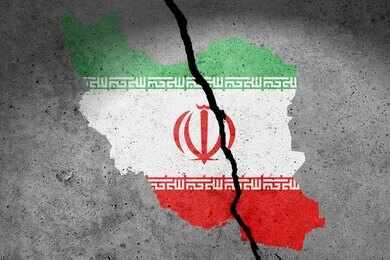
Iran’s rulers aren’t “restoring order” in 2025—they’re scaling up state killing on a historic level to frighten their own citizens into silence.
Quick Take
- Independent monitors and media reports say Iran carried out a record number of executions in 2025, with totals ranging from at least 1,639 to more than 2,200.
- Available reporting indicates the surge began well before “Operation Epic Fury,” undercutting claims that the spike was merely wartime retaliation.
- Reports describe broader geographic reach, more executions of women, and more public hangings—signs of an intimidation campaign, not routine law enforcement.
- Outside groups warn Iran’s secrecy is so extreme that the true toll is likely higher than documented figures.
Record execution claims hinge on documentation—and Iran’s secrecy
Iran’s execution surge in 2025 is being reported with two main totals: at least 1,639 executions documented by Iran Human Rights (IHR) and Together Against the Death Penalty (TADEP), and a higher figure—more than 2,200—published by the opposition-linked NCRI/PMOI network. The gap matters, but it does not erase the central fact both sides converge on: 2025 marked an extraordinary jump over 2024 and the highest level in decades amid limited official transparency.
Several sources emphasize that Iranian authorities publicly acknowledge only a small share of executions, meaning outside trackers rely on local reporting, families, and other verification channels. That reality creates uncertainty about the exact number, but it also points to a deeper problem: a government that uses the power to take life while restricting public oversight. For Americans who distrust unaccountable institutions, Iran is a stark reminder of what “state power without transparency” can look like.
The timeline shows acceleration before “Operation Epic Fury”
Early 2025 data already showed a steep rise. One report cited at least 343 executions in the first four months of 2025, a 75% increase compared with the same period in 2024, with April reaching 110 executions. Later reporting described an even sharper acceleration in the second half of the year, including claims of an unprecedented December spike. The consistent theme across sources is that the execution pace climbed before the conflict context referenced as “Operation Epic Fury.”
That sequencing is significant because it frames the executions as preemptive domestic repression, not a narrow response to external events. Multiple reports tie the surge to internal instability following years of protest waves, including the “Woman, Life, Freedom” uprising and subsequent crackdowns. Even where sources differ on rhetoric and attribution, the timeline itself suggests officials were already using maximum coercion to deter unrest—an approach authoritarian systems often choose when they fear legitimacy is slipping.
Who is targeted, and why the details alarm human-rights monitors
Reporting on 2025 includes specific indicators that monitors treat as red flags: executions spread across more cities than in prior years, increased numbers of women executed, and an uptick in public hangings. Sources also describe juveniles among those executed and minorities as disproportionately affected, with drug-related cases forming a major share of death sentences. These details matter because they suggest the death penalty is functioning not merely as punishment for isolated crimes but as a broad tool for social control.
Claims about political targeting also recur. The NCRI/PMOI reporting highlights political prisoners and dissidents, including individuals linked to opposition movements, and describes pending death sentences that could be carried out as pressure rises. Independent monitors more often emphasize the pattern—state killing rising alongside protest activity and economic strain—rather than endorsing any single opposition narrative. Still, the overlap across sources supports a reasonable conclusion: the execution machine is integrated into regime survival strategy.
What this means for U.S. policy amid war and negotiations
American debates about foreign policy often get stuck between “endless war” and “do nothing,” but Iran’s 2025 data forces a narrower question: what leverage, if any, should the West use when a government expands executions at record scale? Several reports note that NGOs want human-rights concerns—including the death penalty—treated as central in diplomacy. That approach aligns with a basic principle many Americans share across party lines: regimes that brutalize their own people shouldn’t be rewarded with legitimacy.
At the same time, the reports underscore an uncomfortable constraint—information is incomplete, and Iran’s internal decision-making is opaque. That makes it harder to design targeted pressure that avoids unintended consequences. For conservatives wary of nation-building, the practical takeaway is not a call for open-ended intervention; it is a call for clarity: verify claims, track trends, and avoid wishful thinking about reform signals that are not supported by measurable changes in behavior, like execution totals.
Why the execution surge resonates beyond Iran’s borders
Iran’s execution spike also speaks to a broader trend many voters sense at home and abroad: entrenched elites protect themselves first. In Iran, the tools are overt—courts, prisons, hangings—used to frighten the public into compliance. In freer societies, the methods are subtler, but the public’s frustration with unresponsive institutions is real. The Iranian case is an extreme example of what happens when government power expands while accountability shrinks.
Iran's Executions Explode to Record High in 2025 — Surge Predated Operation Epic Furyhttps://t.co/7jImagIca1
— RedState (@RedState) April 14, 2026
For readers trying to make sense of daily headlines, the key is separating what is known from what is asserted. The best-sourced point here is the surge itself: multiple outlets and monitors describe 2025 as a record year, with a steep year-over-year increase. The exact total remains disputed, but the direction and scale are not. If 2026 brings further instability, the most defensible expectation—based on the pattern described—is that Tehran’s leaders will rely even more on coercion unless constrained by internal resistance or external pressure.
Sources:
Iran marks more than 2200 executions in 2025, unprecedented high in Khamenei’s 37-year criminal rule
Iran Sees 75% Increase in Executions During First Four Months of 2025 Over 2024
Iran executed at least 1,639 people in 2025, highest amount in decades
Iran executed at least 1,639 people in 2025 in 68% increase on year before, NGOs say