In downtown Memphis, two National Guard soldiers fatally shot a 20‑year‑old man during a police chase, deepening a national debate over using troops as street cops in American cities.
Story Snapshot
- National Guard soldiers on a crime task force joined Memphis police in chasing an armed man who was later shot and killed.
- Officials say Tyrin Johnson had a handgun and fired shots before the chase, but key details of the shooting remain unverified while investigators gather evidence.
- The Guard troops are part of the Memphis Safe Task Force, a deployment a Tennessee judge has already ruled unlawful, raising legal and constitutional questions.
- The case taps into wider fears on the left and right that “elite” leaders use military‑style policing to manage crime instead of fixing deeper social and economic problems.
What Officials Say Happened in Downtown Memphis
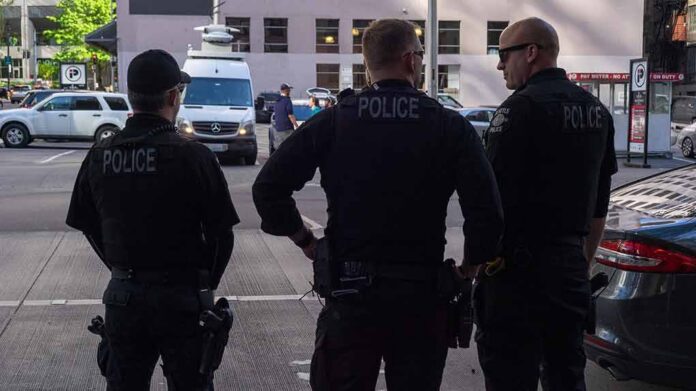
Tennessee state investigators say Memphis police officers were chasing a man who was armed with a handgun in downtown Memphis when the shooting happened. The man was identified as 20‑year‑old Tyrin Johnson, and officials say he had reportedly fired shots in the area before the pursuit began. National Guard soldiers assigned to the Memphis Safe Task Force were already nearby on patrol and joined the chase on foot. During that chase, two soldiers fired their weapons, and Johnson died at the scene.
Reports based on police statements say Johnson “turned toward the soldiers with a gun” just before they opened fire. That description has shaped early media coverage, with some outlets framing the shooting as a response to an “imminent threat” from an armed suspect. No law enforcement officers were hurt during the incident. The Tennessee Bureau of Investigation (TBI) took over the case, which is standard in shootings involving police or state‑deployed personnel in Tennessee.
What We Still Do Not Know About the Shooting
Despite the strong official narrative, several core facts remain unconfirmed. National Public Radio (NPR) notes that “what happened next was not immediately clear” and points out that the claim about Johnson turning toward soldiers with a gun appears in police accounts but is missing from the TBI’s public statement. No body camera video, dash camera footage, or audio recordings have been released that could show the moment when soldiers fired. So far, investigators have not shared forensic evidence, such as ballistics tests, to prove Johnson fired earlier shots.
Officials also have not released the names of the National Guard soldiers involved, which makes it harder for the public to assess their training, records, or statements. Johnson’s family and community advocates are expected to question whether deadly force was truly necessary, but at this point they have not offered detailed evidence that contradicts the basic timeline of the chase. The District Attorney General, Steve Mulroy, has not yet announced whether he will rule the shooting justified, leaving both supporters and critics waiting for a final legal judgment.
Why National Guard Patrols in Memphis Are So Controversial
This shooting did not happen in a vacuum. It took place under a Trump‑era policy that sent National Guard troops into Memphis as part of a larger crime‑fighting push. The Memphis Safe Task Force combines local police, federal agents such as the Federal Bureau of Investigation (FBI), and Tennessee National Guard soldiers to patrol high‑crime areas and respond to shootings. Tennessee’s governor backed the deployment, but a state judge later ruled the Guard’s role in this city crime operation unlawful, saying it violated legal limits on military involvement in civilian policing.
National Guard units are built to respond to emergencies and help communities during floods, storms, and wars, not to act as regular street police. Most Guard troops do not receive the same law enforcement training that city officers do, especially on de‑escalation, local procedures, and civil rights. Legal experts warn that using troops for day‑to‑day crime control walks close to the line drawn by the Posse Comitatus Act, which bars federal military forces from civilian law enforcement unless Congress clearly allows it. Even when Guard members are under state control, heavy use in policing raises fears of a slow slide toward a more militarized society.
Crime, Community Fear, and a System Most Americans No Longer Trust
Memphis is one of many cities struggling with gun violence and deep poverty, and both factors drive tension between residents and law enforcement. Research shows that states with higher gun ownership have much higher rates of civilians killed by police, largely because more confrontations involve firearms. In neighborhoods like South Memphis, young Black men face violent death rates far above national averages, which fuels both demands for strong security and anger over repeated killings and arrests.
To many conservatives, the Guard patrols look like overdue action after years of “soft‑on‑crime” policies and unchecked shootings. To many liberals, they look like proof that leaders would rather send soldiers into poor communities than invest seriously in jobs, schools, addiction care, and housing. Both sides increasingly agree on one thing: federal and state elites seem more focused on optics than on fixing the broken pieces of the system. When a 20‑year‑old dies at the hands of soldiers on American streets, and basic facts remain hidden, it confirms a growing fear that the government’s answers to crime are both heavy‑handed and unaccountable.
Sources:
washingtontimes.com, tbinewsroom.com, abcnews.com, pbs.org, npr.org, indiatoday.in, facebook.com, war.gov, cfr.org, protectdemocracy.org, pmc.ncbi.nlm.nih.gov, csis.org, brennancenter.org, youtube.com