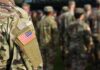


At the very moment many Americans doubt Washington’s priorities, the U.S. military has quietly posted its strongest recruiting numbers in 15 years.
Story Snapshot
- All five active-duty branches met or beat their fiscal 2025 recruiting goals, averaging about 103% of mission.
- The Army, Navy, Air Force, Marine Corps, and Space Force all hit targets after years of shortfalls and worry about a “recruiting crisis.”
- Recruitment jumped roughly 12.5% in 2024, then surged again in 2025, signaling a real break from the 2022 low point.
- Stronger pay, new training pipelines, and harder economic times—not just politics—appear to be driving the turnaround.
Record recruitment after years of shortfalls
Pentagon data for fiscal year 2025 shows the U.S. military achieved its best recruiting performance in about 15 years, with every active-duty branch meeting or exceeding its annual target. The Army set a goal of 61,000 new soldiers and signed 62,050 enlistment contracts, slightly above mission. The Navy aimed for 40,600 sailors and brought in 44,096, while the Air Force reached 30,166 against a 30,100 goal. The Marine Corps hit its 26,600 target exactly, and the Space Force passed its mark with 819 recruits.
Taken together, the five main services averaged roughly 103% of their active-duty recruiting mission in 2025, a level the Defense Department describes as the strongest in a decade and a half. This rebound comes after a deep slump in 2022, when overall enlistment hit a 40‑year low and the Army missed its goal by about a quarter. Analysts note that while 2025’s numbers are impressive, they largely represent a return to historical norms rather than a sudden, unexplained boom.
What changed between the recruiting crisis and the comeback?
Defense officials say the turnaround did not start overnight in 2025, but built over several years of changes to how the services recruit and train new personnel. Between 2023 and 2024, total accessions rose about 12.5%, from roughly 200,000 to 225,000 across the force, as new programs and incentives took hold. The Army’s Future Soldier Preparatory Course, launched in 2022, helped borderline applicants improve fitness and test scores so they could qualify without lowering standards. Other branches expanded bonuses and updated marketing to reach young people more effectively.
Economic pressure also played a role. Civilian employers have cut back in some regions, and inflation has made stable pay and benefits look more attractive, especially to working‑class families. Higher base pay, reenlistment bonuses, and better education benefits created a clearer “value proposition” for service compared to retail or gig economy jobs. At the same time, the Pentagon poured more money—about billions over several years—into recruiting and retention, funding more recruiters, digital outreach, and partnerships with schools. These steps helped rebuild the pipeline that collapsed during the COVID‑19 pandemic.
Patriotism, politics, and the ‘America First’ narrative
Trump administration officials and supporters have loudly tied the recruiting surge to a renewed focus on a “warrior ethos” and an America First message, claiming that young people are more willing to serve under strong nationalistic leadership. Some conservative commentators argue that rolling back diversity and inclusion programs and rebranding the force as tough and unapologetically patriotic made service more appealing. Many older conservatives, frustrated by years of what they see as “woke” policies, view the numbers as proof that the country is finally rewarding traditional values of duty and sacrifice.
However, nonpartisan analysts caution against giving any one politician or party full credit. They point out that the recruiting momentum actually began in early 2024, during the final year of the previous administration, when reforms and incentives first started to show results. Data from USAFacts and Defense Department statements show the services were already on track to meet or exceed 2025 goals before the latest round of political messaging. In this reading, long‑planned policy changes, not sound bites, drove most of the improvement.
Why this matters to Americans who distrust Washington
For many Americans on both the right and the left, the recruiting surge lands in a strange moment. People see a federal government that feels slow, distant, and often captured by elites, yet they also see tens of thousands of young men and women still willing to raise their hand and serve. The fact that the services had to work so hard—offering bigger pay, better training support, and smarter outreach—underscores how difficult it has become to convince ordinary citizens that institutions deserve their trust.
The numbers also raise hard questions. Strong recruiting does not automatically mean the force is ready, since there is no standard public metric for how long it takes new recruits to become fully mission‑capable. Reserve components, especially the Army Reserve, still fall short of their goals, suggesting the recovery is uneven. And demographic trends, including fewer teenagers and widening economic divides, threaten to squeeze the pool of potential recruits in coming years. In other words, the 15‑year high is real—but keeping it going will demand more than headlines or partisan victory laps.
Sources:
facebook.com, washingtontimes.com, militarytimes.com, youtube.com, fox.com, reddit.com, instagram.com, pmc.ncbi.nlm.nih.gov, usamm.com, usafacts.org, recruiting.army.mil