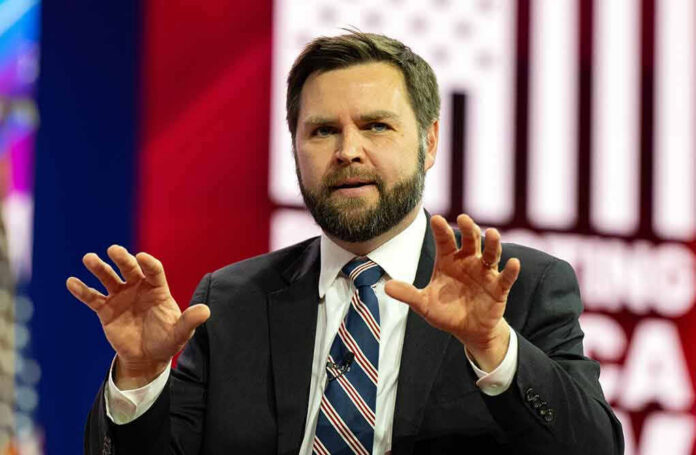
Vice President JD Vance framed the 2026 midterms as a fight for “common sense” while rallying Republicans in battleground Iowa.
Story Highlights
- Vance headlined a Republican midterm rally in Council Bluffs, Iowa, on Sept. 18.
- Reports say he pitched the election as “common sense” versus “crazy,” a theme he used in recent stops.
- The visit targeted tight Senate and House races as Iowa reemerged as a battleground.
- The message fits a wider populist tactic that simplifies complex issues into a stark choice.
Vance rallies Republicans in Council Bluffs ahead of tight races
Vice President JD Vance traveled to Council Bluffs, Iowa, on Sept. 18 to headline a Republican rally at the Mid-America Center as the midterm campaign intensified. National and local outlets listed the event as a key stop as Iowa again appeared competitive on the Senate and House maps. Coverage described the visit as part of a push to boost turnout in races seen as close, with Republican leaders treating Iowa as newly in play late in the cycle.
Published reporting said Republicans cast the fall campaign as a test of “common sense” politics against opponents they called “crazy,” echoing Vice President Vance’s recent language leading into the event. Townhall quoted Vance days earlier urging voters to “send these people packing,” and portraying the election as a choice between normal priorities and policies he rejects as extreme. News accounts from the rally day emphasized the theme but did not carry a full transcript of the Council Bluffs speech.
Why Iowa and why now: the strategic map behind the stop
Reuters reported that Republicans view Iowa as a battleground this year, citing competitive congressional contests and high interest in the Senate race. The Washington Examiner also framed Vance’s visit as an effort to shore up a toss-up Senate contest and several tight House races that could shape control and momentum heading into the final campaign stretch. That map explains why a sitting vice president would spend time rallying activists in a state once seen as safely Republican.
Earlier in 2026, Vance used similar language while visiting Des Moines, where he praised Republican candidates as champions of working-class concerns and daily costs that strain family budgets. Those remarks previewed the fall line by focusing on price pressure, border issues, and public safety as “kitchen table” stakes. By repeating the “common sense” frame across multiple Iowa stops, the vice president aimed to offer voters a simple test for campaign choices without diving deep into policy detail.
How the “common sense” frame works — and what it leaves out
Scholars say appeals to “common sense” are common in modern populist politics because they turn complex debates into a moral choice that feels obvious to many voters. Research finds these messages often set “ordinary people” against an out-group, and present a leader’s views as the only sensible path. This strategy can energize supporters who feel ignored by elites, but it can also reduce room for debate on facts and trade-offs that policies often require.
VANCE CAMPAIGNS IN IOWA AS REPUBLICANS FACE TIGHT MIDTERM RACES
Vice President J-D Vance will be in Iowa today to campaign for Republicans facing tough midterm challengers.
NewsNation's Alex Caprariello is in Council Bluffs…: “The likely 2028 Republican presidential candidate…— Worldwide News Network (@WorldwideNNX) September 18, 2026
Applied to Iowa’s midterms, the “common sense” pitch aims to link issues like prices, border enforcement, and crime to a broader identity test. That approach can motivate both conservatives who dislike past “woke” or globalist ideas and liberals who fear cuts to social programs or harsh immigration actions. It speaks to cross-partisan frustration that government is not working, even as it channels anger toward political rivals. That makes it powerful in a tight race, and polarizing in its tone.
What to watch as Iowa votes approach
Voter response will show whether simplicity beats detail in the final weeks. Campaigns that hinge on a short theme can drive turnout, but they also risk backlash if opponents counter with local facts or targeted promises. In Iowa, the outcome may turn on which side better connects that “common sense” idea to concrete steps on energy costs, border security, farm policy, and healthcare access that families feel in daily life.
Sources:
facebook.com, rmb.reuters.com, thehill.com, pbs.org, desmoinesregister.com, yahoo.com, washingtonexaminer.com, youtube.com, redstate.com