

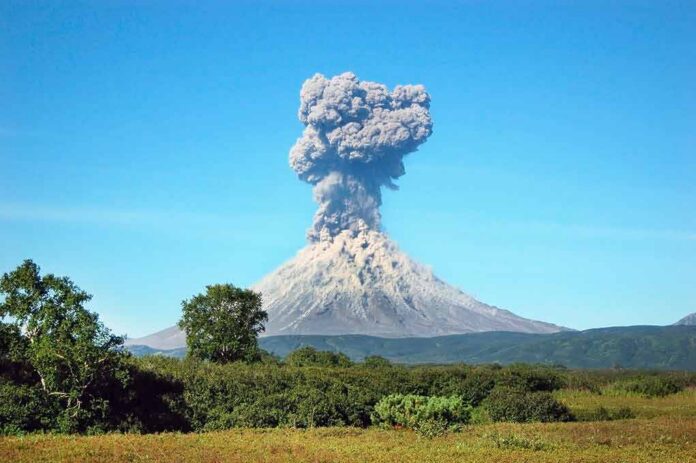
Volcanic ash from Indonesia’s Anak Krakatau volcano shut down the country’s busiest airport and grounded hundreds of flights, stranding travelers and closing schools across western Indonesia.
Story Snapshot
- Soekarno-Hatta International Airport in Jakarta suspended all flight operations after ash from Anak Krakatau reached the runway.
- Indonesia’s transportation ministry confirmed the volcano had been erupting since late Friday, with ash detected at the airport early Sunday.
- Five airports across the region halted operations, and major carriers including Singapore Airlines and Scoot canceled multiple flights.
- Schools and fishing activity near the volcano were also suspended as officials tracked the eruption’s spread.
Ash Cloud Forces Jakarta’s Main Airport To Shut Down
Soekarno-Hatta International Airport posted on Instagram that it had suspended flight operations until 9:30 a.m. local time on Sunday. That announcement extended an earlier halt that was supposed to end at 5:30 a.m. The airport cited volcanic ash from the ongoing eruption of Mount Anak Krakatau as the reason for the extended shutdown, which affected hundreds of scheduled flights.
Indonesia’s transportation ministry said Anak Krakatau had been erupting since late Friday night. Ash from the volcano reached Jakarta’s airport early Sunday morning, prompting the closures. The eruption also forced authorities to halt some school activities and fishing operations in areas near the volcano as a precaution against health risks tied to falling ash.
Five Airports Close As Airlines Cancel Flights
The disruption spread beyond Jakarta. Five airports across the region suspended flight operations because of the ash cloud. Major international carriers, including Singapore Airlines and its budget arm Scoot, canceled multiple flights to and from Indonesia. The closures left passengers stuck at terminals as airlines scrambled to reroute or delay departures until conditions improved.
Indonesian officials have handled similar Anak Krakatau eruptions before. In past events, the country’s disaster management agency raised alert levels and imposed exclusion zones around the volcano while air-traffic control rerouted flights entirely around the danger area. The current shutdown follows that same playbook of grounding planes first and reassessing risk once ash levels drop.
Why Airlines Treat Volcanic Ash As A Serious Threat
Volcanic ash is not ordinary dust. It is made of tiny, hard fragments of glass and rock that melt inside jet engines at normal operating temperatures. The ash can sandblast aircraft exteriors, cloud cockpit windows, and cause engines to lose power mid-flight, according to atmospheric researchers who study the hazard.
International aviation regulators follow a strict standard: avoid volcanic ash entirely whenever possible. There is no universally agreed safe concentration of ash for jet engines, so airports and air-traffic agencies often choose the most cautious option and shut down completely rather than risk a plane encountering an unseen ash cloud at cruising altitude.
About 170,000 passengers were left stranded on Sunday as Indonesia shuttered its main international airport and seven others, cancelling hundreds of flights after Mount Anak Krakatoa spewed a plume of volcanic ash and lava from more than 150 kilometres away.…
— Jamaica Observer (@JamaicaObserver) September 6, 2026
Government scientists in the United States have documented cases where ash clouds caused engine failures on aircraft flying hundreds of miles from the source volcano, even when the cloud looked thin from the ground. That history explains why Indonesian authorities moved quickly to ground flights rather than wait to measure the ash concentration in real time.
Sources:
mirror.co.uk, bbc.com, reuters.com, abc.net.au, arabnews.com, sto.nato.int, skybrary.aero