Melania Trump just tried to shut down Epstein rumors in one blunt White House statement—while daring Congress to put the real victims under oath.
Quick Take
- First Lady Melania Trump delivered a rare on-camera White House statement on April 9, 2026, denying any personal ties to Jeffrey Epstein.
- Melania described online claims and fake images as “lies” and “defamatory,” saying she met Epstein only once, briefly, at a 2000 social event.
- She acknowledged an email exchange with Ghislaine Maxwell cited in released “Epstein files,” but characterized it as casual social correspondence.
- Melania rejected claims she was a victim or witness and called for congressional hearings so Epstein’s victims can testify under oath.
A rare White House statement aimed at ending a growing online smear
Melania Trump appeared in a surprise on-camera statement from the White House on April 9, 2026, addressing rumors linking her to Jeffrey Epstein. She denied any friendship, relationship, or awareness of Epstein’s crimes and said the claims circulating online have crossed into defamation. Multiple outlets described the moment as unusual because first ladies rarely respond directly to viral accusations, especially in a formal White House setting.
Melania’s core factual claim was narrow and specific: she said she crossed paths with Epstein only once, in 2000, at a social event she attended with Donald Trump. She also said Epstein did not introduce her to Trump, pushing back on a common insinuation that elite networking played a central role in her relationship. Reports emphasize that the statement was recorded and distributed as clips, not described as a live broadcast.
What the “Epstein files” email does—and doesn’t—establish
The immediate spark for the renewed attention appears tied to recently resurfaced “Epstein files” material that included an email involving Melania and Ghislaine Maxwell. Melania referenced that email herself, portraying it as a polite, casual reply to a social note rather than evidence of any relationship. Based on the available coverage, the email’s existence is treated as confirmed, while broader claims about deeper involvement are not supported in the cited reports.
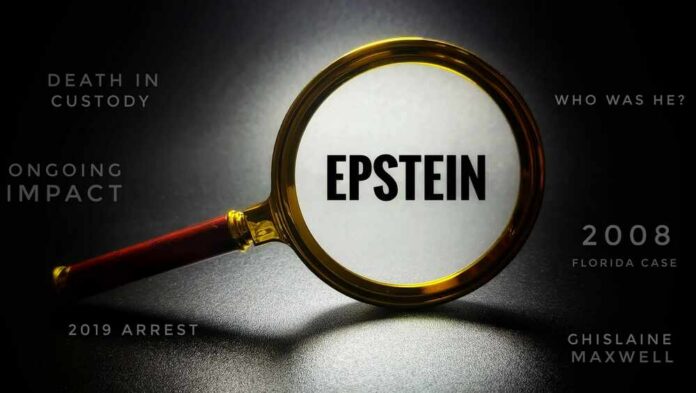
That distinction matters because the Epstein story has long been fueled by guilt-by-association logic that often sweeps up public figures who moved through the same New York and Palm Beach social circles in the 1990s and early 2000s. Epstein’s known criminal conduct, conviction, and later death in 2019 remain the backdrop, but the current reporting does not present independent documentation that Melania was part of Epstein’s criminal world—only that her name surfaced in connection with a limited social contact.
Her pivot to Congress: a demand for public testimony from victims
Melania’s statement did more than deny allegations; it also tried to redirect attention to accountability for Epstein’s crimes. She called for congressional hearings that would allow Epstein’s victims to testify under oath. That request aligns with a broader public frustration—on the right and left—that powerful institutions often manage scandal through selective leaks and closed-door processes rather than transparent fact-finding that centers victims and verifiable evidence.
At the same time, the research available here does not show whether Congress has responded or whether any hearing has been scheduled. The reporting also lacks detail on which committee would have jurisdiction or what witness list might look like. That uncertainty leaves the moment in a familiar place for many Americans: a high-profile controversy re-enters the news cycle, while concrete next steps depend on lawmakers who are frequently accused of prioritizing political theater over durable answers.
Why this story resonates in 2026’s mistrust climate
Media coverage noted that Melania’s approach diverged from President Trump’s style, underscoring the unusual nature of her direct engagement. For conservatives frustrated by “elite” double standards, the Epstein saga has become a symbol of how well-connected people can evade full scrutiny for years. For liberals, the same saga reinforces concerns about inequality and the protection powerful circles receive. In that environment, even thinly supported rumors spread fast.
Without additional primary documentation beyond her statement and the acknowledged email, the strongest verified facts in the research are limited: Melania’s denial, her account of a single encounter, confirmation that an email appears in released materials, and her call for victim-centered hearings. The broader takeaway is institutional: when trust is low, reputations and narratives can be shaped by viral content faster than sworn testimony. Melania’s challenge to Congress raises a simple test—whether Washington will pursue public, on-the-record clarity.
Sources:
Melania gives statement on Jeffrey Epstein, diverging from Trump