Trump’s “whole civilization will die tonight” warning shows how a single presidential post can put the world on notice—and push a Middle East conflict toward a make-or-break deadline.
Quick Take
- President Trump warned on Truth Social that “a whole civilization will die tonight” if a ceasefire with Iran was not reached by an 8 p.m. deadline on April 7.
- The warning landed amid an ongoing U.S.-Iran conflict that began with joint U.S.-Israeli strikes in February 2026, and amid reports of a fresh, intense wave of strikes.
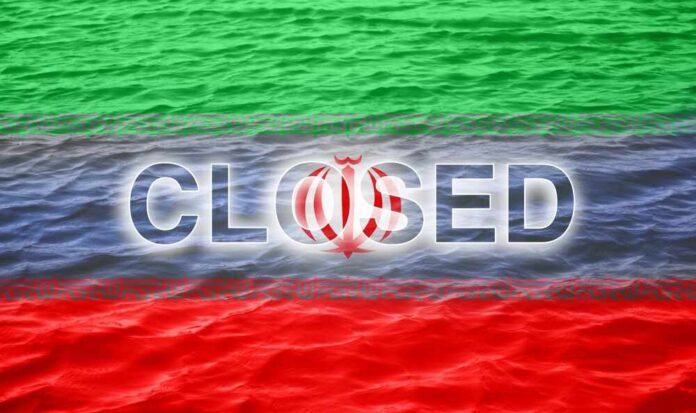
- Iran’s closure of the Strait of Hormuz—through which roughly 20% of the world’s oil transits—raised the economic stakes and shaped Trump’s ceasefire conditions.
- Politico reported Pentagon planners were revising target lists to include energy sites that serve civilians and the military, a shift that could intensify legal and humanitarian scrutiny.
Trump’s deadline message puts “maximum pressure” into a single sentence
President Donald Trump used Truth Social on April 7 to warn that “a whole civilization will die tonight” if a ceasefire deal was not reached by an 8 p.m. deadline. NBC News and Politico both reported the quote and Trump’s claim that he did not want that outcome but believed it was likely. The statement reflected Trump’s preference for direct, public leverage—especially when he believes the clock is the only language adversaries respect.
The available reporting does not spell out the full operational meaning of the phrase “whole civilization,” and no public casualty or damage estimates were provided in the cited coverage. What is clear is that the White House message was designed to compress diplomacy and deterrence into hours, not weeks. For supporters, that kind of blunt clarity signals resolve. For critics, it raises the risk of miscalculation when adversaries must interpret high-stakes rhetoric in real time.
The war’s immediate trigger: strikes, retaliation, and the Strait of Hormuz choke point
The conflict’s current phase began in February 2026 with joint U.S.-Israeli strikes against Iran, according to Politico. Trump administration statements cited by NBC News said the U.S. has hit more than 13,000 targets in Iran. Iran responded by closing the Strait of Hormuz, a strategic waterway that carries about 20 percent of the world’s oil transit. That closure immediately fused national security goals with household economics, including fuel prices and inflation pressures.
Trump publicly linked a ceasefire to reopening the strait, according to Politico’s reporting. He also criticized allies, including NATO partners, for what he framed as insufficient support for reopening the passage. For an America First administration, the policy logic is straightforward: global energy disruptions land on U.S. consumers, and the federal government gets blamed either way—if it escalates overseas or if it “does nothing” while prices spike. That political reality is shaping the messaging.
Infrastructure targeting and the legal line the Pentagon has to navigate
Politico reported that Trump’s threats explicitly referenced bridges, desalination plants, and energy targets, and that Pentagon war planners were revising target lists to include energy sites that provide fuel for both civilians and the military. The reporting described this as a potential workaround to avoid war-crime accusations, highlighting how modern war planning often involves lawyers and optics alongside strategy. The administration also communicated conditions on when infrastructure strikes would occur.
Politico’s account said the administration clarified that strikes on energy and infrastructure targets would not happen “until the Iranians either make a proposal that we can get behind or don’t make a proposal,” with the deadline set for Tuesday at 8 p.m. That kind of conditional posture matters because it signals a negotiating framework, not just a threat. At the same time, hitting systems used by civilians can produce cascading humanitarian effects, which is why the details matter.
Truth Social, tech retreat, and a new era of unfiltered presidential signaling
Politico framed Trump’s Truth Social use as an escalation compared with his first term, when major platforms still maintained at least nominal moderation policies. The reporting cited tech consultant Nu Wexler arguing companies pulled back not from a principled free-speech shift, but because enforcing rules against Trump became politically costly. The same piece quoted Crystal Patterson, a former Facebook executive, saying Truth Social is doing what Trump built it to do: transmit his message directly.
BREAKING: President Trump addresses his social media post warning that a "whole civilization" could die in Iran, arguing that the comment brought the regime back to the bargaining table.
"I told my people, I want everything. I don't want 90%, I don't want 95%. I told them I want… pic.twitter.com/rFszAqUikY
— Fox News (@FoxNews) April 12, 2026
The larger takeaway is not partisan: public, instantaneous presidential communication is now a major instrument of statecraft, and Americans are left to parse it without the buffer of formal briefings or institutional language. Conservatives often value transparency and strength, but they also tend to distrust unaccountable institutions—whether government bureaucracies or tech gatekeepers. This episode highlights both tensions at once: a presidency using direct communication to project power, and a system where the public still lacks key facts about outcomes.
Sources:
Trump social media power growing