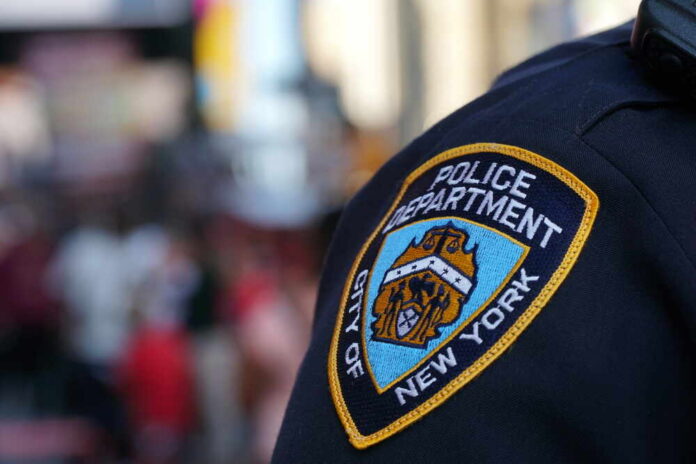
A Midtown street attack targeting visibly Jewish New Yorkers is back in the spotlight—raising fresh questions about whether America’s biggest city can still guarantee basic public safety amid rising political and religious tensions.
Quick Take
- NYPD treated a January 2025 assault on three Jewish men near Herald Square as a hate crime after victims reported antisemitic slurs.
- Police identified and arrested Mohamad Soumah of Queens after surveillance footage circulated, with prosecutors seeking hate-crime enhancements.
- As of April 2026, the case remained headed toward trial in Manhattan, with jury selection expected in May 2026, according to the research summary.
- The incident landed in a broader post–Oct. 7 environment where New York has reported major increases in antisemitic incidents and added security costs.
What happened near Herald Square—and why it drew a hate-crime designation
Police and witnesses said the assault happened around 7:30 p.m. on Jan. 9, 2025, near West 34th Street and Seventh Avenue in Midtown Manhattan. The victims were described as visibly Jewish, wearing kippahs, and were reportedly punched and kicked during an unprovoked attack. Victims said the attacker shouted antisemitic slurs, a key reason NYPD handled the case as a hate crime rather than routine street violence.
Maniac in Iranian flag T-shirt pummels three Jewish men in NYC hate crime: sources https://t.co/XetI2wcOrp pic.twitter.com/3seh63x9AL
— New York Post (@nypost) April 27, 2026
Surveillance video reportedly showed the suspect fleeing, and the New York Post’s coverage said investigators quickly used footage and investigative work to identify the attacker as Mohamad Soumah, 28, of Queens. The same reporting placed the arrest late on Jan. 10, 2025, one day after the assault. The victims’ injuries were described as bruises and cuts, and they were treated at the scene rather than transported with life-threatening injuries.
Where the case stands in 2026: charges, bail, and the upcoming trial timeline
Court proceedings have stretched well beyond the initial headlines. The research summary says Soumah was arraigned on Jan. 13, 2025, on three counts of assault along with hate-crime enhancements, and he pleaded not guilty. Bail was denied, and pre-trial motions continued into late 2025. By April 2026, the report described the hate enhancement as still upheld, with jury selection scheduled for May 2026.
Prosecutors and defense attorneys have previewed conflicting narratives that are typical in hate-crime cases, where motive must be established beyond the act itself. The research notes a March 2026 prosecution statement pointing to “clear antisemitic motive via attire/slurs,” while the defense argued mental health issues rather than hate. A psychological evaluation referenced in the report said the case did not support an insanity defense, narrowing the legal lanes heading into trial.
The bigger trend: antisemitism, public disorder, and the cost of “managing the chaos”
The incident landed in a city already dealing with a documented surge in antisemitic incidents after Oct. 7, 2023. The research cites NYPD data indicating a sharp rise in antisemitic attacks and cites ADL reporting of thousands of antisemitic incidents nationally across 2023–2024, with a heavy concentration in the New York metro area. That matters politically because “quality of life” and basic safety—subways, sidewalks, neighborhoods—often drive voting more than rhetoric.
Security responses also come with price tags that taxpayers eventually absorb. The research summary describes heightened vigilance in the Jewish community, including increased synagogue security, plus additional city security costs during 2025. Even when leaders condemn attacks and pledge initiatives, residents notice the gap between slogans and outcomes. That gap fuels a familiar, bipartisan frustration: regular people are told to keep calm while institutions struggle to stop repeat patterns of street-level intimidation.
Why this case resonates beyond one defendant: importing conflicts vs. protecting Americans at home
The attacker’s reported Iranian flag T-shirt turned a local assault into a symbol-laden story about how overseas conflicts spill into American public life. The research notes uncertainty about definitive “Iran ties” beyond attire and alleged social media activity, which is important: a courtroom conviction should rest on evidence, not innuendo. At the same time, the victim-centered reality remains simple—Americans should not need political context to walk safely in a major city.
For conservatives, the immediate concern is straightforward: enforcing the law consistently, keeping violent offenders off the street, and rejecting double standards that treat antisemitism as a lesser offense. For many liberals, the concern is also straightforward: preventing discrimination and violence while avoiding broad-brush backlash against communities not responsible for an attack. The shared bottom line is accountability—public safety cannot depend on which group is targeted or which narrative is trending.
Sources:
Maniac in Iranian flag T-shirt pummels three Jewish men in NYC hate crime: sources