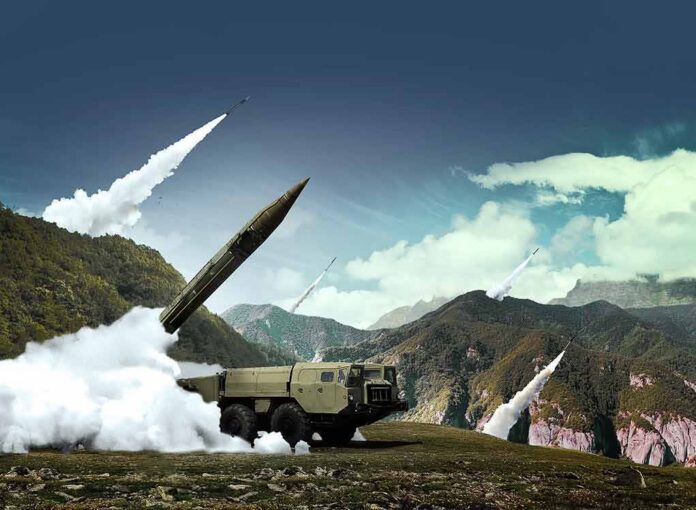
North Korea says it fired an intermediate-range missile with onboard artificial intelligence as Kim Jong Un watched, signaling a faster, smarter threat to U.S. allies in Asia.
Story Snapshot
- Kim Jong Un oversaw a launch of an intermediate-range strategic missile from Wonsan, North Korea.
- Kim Yo Jong said the missile used artificial intelligence and could change course at low altitude.
- State media framed the event as a firing drill in the East Sea, also called the Sea of Japan.
- North Korea tied this test to a broader push to add “AI-guided” features to missiles this year.
What Pyongyang Announced
North Korean outlets reported that Kim Jong Un personally observed a firing drill from Wonsan on the east coast. The drill featured an intermediate-range strategic missile, a class able to reach targets in the Western Pacific. Kim Yo Jong, his sister and key aide, said the missile used artificial intelligence. She also said it could change its flight path at a low altitude, which can make tracking and interception harder.
Reports placed the drill over the East Sea, also known as the Sea of Japan. The description matches prior launches North Korea uses to test regional strike options. The announcement focused on maneuver at low altitude, which is a feature linked to evading missile defenses. The claim drew rapid pickup across global wire services and regional press, which cited the state media accounts and her statement on the test’s purpose and capability.
Why “AI in Missiles” Matters
Artificial intelligence can help a missile adjust to new data in flight. That might include route updates, target recognition, or terminal guidance. Even partial automation can reduce reaction time and raise the cost for defenses. North Korea’s message highlights this edge. It says the missile changed course at low altitude with help from onboard software. Such maneuvering, if reliable, could challenge regional detection and tracking by shortening warning windows.
North Korea has spent 2026 talking up similar technology across its arsenal. Earlier reports said the country tested “AI-guided” cruise missiles and improved navigation. These actions were presented as part of a modernization drive under Kim’s direct oversight. The language suggests a consistent theme: smarter weapons that are harder to stop and more precise at the end of flight. Those tests were also described through state media channels and repeated by major outlets.
Regional and U.S. Stakes
An intermediate-range system with maneuvering flight would put pressure on South Korea and Japan. Both rely on layered air and missile defense. Low-level course changes can stress those defenses and complicate engagement planning. The United States keeps forces and assets in the region to back its allies. Any step that shortens response time or clouds tracking raises risk. That risk is higher if the system can fly under radar horizons longer and vary its path late in flight.
🚀 North Korea test-fired an intermediate-range ballistic missile under Kim Jong Un's supervision. Pyongyang claims AI-guided evasive flight; Seoul says it flew 700+ km. (via Reuters, AP)
— Flashline News (@Flashline_News) October 4, 2026
The timing also fits a long pattern. North Korea often pairs technical messages with political aims. Weapons news can deter rivals, drive attention, and signal resolve. In this case, the state narrative underscores leadership control and rapid progress. Major outlets carried those claims quickly, echoing the specific point about low-altitude maneuver and onboard intelligence. A brief caveat is that outside analysts have not published open telemetry that shows how the software worked during the drill.
What To Watch Next
Allies will look for tracking data that hints at flight profile and altitude bands. Analysts will scan for radar plots, infrared traces, and debris or imagery that reveal guidance hardware. Future tests may show repeatable course changes or new terms that narrow what “artificial intelligence” means here. Observers will also compare this event with May’s “AI-guided” cruise missile claims to judge whether North Korea is scaling a single software stack across different platforms.
Sources:
insiderpaper.com, aa.com.tr, brusselstimes.com, independent.co.uk, breitbart.com, military.com