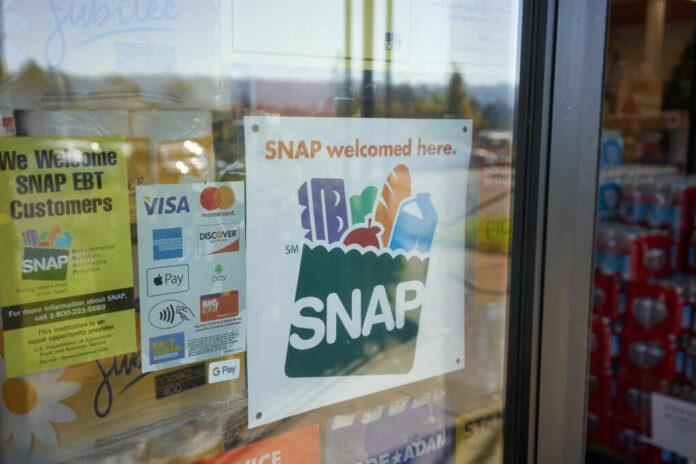
A federal lawsuit is now trying to turn a “health” tweak to food stamps into a court-ordered rollback—raising fresh questions about who sets the rules for taxpayer-funded benefits.
Quick Take
- Five SNAP recipients sued USDA in Washington, D.C., challenging waivers that restrict certain sugary items in 22 states.
- The waivers, tied to the “Make America Healthy Again” push, limit SNAP purchases of items such as sugary drinks, candy, energy drinks, and prepared desserts.
- Plaintiffs argue the waivers violate the Administrative Procedure Act and the Food and Nutrition Act by creating arbitrary bans without proper process.
- The case could shape whether SNAP rules remain nationally uniform or become a state-by-state patchwork.
Lawsuit Targets USDA Waivers Spreading Across 22 States
Five SNAP recipients from Colorado, Iowa, Nebraska, Tennessee, and West Virginia filed suit on March 11, 2026, in U.S. District Court for the District of Columbia against the U.S. Department of Agriculture. The complaint challenges USDA-approved waivers that restrict what SNAP benefits can buy in 22 states as of March 4. The lawsuit seeks to block the restrictions and invalidate the waivers, putting the Trump administration’s new policy direction under immediate judicial review.
The restrictions focus on categories described in reporting as sugary drinks, candy, energy drinks, and prepared desserts. The administration links the waivers to a broader “Make America Healthy Again” initiative, endorsed by USDA Secretary Brooke Rollins and HHS Secretary Robert F. Kennedy Jr. Supporters frame the effort as an attempt to reduce junk-food consumption with taxpayer assistance, while opponents argue the definitions are vague and could sweep in items with practical dietary uses.
What Plaintiffs Claim: Process, Definitions, and “Arbitrary” Lines
The plaintiffs are represented by the National Center for Law and Economic Justice, which argues USDA’s approach breaks federal law by rewriting what counts as eligible “food” without the required safeguards. Their core claims rely on two pillars: the Administrative Procedure Act and the Food and Nutrition Act of 2008. The lawsuit alleges the waivers create arbitrary prohibitions without proper notice-and-comment procedures, and that the resulting rules are unpredictable for families trying to budget groceries within a fixed benefit.
Advocates for the plaintiffs also stress practical fallout at the checkout counter. Retailers, they argue, must enforce complicated categories in real time, which can create confusion, delays, and disputes—especially if rules differ from one state to the next. Because SNAP is used by tens of millions of Americans, small definitional shifts can cascade into large administrative burdens. USDA did not respond to inquiries in the cited coverage, leaving its legal defense and rationale to be clarified in court filings.
The Administration’s Policy Reversal Collides With 2018 Precedent
A key complication for USDA is history. In 2018, USDA rejected similar state proposals to restrict SNAP purchases, warning that “non-nutritious” lists are inherently arbitrary, reduce participant choice, and impose costs on retailers and administrators. That earlier analysis also questioned whether bans would produce measurable health improvements. The current waivers represent a reversal: the first approval came May 19, 2025, for Nebraska, and the approach expanded to 22 states by early March 2026.
That reversal matters because it gives the plaintiffs an obvious comparison point: if the same agency previously argued the lines were too blurry and the benefits unproven, a court may ask what changed—legally, administratively, or evidentiary—between the 2018 posture and the 2025–2026 approvals. The available reporting does not detail USDA’s updated findings or data, so the public record for the shift appears limited in the sources provided.
Human Impact Arguments: Chronic Illness, Special Diets, and Budget Tradeoffs
To challenge the waivers on real-world grounds, the lawsuit highlights individual circumstances described in coverage. One plaintiff reportedly relies on sugary drinks to manage diabetes-related issues, while another said her autistic daughter lost several “safe foods” after restrictions took effect. The complaint also argues that reducing eligible items can force hard tradeoffs in already tight household budgets, intensifying choices between groceries and other necessities like rent when benefits don’t stretch far enough.
Constitutional Stakes: Not About Guns—But About Government Reach
This case does not directly touch the Second Amendment or other enumerated rights, but it sits squarely in a familiar constitutional tension conservatives recognize: how far federal agencies can go using waivers and administrative power without clear, consistent rules. If SNAP policy becomes a patchwork of state-by-state product bans enforced through federal permission slips, Americans could see more bureaucratic leverage over daily life—with unclear standards and limited accountability—unless courts insist on tighter statutory boundaries.
🚨𝐒𝐍𝐀𝐏 𝐑𝐞𝐜𝐢𝐩𝐢𝐞𝐧𝐭𝐬 𝐒𝐮𝐞 𝐓𝐫𝐮𝐦𝐩 𝐀𝐝𝐦𝐢𝐧𝐢𝐬𝐭𝐫𝐚𝐭𝐢𝐨𝐧 𝐎𝐯𝐞𝐫 𝐒𝐮𝐠𝐚𝐫𝐲 𝐅𝐨𝐨𝐝 𝐑𝐞𝐬𝐭𝐫𝐢𝐜𝐭𝐢𝐨𝐧𝐬
USDA has issued food stamp waivers to restrict certain food items across 22 states.
Read more 👇https://t.co/LMYdGmIISt
— The Epoch Times (@EpochTimes) March 12, 2026
The near-term outcome is simple: either the court slows or stops the waivers, or the restrictions remain in effect while litigation moves forward. The longer-term impact is bigger: a ruling could decide whether USDA can reshape SNAP through targeted waivers that effectively change the program’s national character. With SNAP serving more than 42 million monthly recipients in recent years, the court’s handling of process and definitions could reverberate far beyond the 22 states currently operating under the restrictions.
Sources:
SNAP Recipients Sue Trump Administration Over Sugary Food Restrictions
Trump administration faces lawsuit over sugary food ban in SNAP
Trump administration faces lawsuit over sugary food ban in SNAP
US sued by food stamp recipients over restrictions on sugary drinks, candy