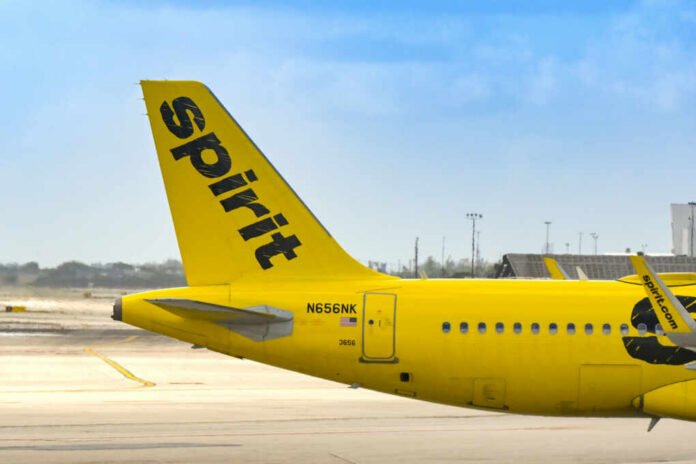
Spirit’s sudden shutdown is a harsh reminder that when Washington and Wall Street play chicken, ordinary travelers and working families get stuck holding the bag.
Quick Take
- Spirit Airlines halted all operations early May 2, canceling flights immediately and leaving customers without rebooking help.
- A proposed $500 million bailout tied to the Trump Administration reportedly collapsed after creditor disagreements, accelerating the wind-down.
- Transportation Secretary Sean Duffy warned travelers not to go to airports and outlined refund options, especially for direct bookings.
- About 17,000 employees and many budget-minded travelers face major disruption as ultralow-cost capacity disappears.
- Industry analysts warn reduced capacity and higher jet fuel costs could push airfares higher across the market.
Spirit’s Immediate Grounding Upended Travel Plans Nationwide
Spirit Airlines announced it stopped operating and began an “orderly wind-down” on May 2, 2026, canceling all flights and effectively going dark for customers who expected normal service. Reports indicated the final Spirit flight landed at Dallas Fort Worth from Detroit as the shutdown began. With customer service unavailable and no rebooking assistance offered, the closure created instant chaos for families who rely on low fares and can’t easily absorb last-minute travel costs.
Transportation Secretary Sean Duffy publicly urged passengers not to show up at the airport, signaling that the government’s focus was containment and refunds rather than operational rescue. For customers, the key detail is how the ticket was purchased: direct bookings were pointed toward refunds through a U.S. Transportation reserve fund, while tickets bought through third-party sellers were left to those vendors’ processes. That split leaves many travelers stuck in bureaucracy at the worst possible time.
A Collapsed Bailout Deal Exposed the Limits of “Stability Politics”
Multiple reports centered the shutdown around a failed $500 million bailout attempt involving the Trump Administration, with creditor dynamics playing a decisive role. Two of Spirit’s three main creditor groups reportedly backed the deal, while bondholders opposed it and blocked the arrangement. In practical terms, that means a major employer and national airline network could not bridge its financial gap even with government negotiations on the table—because the parties with veto power saw liquidation as the better outcome.
This episode is likely to harden public skepticism across the political spectrum. Conservatives who reject routine corporate bailouts see a cautionary tale about moral hazard and government picking winners. Many liberals, meanwhile, see another example of a system where financiers’ incentives can override workers’ and consumers’ interests. The common denominator is distrust: a sense that decision-making centers on institutional survival—whether in boardrooms or bureaucracies—rather than on protecting citizens from abrupt, life-disrupting shocks.
Fuel Shocks and Repeat Bankruptcies Finally Broke the Ultralow-Cost Model
Spirit’s collapse did not start this week. The airline’s history in the last two years included multiple bankruptcies and restructuring attempts, with escalating costs squeezing an already tight business model. Reports tied the final pressure spike to rising jet fuel prices connected to the 2026 Iran war, compounding labor and operating costs. Spirit built its brand on no-frills travel and deep discounts, but that model has little margin for geopolitical turmoil and cost surges.
Higher Fares and Fewer Choices Could Hit Working Families Next
CBS News travel editor Peter Greenberg argued that removing Spirit’s seats from the market reduces capacity while demand remains steady, leaving airfares with “nowhere to go but up.” That matters beyond vacation plans. When affordable routes disappear, smaller cities and budget-dependent travelers lose mobility—making it harder to see family, access specialized medical care, or pursue job opportunities. Other airlines have offered discounts to stranded Spirit customers, but that is a short-term patch, not a replacement for system-wide low-cost capacity.
Spirit Airlines says it's going out of business after 34 years and is ending operations immediately https://t.co/M7whBza9Tv pic.twitter.com/LcYEWvniwu
— NY Post Business (@nypostbiz) May 2, 2026
The near-term policy question is what Washington learns from the wreckage. A limited-government approach still has to grapple with consumer protection, especially when a major carrier can stop flying overnight and leave travelers navigating fragmented refund systems. At the same time, the episode underscores why many voters remain furious about “elite” decision-making: complex financial structures, creditor vetoes, and emergency government interventions can combine into outcomes that feel detached from everyday life, even when officials insist the process is “orderly.”
Sources:
Spirit Airlines says it’s going out of business after 34 years and is ending operations immediately
Spirit Airlines shutting down: What happens to tickets, flights and how it could impact airfares
Airlines offer discounts after Spirit shutdown
Spirit Airlines liquidation concerns: What to know if you have tickets
Is Spirit Airlines shutting down? What to know if you have tickets