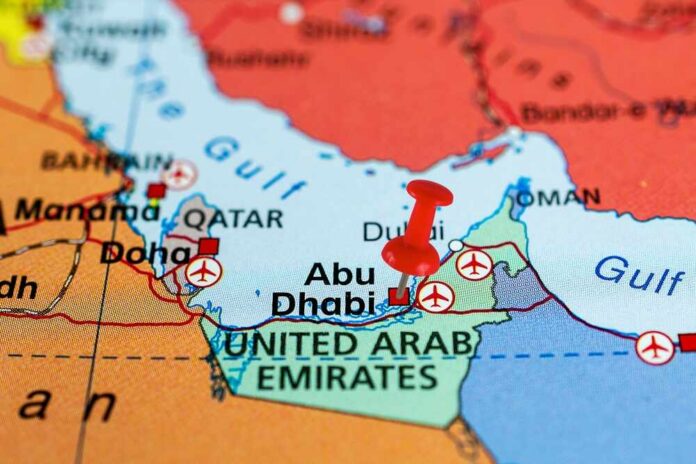
The United Arab Emirates has delivered a stunning blow to OPEC’s decades-long grip on global oil markets, abandoning the cartel amid a deepening energy crisis that exposes how bureaucratic alliances fail Americans struggling with energy costs.
Story Snapshot
- UAE officially exits OPEC effective May 1, 2026, ending nearly 60 years of membership in the oil cartel
- Withdrawal comes during global energy crisis triggered by Iran war and Strait of Hormuz disruptions
- OPEC loses leverage as UAE pursues independent production strategy outside Saudi Arabia’s influence
- Short-term oil prices remain stable due to supply constraints, but long-term market volatility expected
UAE Breaks Free from OPEC Constraints
The United Arab Emirates announced its departure from OPEC on April 28, 2026, through its state-run WAM news agency, with the withdrawal taking effect May 1. This marks the first time a major Gulf oil producer has abandoned the cartel founded in 1960 to control global oil prices. UAE Energy Minister Suhail bin Mohammed Al Mazrouei framed the decision as part of a long-term strategic vision to boost domestic energy production and serve as a reliable global supplier without Saudi-dominated quota restrictions limiting its spare capacity.
Timing Amid War-Driven Energy Crisis
The exit unfolds during a severe global energy crisis sparked by the ongoing Iran war and disruptions at the Strait of Hormuz, where strategic reserves are depleting and supply chains face unprecedented strain. Despite the crisis, experts note no immediate supply surge will materialize because current war-related constraints prevent the UAE from ramping up production in the short term. Oil prices eased slightly following the announcement, reflecting market awareness that physical supply limitations override the symbolic shift away from OPEC coordination for now.
Decades of Quota Disputes Fuel Rift
The UAE joined OPEC in 1967 through Abu Dhabi, formalizing membership in 1971 upon federation. Long-standing tensions over production quotas have plagued the cartel, with Iraq recently criticizing UAE and Saudi Arabia for overproduction that contributed to price declines. The UAE conducted a secret internal review of its OPEC role, driven by frustration that quotas hampered investments in energy expansion and limited its ability to leverage spare capacity. This departure mirrors historical quota battles from the 1970s-1980s price wars, but represents the first full exit by a Gulf state amid active war-related supply shocks.
OPEC’s influence has been built on coordinated production cuts to prop up prices, a strategy that benefits Saudi Arabia’s Vision 2030 funding needs but constrains smaller producers. The UAE’s ADNOC has globalized operations beyond local production, positioning itself as a flexible, low-carbon supplier prioritizing stability, cost competitiveness, and sustainability. By exiting, the UAE gains freedom to pursue market share growth and economic diversification without Saudi leverage dictating output levels, a move that undermines the cartel’s cohesion and erodes its roughly 3-4% share of global oil supply.
Limited Short-Term Impact, Uncertain Long-Term Future
Industry analysts, including Heather Exner-Pirot from the Macdonald-Laurier Institute and Amrita Sen from Energy Aspects, agree the withdrawal poses no existential threat to OPEC immediately. The UAE remains cooperative in the short term due to Hormuz and war-related constraints preventing any supply flood. However, long-term implications point to a weaker OPEC losing market share and influence over prices, with potential for increased volatility as non-OPEC supply grows and the cartel’s ability to manage deficits diminishes. The UAE stands to gain higher production and market share once the crisis subsides, enhancing revenue streams and competitive positioning.
For American consumers already battered by inflation and high energy costs stemming from years of misguided renewable energy mandates and fiscal mismanagement, this development underscores a critical reality: global oil cartels and government bureaucracies prioritize their own power over delivering affordable, reliable energy. The UAE’s exit signals a fracture in the old order that has kept prices artificially elevated, but the immediate crisis driven by war and supply disruptions means relief remains distant. What’s clear is that the political elites running these international bodies care more about maintaining control than solving the energy problems crushing everyday families at the pump and in their utility bills.
Sources:
UAE leaves OPEC in blow to oil cartel during war on Iran
United Arab Emirates announces exit from OPEC effective May 1, 2026 – The Jerusalem Post
The UAE announced it will leave OPEC effective May 1 …