On the 25th anniversary of 9/11, a man rushed Yankee Stadium’s field waving a Palestinian flag as the crowd erupted.
Story Snapshot
- A spectator ran onto the Yankee Stadium field with a Palestinian flag during a 9/11 tribute game.
- Crowds responded with “USA” chants as security tackled and removed the intruder.
- Yankee Stadium rules ban disruptive banners and allow immediate ejection for violations.
- The game featured formal 9/11 ceremonies with honor guards and a giant American flag.
What Happened During the Subway Series Game
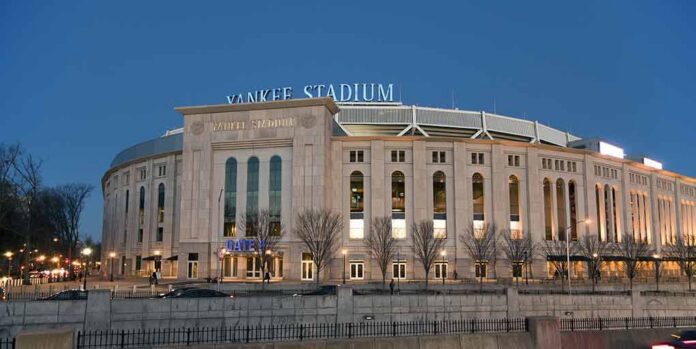
On September 11, 2026, during a New York Yankees and New York Mets game at Yankee Stadium, a man left the stands and ran onto the field while waving a Palestinian flag. A widely shared social media clip placed the moment at 9:11 p.m., which added to the shock and attention the act received. Security officers chased the man across the outfield and brought him down. The game paused briefly while staff cleared the field.
Fans in many sections stood and chanted “USA” as the man ran, and some shouted angry remarks until he was removed. The Yankees did not immediately release the man’s identity or any charges. Field invasions are common flashpoints, since the playing surface is a restricted area. Stadiums treat any on-field intrusion as a security risk, no matter the cause. That is especially true when the display ties to a hot political issue during a solemn public moment.
Why This Night Was Already Highly Charged
The Yankees and Mets marked the 25th anniversary of the September 11 attacks with a full pregame commemoration. Team materials described honor guards from the New York Police Department, the Fire Department of New York, and the Port Authority Police Department presenting colors, plus a giant American flag covering the outfield for the anthem. Media reports noted U.S. flags at half-staff and players wearing caps that honored first responders. The entire event framed the night around shared remembrance.
That setting shaped how people read the flag run. Many fans saw the act as disrespectful to the ceremony and to the day. Others saw it as political speech. Both reactions are real, but venue rules control conduct, not viewpoints. Disruption during a memorial moment can provoke a stronger backlash than the same display on a regular night. That is why security moved fast and escorted the man off the field to restore order and respect the planned tribute.
What Stadium Rules Say About Flags and Protests
Yankee Stadium policy bans banners, flags, and similar items that cause controversy or disruption, and it allows staff to eject violators right away. That language gives security broad power to stop displays that interrupt the game or unsettle the crowd. It also draws a hard line between expression in the stands and trespass on the field. Once a person leaves the seating area and enters the playing surface, safety and event control take priority, and removal is the norm.
Must be one of @ZohranKMamdani 's friends.
On the 25th anniversary of 9/11, a man with a Palestinian flag stormed the field at Yankee Stadium.
Thankfully, stadium security and NYPD officers apprehended him as Yankee and Mets fans erupted in USA chants.
Some fans took out… pic.twitter.com/qIeh3hNTHE
— Americaforever (@onetexgal9) September 12, 2026
Across sports, flag rules vary and are often enforced unevenly. Some leagues and venues have limited both Israeli and Palestinian flags at times, citing safety and clarity concerns. Others have allowed national flags but policed size, location, or behavior. These mixed standards fuel claims of bias from both sides. The core pattern is consistent, though: when expression becomes disruption, especially on the field, security steps in to protect players, staff, and the event timeline.
Why This Matters Beyond One Game
Stadiums have become stages where patriotism, grief, and protest collide. After 9/11, sports often served as civic rituals that honor service and loss, and those moments still carry weight today. That is why a sudden political display in that space, on that date, drew such a sharp reaction. Many Americans on the left and right feel public rules change based on who is speaking. Uneven enforcement at venues deepens that distrust and feeds a wider story of institutions serving order first and people last.
Sources:
nypost.com, x.com, postregister.com, cryptobriefing.com, sports.yahoo.com, sportscollectorsdigest.com, archive.nytimes.com, mlb.com, espn.com.au