A knife attack in Switzerland with reports of “Allahu Akbar” has renewed Europe’s security anxieties—and the questions authorities too often dodge until it’s too late.
Story Snapshot
- Police say three were injured and a 31-year-old Swiss national was arrested at Winterthur station [1][2].
- Local video and eyewitness accounts reported shouts of “Allahu Akbar” during the chaos [1].
- Investigators have not yet stated a motive, keeping terrorism questions open but unconfirmed [1][2].
- The incident triggered a major police operation, underscoring public-safety stakes [1].
What Swiss Police Confirmed About the Winterthur Stabbing
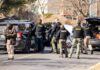
Swiss authorities reported that three people were injured in a knife attack at the Winterthur train station on May 28, and that officers arrested a 31-year-old Swiss national at the scene [1]. Police initiated a large response, secured the area, and said victims received hospital treatment [1]. The Independent separately noted the three victims were Swiss citizens ages 28, 43, and 52, reinforcing the seriousness and indiscriminate nature of the violence [2]. Officials added that the attacker’s motive remains under investigation, with no final conclusion released [1][2].
Reuters reported that local outlet Blick circulated video of a man running from the station while shouting “Allahu Akbar,” and an eyewitness described a person holding a knife as crowds screamed and fled [1]. That report, paired with the police statement that motive is still being probed, leaves two simultaneous realities: evidence suggesting a possible ideological trigger and a live investigation that has not labeled the incident as terrorism [1]. Responsible coverage must track both facts without jumping to conclusions beyond the verified record.
Why Early Facts Matter—and Where the Record Is Still Thin
Investigators have not publicly detailed the suspect’s background, prior history, online activity, or any link to radicalization, which limits confident motive judgments [1][2]. Reuters and The Independent both stress the ongoing inquiry, which supports caution about declaring ideological causation at this stage [1][2]. The suspect’s Swiss nationality also complicates simple migration narratives and underscores that threats can emerge through domestic radicalization or personal crises, not only cross-border flows, until authorities confirm otherwise [1][2]. Readers should expect updates as police analyze devices, witness statements, and station footage.
At the same time, the reported “Allahu Akbar” shout cannot be shrugged off as irrelevant noise. Such a cry has appeared in past ideologically charged attacks across Europe, and it is exactly the sort of early indicator investigators scrutinize for intent and planning. Reuters tied the phrase to a named local source and an eyewitness, lending it initial credibility while not elevating it to a proven terrorism verdict [1]. That is the needle to thread: airing credible facts promptly while resisting the temptation to assert more than the record currently shows.
Security Stakes for Europe—and Lessons for U.S. Policy Watchers
Europe’s recurring pattern is familiar: a violent public attack, viral footage, and a race between facts and narratives. Reuters-style dispatches establish the firm minimum—injuries, arrest, and an open motive—while online ecosystems race ahead with sweeping claims [1][2]. That tension frustrates citizens who see mounting public-safety risks, yet it also protects the integrity of criminal investigations. The right balance is transparency: release corroborated video, clarify suspect history, and provide periodic updates so citizens are not left guessing or assuming institutional evasion.
For American readers, two guardrails apply. First, be clear-eyed about threats that target civilians in routine spaces like stations and streets; hardening soft targets and acting quickly saves lives. Second, demand precision from officials and the press: name facts, publish evidence, and separate verified findings from working hypotheses. In Winterthur, the confirmed facts are three injured, one Swiss suspect in custody, a major police response, and an ongoing motive probe [1][2]. The reported “Allahu Akbar” shout is a red flag that warrants scrutiny, not a license for speculation [1].
Sources:
[1] Web – “Allahu Akbar” Knife Attack at Swiss Train Station, Injuring 3, Sparks …
[2] Web – Swiss police say attacker injures three with knife in Winterthur