A would-be attacker at the White House Correspondents’ Dinner has reignited a chilling question for Americans across the spectrum: how do fringe political identities turn into real-world violence?
Story Snapshot
- Cole Tomas Allen, a 31-year-old teacher and engineer from Torrance, California, was identified as the suspect in a weapons-laden attempt to breach a security checkpoint tied to the WHCD on April 25, 2026.
- Authorities said Allen tried to rush the checkpoint with a shotgun, a handgun, and multiple knives; officials reported no casualties at the checkpoint.
- Allen’s family members told investigators he had been making radical statements, frequently visited shooting ranges, and posted anti-Trump and anti-Christian content online.
- The name “Wide Awakes” has a complicated history: it began as a pro-Lincoln Republican youth movement in 1860, but Allen’s sister described a modern “social justice” network using the label.
What Happened at the WHCD Checkpoint—and Why It Matters
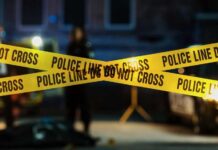
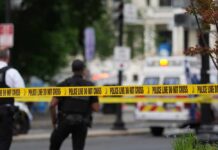
Law enforcement identified Cole Tomas Allen as the suspect after he allegedly attempted to force his way through a security checkpoint connected to the White House Correspondents’ Dinner on Saturday night, April 25, 2026. Reports describe him as armed with a shotgun, a handgun, and multiple knives. Officials indicated the threat was stopped at the checkpoint with no reported casualties there, but the event immediately raised security and political alarms because it targeted a high-profile media-government gathering.
Security incidents near nationally visible political events often get reduced to partisan talking points, but the deeper issue is institutional trust. Americans who already believe the system protects insiders first—politicians, media, and donors—tend to interpret a near-attack like this as proof that the country is under stress and that public safety is becoming secondary to optics. The WHCD setting also ensures heavy coverage, which can amplify copycat incentives if authorities and media aren’t careful.
Who Are the “Wide Awakes”? A Name With Two Meanings
The term “Wide Awakes” did not begin as a modern activist brand. Historically, the Wide Awakes were a youth organization aligned with the Republican Party during the 1860 election, formed to support Abraham Lincoln. Accounts of that period describe uniformed marches, rallies, and efforts to energize young voters, with a public identity tied to abolitionist-era politics and political organizing—not clandestine violence. That history matters because today’s “Wide Awakes” references can be symbolic, ironic, or opportunistic.
In the current case, reporting describes Allen’s sister telling authorities her brother was part of a contemporary “network of activists dedicated to social justice issues” using the Wide Awakes name, and that he had attended a “No Kings” protest in California. Based on what is publicly available, the modern group’s structure, leadership, and activity level remain unclear. Investigators have not publicly produced independent documentation of a formal organization beyond the family’s description and references surfaced during the probe.
What We Know About Allen’s Path to Radicalization
Investigators and media reports say Allen’s family provided key information about his mindset and preparation. Descriptions include frequent visits to shooting ranges, radical statements about doing “something” to fix what he viewed as problems in the country, and social media posts characterized as anti-Trump and anti-Christian. Those details, if accurate, point to a familiar modern pattern: an individual moving from grievance-driven rhetoric into planning and capability, with online content serving as reinforcement.
At the same time, the available reporting leaves major gaps that responsible observers should acknowledge. Public accounts have not established that any broader “Wide Awakes” network directed, funded, or coordinated violence, and the historic Wide Awakes were a public political movement from a different era. With limited confirmed details about membership rolls, communications, or a chain of command, the strongest-supported conclusion right now is that Allen appears to be a lone actor with loose ideological identification, not proven organizational backing.
The Bigger Political Lesson: Extremism Thrives on Institutional Failure
The attempted WHCD breach lands in a country already exhausted by political hostility, distrust of institutions, and the sense that leaders serve themselves first. Conservatives often blame elite-driven cultural coercion, border failures, and fiscal mismanagement; liberals often blame inequality and perceived discrimination. The overlap is the combustible middle: millions on both sides believe “the system” is rigged and unresponsive. That shared cynicism can become fuel for unstable people seeking moral permission to act.
Who are 'The Wide Awakes,' leftist group WHCD gunman Cole Allen was supposedly a part of? https://t.co/sOI6ls8gpB pic.twitter.com/MnAHAj8QsQ
— New York Post (@nypost) April 27, 2026
For Republicans governing in 2026, the practical test is whether federal institutions can deliver public safety without turning investigations into partisan theater. A careful approach would separate two questions: what Allen allegedly did, and what—if anything—his claimed affiliations actually mean. Overreaching rhetoric risks smearing lawful activism; underreacting risks missing warning signs. If the government’s response looks political rather than professional, it will deepen the very distrust that makes this kind of crisis more likely.
Sources:
Cole Tomas Allen Family Reveals His Plans to ‘Fix the World’, Affiliation to The Wide Awakes Group
What We Know About Cole Allen, Suspected White House Correspondents’ Dinner Shooter