A massive 7.8 earthquake off the southern Philippines has killed dozens and triggered tsunami waves, exposing once again how quickly a natural disaster near key sea lanes can ripple into America’s security, economy, and already-strained foreign commitments.[1]
Story Snapshot
- A magnitude 7.8 offshore quake struck near Sarangani in southern Mindanao, killing at least 32 and injuring over 200, with tsunami waves recorded along the coast.[1]
- Tsunami warnings and evacuations hit major fishing and shipping hubs, briefly threatening routes vital to American trade and energy supplies.[1]
- Conflicting early casualty figures from media and foreign outlets show why conservatives demand verified facts over sensational headlines.[1][2]
- The quake highlights how U.S. disaster aid and security guarantees in the Pacific compete with domestic priorities like border security and debt reduction.
Powerful Quake Slams Mindanao, Casualties Mount As Tsunami Hits Coast
On June 8, a powerful magnitude 7.8 offshore earthquake struck near Sarangani, off the southern coast of Mindanao in the Philippines, shaking the region for roughly half a minute and sending people fleeing into the streets.[1] Philippine and international seismologists located the epicenter just off Sarangani province, near the junction of the Cotabato and Sangihe ocean trenches, where major tectonic plates grind past each other.[1] The Philippine Institute of Volcanology and Seismology reported an offshore origin and shallow depth that raised immediate tsunami concerns.
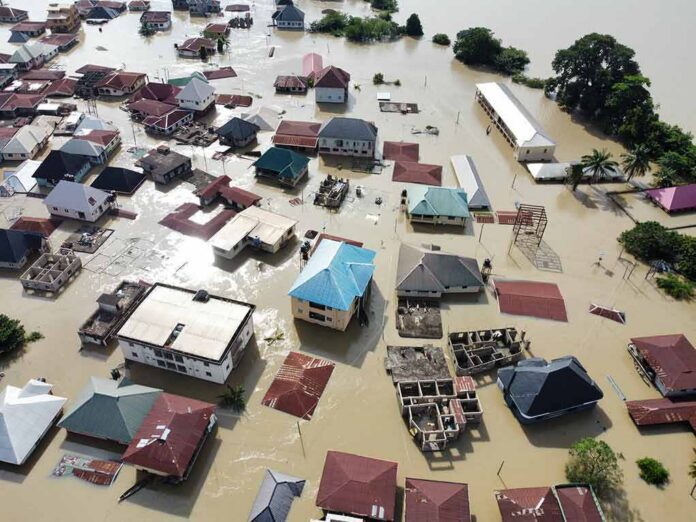
Philippine officials now report at least 32 people dead, more than 200 injured, and at least 12 missing across several southern regions, with casualties concentrated in Sarangani, General Santos City, South Cotabato, and Davao Occidental.[1] Authorities say victims died in building collapses, landslides, and falling debris, including a deadly landslide in Glan that killed 13 and a warehouse wall collapse in General Santos that claimed two lives.[1] Damage estimates in General Santos alone already top roughly one billion pesos, about twenty million U.S. dollars.[1]
Tsunami Warnings, Evacuations, And Early Chaos On The Coast
Within minutes of the quake, the Philippine Institute of Volcanology and Seismology issued tsunami warnings for coastal provinces including Sarangani, Davao Occidental, Tawi-Tawi, Sulu, Basilan, Zamboanga del Sur, Zamboanga Sibugay, Sultan Kudarat, and South Cotabato, triggering evacuations along long stretches of shoreline.[1] Officials later confirmed tsunami waves of roughly 1.4 meters, or about four to five feet, along parts of Mindanao’s southern coast between 7:42 and 8:45 in the morning.[1] Regional monitoring centers detected smaller waves across the broader western Pacific, including Palau and Indonesian islands.[1]
International warnings briefly extended as far as Indonesia, Palau, Japan, Taiwan, and Papua New Guinea, underscoring how one offshore rupture can disrupt a wide arc of coastal communities and shipping routes.[1] Philippine seismologists recorded at least 180 aftershocks, including several strong magnitude 6 events, keeping residents on edge and complicating rescue operations.[1] Video from the region shows buildings swaying, ceilings collapsing, and panicked families fleeing schools and offices as alarms and sirens blared. Authorities continue to inspect bridges, ports, and power lines for hidden damage.
Messy Early Numbers Expose Media Habits—And Why Verification Matters
As often happens after major disasters, early death tolls varied sharply across outlets, with some foreign reports initially citing one or four fatalities while others quickly jumped to a dozen or more.[1][2] Later tallies consolidated around at least 32 confirmed deaths and over 200 injuries, matching assessments by Philippine agencies and regional news services.[1] This pattern fits a familiar script: first responders and local media report fragments, while international desks rush to publish before facts are fully vetted.[1]
For Americans tired of sensational headlines and politicized “crises,” this earthquake is another reminder to separate hard data—magnitude, location, tsunami confirmation—from the fluid counts that dominate cable chatter.[1] The Philippine Institute of Volcanology and Seismology first logged the event around magnitude 7.0 before revising to 7.8 as more waveform data came in, illustrating how legitimate science corrects itself in real time instead of locking into a narrative.[1] Careful verification matters, especially when social media clips and amateur commentary can outrun official bulletins by hours.
Why This Matters For America: Security, Supply Chains, And Priorities At Home
Southern Mindanao sits near vital sea lanes that carry energy, food, and manufactured goods across the western Pacific toward the United States and its allies, so any disruption from tsunamis or damaged ports can ripple into global prices.[1] Fishing hubs and container terminals around General Santos and surrounding coasts support trade routes that link into larger networks touching American markets.[1] Even a short-lived shutdown can compound the supply-chain shocks Americans know too well from recent years of inflation, pandemic restrictions, and wars abroad.
At least 32 people are feared dead and dozens injured after a powerful magnitude 7.9 earthquake struck the southern Philippines on Monday (June 8), officials said.
In General Santos, a city of about 700,000 people, the roof of one building housing a fast food restaurant… pic.twitter.com/3z7u4VWHkJ
— CGTN Europe (@CGTNEurope) June 8, 2026
As Washington considers disaster assistance and security coordination with a long-standing treaty ally, many American taxpayers will weigh these commitments against unresolved crises at home: a still-porous southern border, high federal debt, and communities recovering from their own storms and fires. The Trump administration faces a familiar balancing act—standing with allies in a dangerous region while refusing to write blank checks or ignore domestic needs. For conservatives, the lesson is clear: respect the science, question the spin, and demand that foreign aid never outrun accountability, constitutional limits, or America’s own urgent priorities.
Sources:
[1] Web – Major quake off Philippines kills at least 15, triggers tsunami …
[2] Web – A 7.8 magnitude quake in the Philippines kills at least 19, fells …