A devastating fire in Hong Kong has claimed at least 36 lives, exposing critical safety failures in government-regulated construction practices that prioritized tradition over modern fire safety standards.
Story Overview
- Massive fire engulfed seven residential buildings under renovation in Hong Kong’s Tai Po district
- At least 36 people confirmed dead in one of Hong Kong’s deadliest residential fires
- Traditional bamboo scaffolding appears to have accelerated the fire’s spread across multiple buildings
- Government oversight of construction safety standards now under intense scrutiny
Deadly Blaze Spreads Rapidly Through Multiple Buildings
The fire erupted Wednesday at the Wang Fuk Court residential complex in Hong Kong’s Tai Po district, quickly consuming seven high-rise apartment buildings. Emergency responders arrived to find the structures completely engulfed in flames, with the blaze spreading at an alarming rate between the connected buildings. The death toll of at least 36 makes this one of Hong Kong’s most devastating residential fires in recent history, highlighting serious concerns about building safety protocols during renovation projects.
Traditional Scaffolding System Blamed for Fire Acceleration
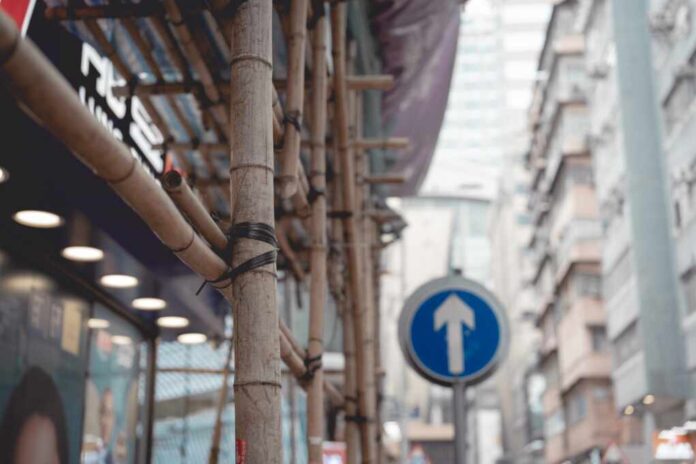
The buildings were sheathed in bamboo scaffolding during renovation work, a traditional construction method still widely used throughout Hong Kong despite modern alternatives. This flammable material appears to have acted as a conduit, allowing flames to rapidly spread from building to building across the complex. Fire safety experts have long warned that bamboo scaffolding presents significant risks during construction projects, yet government regulations continue to permit its widespread use without adequate fire suppression measures or safety barriers.
The tragic incident underscores how adherence to outdated practices can override common-sense safety measures. While bamboo scaffolding may be cost-effective and culturally significant, the loss of life demonstrates the urgent need for updated building codes that prioritize resident safety over traditional construction methods.
Government Oversight Failures Under Investigation
Questions are mounting about Hong Kong authorities’ oversight of construction safety standards, particularly regarding fire prevention during renovation projects. The complex was undergoing significant renovation work, yet appears to have lacked adequate fire safety measures to prevent such catastrophic spread between buildings. Local officials are now facing pressure to explain how such extensive renovation work proceeded without proper fire barriers or alternative scaffolding materials that could have contained the blaze.
The fire in Tai Po, Hong Kong now is really devastating. I'm shocked it's a resident apartment. I read that the fire started burning before 3PM from bamboo scaffolding and the fire is still going now.
🎥 Cr: 🌸debbie🌸 https://t.co/sFcpNr1Fkf pic.twitter.com/vC8mkYsE8R
— Vina Verde🎙️🎧🎸 || streaming MORNING COFFEE ☕ (@vinaverdemusic) November 26, 2025
This disaster highlights broader concerns about government priorities in building regulation enforcement. When bureaucratic approval processes favor traditional methods over proven safety technologies, residents pay the ultimate price. The incident serves as a stark reminder that effective governance must balance cultural practices with non-negotiable safety standards that protect innocent lives from preventable tragedies.
Sources:
What we know about the Hong Kong apartment fires
Hong Kong residents react as deadly fire tears through housing estate
Deadly fire breaks out in Tai Po, Hong Kong