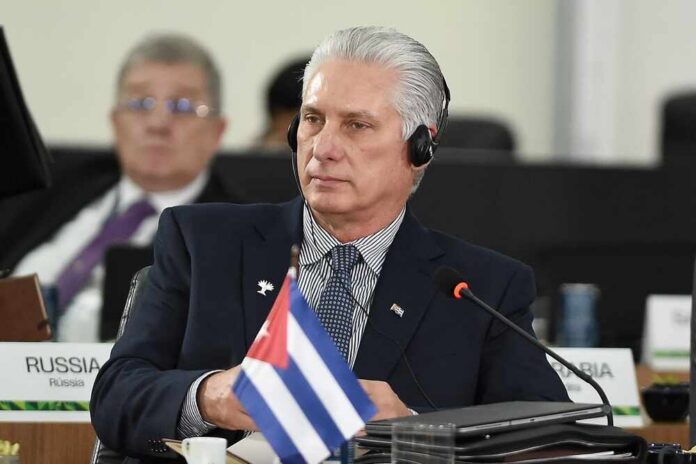
Cuba’s communist leader is again invoking Bay of Pigs-era fears—warning Americans that any move to topple him would be “costly” and met with resistance “to the death.”
Quick Take
- Miguel Díaz-Canel used a major revolutionary anniversary rally to frame Cuba as a target of U.S. aggression while promising the island will be ready to fight.
- In a U.S. TV interview, Díaz-Canel said there is “no justification” for military action or an attempt to remove him, and warned Cuba would defend itself.
- Available reporting shows heightened rhetoric, not confirmed U.S. military escalation—leaving intent and timing of any “attack” claim unverified.
- The messaging lands as Cuba faces “extremely challenging” economic conditions and lingering social pressure after recent years of unrest.
Díaz-Canel revives Cold War language at a symbolic rally
Miguel Díaz-Canel delivered his warning on April 16 in Havana during a rally marking the 65th anniversary of Fidel Castro’s declaration that the revolution was socialist—an anniversary closely tied to the Bay of Pigs episode in 1961. Díaz-Canel said Cuba does not want U.S. aggression, but described preparation as a duty and claimed the country would be ready to confront and defeat any attack. The event drew hundreds and centered unity during difficult economic conditions.
Using an anniversary built into Cuba’s political identity matters because it shifts the message from day-to-day diplomacy into the language of national survival. By placing today’s tensions alongside the island’s defining confrontation with Washington, Díaz-Canel effectively casts any U.S. pressure—economic or political—as part of a long-standing siege. That framing is familiar to Cuban state messaging, but it also signals that the regime wants the public focused on external threats rather than internal mismanagement or the hardships ordinary Cubans face.
Meet the Press interview targets U.S. audiences—without new evidence of an attack
Díaz-Canel repeated the theme in an interview aired on NBC’s “Meet the Press,” telling an American audience he sees no justification for military aggression or efforts to depose him. He warned any such move would be costly and said Cubans would defend themselves. The available sources do not describe a specific new U.S. operational trigger, and they do not report any confirmed escalation beyond rhetoric. As presented, the claims highlight fear of intervention more than a documented imminent U.S. action.
That distinction is important for Americans trying to separate propaganda from policy reality. When leaders claim an attack is coming without pointing to concrete steps—troop movements, public directives, or formal threats—readers should treat it as political messaging unless additional evidence appears. The reporting indicates Díaz-Canel also referenced scenarios like a “surgical operation” or even kidnapping, language that raises the emotional temperature while still stopping short of citing verifiable plans by Washington.
Why Cuba’s leadership benefits from the “under attack” narrative
Multiple reports connect the speech to Cuba’s broader domestic strain. Cuba remains under a long-running U.S. embargo and is still navigating economic weakness that chills investment and tourism. In that environment, revolutionary rhetoric can help the government rally loyalists, justify tightened control, and depict dissent as disunity in the face of an enemy. Some coverage also points to a U.S. political backdrop, including references to a Trump-era “friendly takeover” line, though the sources do not establish it as a new policy action.
From an American conservative viewpoint, the practical takeaway is less about taking Havana’s claims at face value and more about recognizing how authoritarian systems use external confrontation to maintain internal discipline. U.S. taxpayers and service members have no interest in another open-ended confrontation in the region, but neither should Washington ignore that hostile regimes often try to turn economic pressure into a moral narrative of victimhood. The public record in this reporting shows rhetoric rising while facts about imminent conflict remain limited.
Sources:
Cuba’s president says island does not wish for US aggression but ready to fight if needed
Cuba’s president warns US against attacking island, trying to depose him
Cuba president says US targeting island, trying to remove him