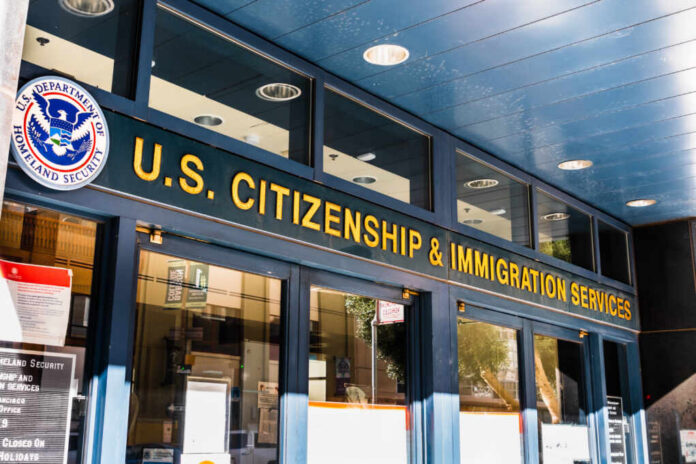
The Trump administration’s push to police fraud in the naturalization system is colliding with a hard constitutional question: how do you enforce the law aggressively without turning U.S. citizenship into a revocable privilege?
Story Snapshot
- USCIS is expanding denaturalization work and, according to reporting, setting targets of roughly 100–200 cases per month.
- The administration says the focus is fraud and misrepresentation in the naturalization process, while critics warn about due process and retroactive scrutiny.
- USCIS has reportedly deployed specialists across 80+ field offices to identify cases and refer them for prosecution.
- As of February 2026, the second Trump term has filed 16 denaturalization cases and won 7, including a case involving child sexual abuse imagery distribution.
USCIS ramps up denaturalization referrals with monthly targets
USCIS has reportedly reassigned personnel across more than 80 field offices and begun sending expert teams nationwide to identify naturalization cases for potential denaturalization. The reporting describes quotas of about 100–200 cases per month, a scale far beyond the first Trump term, when 102 denaturalization cases were filed over four years. The Justice Department is positioned as the litigation arm, pursuing selected cases in federal court.
USCIS’s public posture is framed around fraud enforcement rather than ideology. A USCIS spokesman said the agency maintains a “zero-tolerance policy” for fraud in the naturalization process and will pursue proceedings against individuals who lied or misrepresented themselves. That principle is familiar to most Americans: citizenship is valuable, and the government has a duty to protect the integrity of the oath and the lawful process that makes someone an American.
How denaturalization works—and why due process concerns keep surfacing
Denaturalization is historically rare and legally demanding, typically tied to fraud, material misrepresentation, or concealment of disqualifying facts during the citizenship process. That high bar exists for a reason: citizenship is not a mere benefit; it is a core legal status that shapes voting, family stability, and constitutional protections. Critics argue that quota-like targets and a broad “catch-all” category for “important” cases risk shifting the program toward volume over careful case selection.
Supporters of stronger enforcement counter that the rule of law requires consequences when someone obtained citizenship by deception, especially when serious crimes or national-security risks are involved. The limited case data available for the second term shows 16 cases filed and 7 wins by February 2026, including a case involving a man from the United Kingdom convicted of distributing sexually explicit images of children. The available reporting does not fully explain how USCIS is prioritizing cases beyond example categories provided to attorneys.
Birthright citizenship restrictions add fuel to the broader immigration reset
The denaturalization expansion is landing amid wider immigration changes, including executive actions issued on January 20, 2025, and birthright citizenship restrictions that took effect on February 19, 2025. Legal analysis and advocacy summaries describe a policy framework that tightens who qualifies at birth when neither parent has lawful permanent resident status or U.S. citizenship. That debate matters politically because it touches the Fourteenth Amendment and the long-running fight over incentives that critics say drive illegal immigration.
Who is affected, and what’s still unclear about scope and safeguards
Naturalized citizens are the direct population exposed to denaturalization proceedings, while their families can face downstream consequences if a case ends in deportation. At the same time, advocacy groups and some former officials warn about uncertainty created by retroactive scrutiny of years-old paperwork and shifting enforcement standards. One former USCIS official emphasized that presidents cannot unilaterally strip citizenship, underscoring that courts and statutory limits still control outcomes case by case.
Broader immigration policy projections cited by advocates estimate large populations could lose legal protections under certain proposals, including Temporary Protected Status holders, Dreamers, and Ukrainians who arrived under specific programs. Those estimates are not denaturalization counts, but they illustrate the scale of the administration’s overall enforcement posture. What remains incomplete in the public record is the exact operational definition of the “catch-all” category and how uniformly it will be applied across field offices.
Inside the Trump Administration's Plan to Protect Citizenship
https://t.co/cdEYqjygiv— Townhall Updates (@TownhallUpdates) February 13, 2026
For conservatives who watched years of lax enforcement, loopholes, and politicized “equity” standards, the core question is straightforward: can the government restore credibility to citizenship without eroding due process protections that keep the state in check? The facts so far show an expansion in staffing, referrals, and ambition, but only a small number of filed cases. The lasting impact will depend on transparent criteria, court scrutiny, and whether enforcement stays anchored to provable fraud rather than vague standards.
Sources:
Trump admin working to expand effort to strip citizenship from foreign-born Americans
President Trump Issues Six Executive Orders Pertaining to Immigration
Trump on Immigration
Protecting the Meaning and Value of American Citizenship
Trump 2.0 Immigration: The First Year
Protecting Birthright Citizenship