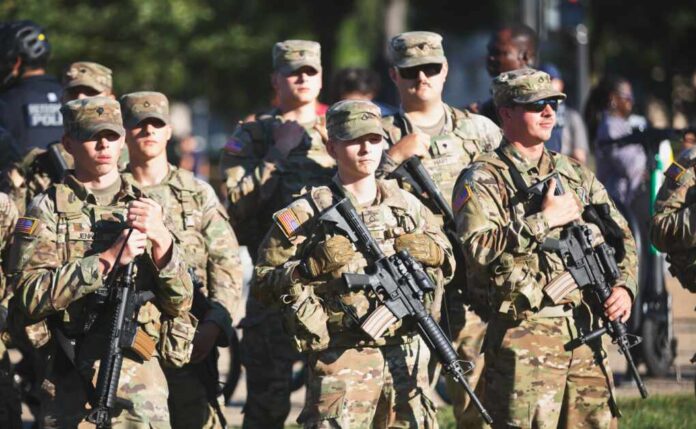
The Pentagon has ordered hundreds of military police soldiers at Fort Bragg to prepare for potential deployment to Minneapolis, where federal immigration enforcement operations have sparked violent protests and clashes, raising critical questions about constitutional limits on military involvement in domestic law enforcement.
Story Snapshot
- Pentagon orders 300-500 Army military police at Fort Bragg to prepare for Minneapolis deployment amid immigration enforcement protests
- Deployment follows fatal shooting of mother-of-three Renee Nicole Good by ICE agent during raids, sparking widespread unrest
- Troops cannot perform law enforcement duties without President Trump invoking the Insurrection Act
- Minneapolis Mayor Jacob Frey condemns potential deployment as “ridiculous and unconstitutional”
- Orders add to 1,000-1,500 Alaska-based soldiers already on standby for Minnesota cities
Pentagon Issues Deployment Orders Amid Minneapolis Unrest
The Pentagon issued prepare-to-deploy orders on January 20, 2026, to approximately 300-500 soldiers from an Army military police brigade stationed at Fort Bragg, North Carolina. These troops possess specialized training in crowd control and security operations. The orders come as Minneapolis experiences ongoing civil unrest triggered by federal immigration enforcement raids that have resulted in violent confrontations between protesters and federal agents. Pentagon officials characterized the move as “prudent planning” while stating they had nothing officially to announce regarding actual deployment timing or confirmation.
"Soldiers at Fort Bragg military base told to prepare for Minneapolis deployment" on SmartNews: https://t.co/0pvOVmsZCK #SmartNews
— YpsiGal🇺🇸🌎☮️ (@YpsiGal) January 22, 2026
Fatal ICE Shooting Ignites Protests Against Immigration Raids
The current crisis erupted following the fatal shooting of Renee Nicole Good, a 37-year-old mother of three, who was shot in the face by an Immigration and Customs Enforcement agent during raids in early January. The incident sparked massive protests across Minneapolis, with thousands of residents clashing with ICE and Border Patrol agents deployed to conduct immigration enforcement operations. Federal officers have faced off against demonstrators outside federal buildings, including the Whipple Federal Building, as tensions escalated throughout the month. The situation has drawn comparisons to the 2020 George Floyd protests that rocked the same city, though this unrest stems from federal immigration actions rather than local police conduct.
Constitutional Constraints on Military Deployment
Under current law, active-duty military personnel cannot perform civilian law enforcement functions without presidential invocation of the Insurrection Act, which authorizes such extraordinary measures during domestic emergencies. The Posse Comitatus Act establishes this critical boundary between military and civilian authority, a protection designed to prevent federal overreach and preserve constitutional governance. President Trump has not yet invoked the Insurrection Act for this situation, meaning deployed troops would be limited to supporting roles such as securing federal property. Last summer, Trump deployed approximately 700 active-duty Marines to Los Angeles for security around federal buildings during similar unrest without invoking the Act, establishing a precedent for limited military involvement in domestic situations.
Local Leaders Resist Federal Military Presence
Minneapolis Mayor Jacob Frey strongly opposed the potential troop deployment, calling it “ridiculous and unconstitutional” and vowing that his city “will not be intimidated” by federal military presence. His resistance reflects broader concerns among Minnesota leaders about federal overreach and the appropriateness of military involvement in civilian protests. The Pentagon’s orders add Fort Bragg military police to at least 1,000-1,500 soldiers from the 11th Airborne Division in Alaska already on standby for deployment to Minnesota cities. Anonymous defense sources described the orders as “pre-decisional,” highlighting the sensitive nature of deploying military forces against American citizens exercising their rights to protest government actions, even when those protests involve violence and clashes with federal agents.
Federal Authority Versus State Sovereignty
This situation represents a critical test of constitutional boundaries between federal enforcement authority and state sovereignty. The Trump administration’s aggressive immigration enforcement has collided with local resistance in a city already scarred by civil unrest. While the administration has legitimate authority to enforce immigration law and protect federal agents conducting lawful operations, the deployment of active-duty military forces into American cities raises profound concerns about government overreach that conservatives traditionally oppose. The distinction between maintaining order during violent riots and suppressing legitimate protest remains essential. Patriots who value constitutional limits on federal power should scrutinize whether military deployment serves genuine security needs or represents intimidation tactics against citizens opposing federal policies.
Sources:
Pentagon orders more active-duty soldiers to prepare for deployment in Minnesota: report
Soldiers at Fort Bragg military base told to prepare for Minneapolis deployment
Pentagon orders soldiers at Fort Bragg military police to prepare for Minneapolis deployment
Military Police Troops Put on Alert for Possible Deployment to Minnesota