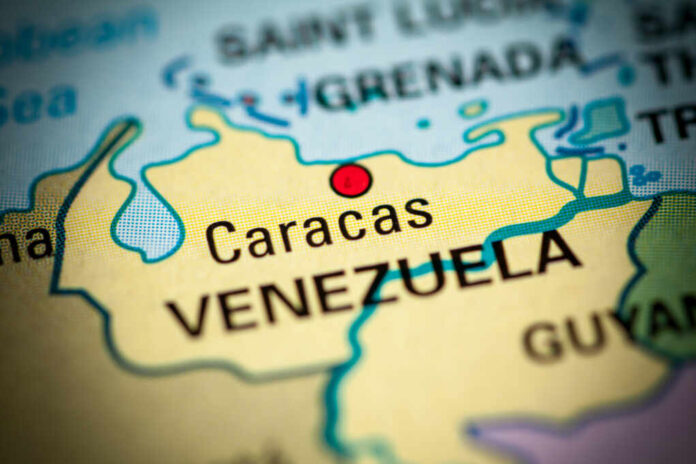
Washington’s decision to let the U.S. control and sell Venezuelan oil “indefinitely” marks one of the most aggressive energy power plays America has seen in decades.
Story Snapshot
- The U.S. will market and sell up to 50 million barrels of Venezuelan crude and then continue overseeing sales indefinitely.
- Trump’s team is using Venezuela’s oil as leverage to rebuild a broken country and crack down on criminal smuggling networks.
- Congress, including some Republicans, is demanding tight oversight to avoid a government “takeover” and protect U.S. producers.
- Seizures of sanctions-busting tankers show this strategy is backed by real military and law-enforcement muscle.
Trump’s Energy Gamble: Indefinite Control of Venezuelan Crude
Energy Secretary Chris Wright has confirmed that the United States will not just sanction Venezuelan oil, but actively market and sell it on an open-ended basis, starting with roughly 50 million barrels of crude turned over by Venezuela’s interim authorities. The initial tranche alone could generate about $2.5 billion in revenue, giving Washington powerful leverage over a vital resource once controlled by Nicolás Maduro’s corrupt regime. For many conservatives, this looks like America finally using its strength to advance both stability and energy security.
President Trump announced the plan late on January 6, 2026, only hours after a U.S. military raid in Caracas captured Maduro and his wife, effectively ending years of socialist misrule. Within a day, Wright laid out the details at a conference and in meetings with major oil companies, emphasizing that U.S. oversight will continue “indefinitely.” That word has alarmed critics, but it also signals a clear message: the days of turning a blind eye to hostile, anti-American oil regimes in our backyard are over.
From Failed Socialism to U.S.-Managed Recovery
Venezuela once boasted some of the world’s largest proven oil reserves, yet under Maduro’s socialist experiment and chronic mismanagement, production collapsed from about 2.5 million barrels per day a decade ago to under 800,000 by 2024. Fields degenerated, pipelines corroded, and heavy crude turned to sludge. The new interim government has admitted it lacks the capital, equipment, and technical know-how to revive output, so it has invited U.S. support even as it cedes control of stored oil stockpiles to Washington as part of a broader rescue framework.
For Trump’s America First agenda, this arrangement offers both opportunity and risk. On one hand, U.S. companies stand to gain access to enormous reserves, using American technology, chemicals, and machinery to restart production and rebuild the country’s core industry. On the other, conservatives are wary of any long-term entanglement that smells like nation-building or exposes U.S. producers to unfair competition from a flood of revived Venezuelan crude. The administration insists no U.S. taxpayer funds are expected to be used, but investment needs run into the billions, and that promise will face ongoing scrutiny.
Congress Pushes Back While Demanding Guardrails
On Capitol Hill, the plan has triggered an unusual mix of bipartisan concern. Democrats such as Senator Chris Murphy have blasted the strategy as an “insane” attempt to “steal Venezuela’s oil at gunpoint forever,” framing it as imperial overreach rather than a lawful enforcement of sanctions and agreements with the interim government. That rhetoric resonates with the same globalist mindset that tolerated Maduro’s abuses while lecturing Americans about climate targets and so-called social justice instead of confronting real-world security threats.
Republican lawmakers, especially from energy-producing states like North Dakota, are more measured but still cautious. Senators John Hoeven and Kevin Cramer describe Wright as highly capable and view U.S. control of Venezuelan revenues as valuable leverage for building a real democracy in Caracas. At the same time, they want firm assurances that domestic producers will not be undercut by cheap foreign barrels dumped into U.S. markets. House Speaker Mike Johnson has signaled support, provided Congress maintains strict oversight and taxpayers are not left footing the bill.
Seizing Sanctions-Busting Tankers and Targeting Rogue Networks
The policy is backed by aggressive enforcement at sea, reminding allies and adversaries that this White House is serious. On January 7, U.S. forces seized the Bella 1, a Russia-flagged vessel previously linked to Hezbollah-tied smuggling networks, in the North Atlantic after a failed boarding attempt weeks earlier. Around the same time, another tanker, the Sophia, was intercepted in the Caribbean for sanctions violations. Both ships were turned over to law enforcement, cutting off illicit revenue streams tied to the old Maduro machine.
These operations echo earlier U.S. seizures of Iranian and Venezuelan tankers but go further by pairing military action with direct, long-term control of oil sales. For conservative readers worried about terrorism, cartels, and foreign regimes exploiting weak borders and lax enforcement, this is the opposite of the Biden-era passivity. Instead of tolerating shadowy shipments benefiting hostile actors, the Trump team is disrupting those networks and channeling resources through transparent, accountable structures aligned with U.S. interests.
What It Means for U.S. Energy, Markets, and Sovereignty
Economically, the immediate revenue from selling 50 million stored barrels is only the opening move. If U.S.-backed investments revive Venezuela’s output over several years, global supply could rise and potentially pressure prices, raising understandable concerns among American drillers who endured years of anti-fossil-fuel posturing under previous administrations. Yet the alternative is leaving a vital energy asset to be exploited by hostile regimes like Iran, Russia, or China, with zero regard for U.S. workers, consumers, or security.
The left next meltdown is about to erupt any minute now 👇🏼👇🏼👇🏼
BIG WIN FOR AMERICA!
President Donald J. Trump just announced: The Interim Authorities in Venezuela are turning over 30-50 MILLION barrels of high-quality, sanctioned oil to the United States!
This oil will be… pic.twitter.com/v4nFnejNUS
— 𝗖𝗵𝗿𝗶𝘀𝘁𝗶𝗻𝗮𝗡𝗬𝗖 (@UniqueBigApple) January 7, 2026
Politically, this strategy underscores Trump’s belief that American power—economic, military, and energy—should be used unapologetically to shape outcomes in our hemisphere, not outsourced to global institutions or climate bureaucrats. For Venezuelans, U.S. oversight means temporary loss of full autonomy, but it also offers a path out of socialist collapse toward markets, rule of law, and eventual self-governance. For U.S. conservatives, the key tests ahead will be whether Congress enforces real guardrails, whether taxpayers remain protected, and whether this muscular approach strengthens, rather than dilutes, American energy independence and constitutional checks on executive power.
Sources:
ABC News – Venezuela live updates: Trump to give details after US operation
Politico – Congress demands oversight of Venezuelan oil revenue
Politico – Wright: US will sell Venezuelan oil ‘indefinitely’
SFGate / AP – US forces board Venezuela-linked sanctioned oil tankers