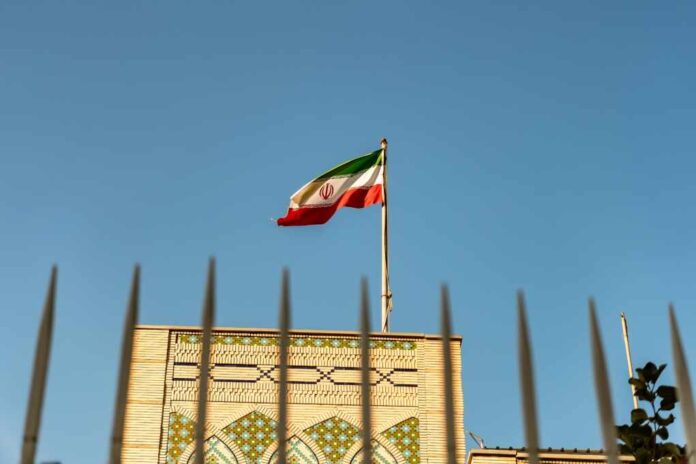
As Iran executes six prisoners accused of collaborating with Israel, global outrage grows over secretive trials and the escalating shadow war in the Middle East.
Story Highlights
- Iran executed six prisoners accused of carrying out attacks for Israeli intelligence, following an Israeli airstrike on Tehran’s Evin prison.
- Both Iran and Israel claim their actions are justified responses to foreign aggression, deepening tensions and fueling a dangerous cycle.
- International human rights groups condemn the executions as politically motivated and lacking due process, calling for independent investigations.
- The incident signals a new level of hostility in the Iran-Israel conflict, raising concerns over regional stability and basic human rights.
Iran Executes Six Accused of Espionage After Israeli Strike
Iranian authorities carried out the execution of six prisoners accused of collaborating with Israeli intelligence, mere days after an Israeli airstrike hit Tehran’s Evin prison. The executions, announced by Iranian officials, came at a time of heightened hostilities between Iran and Israel, with both countries exchanging public accusations and warnings. Iranian state media portrayed the executions as necessary retaliation for acts of aggression, while critics point to the lack of transparency and due process in these cases.
Israeli officials justified the Evin prison airstrike as a targeted response against regime repression and alleged intelligence operations against Israel. The prison itself, notorious for housing political prisoners and alleged spies, has long been a symbol of state control and international controversy in Iran. The June 2025 airstrike resulted in numerous civilian casualties, drawing condemnation from international human rights organizations and calls for independent investigations into potential violations of international law.
Iran executes 6 death-row inmates it alleges carried out attacks on behalf of Israel .. pic.twitter.com/l0ZAxgRmdh
— imran wani (@imran46450) October 5, 2025
Escalating Shadow War Between Iran and Israel
For decades, Iran and Israel have engaged in covert operations, espionage, and proxy warfare, each accusing the other of destabilizing the region. The latest round of executions and military strikes marks a significant escalation, with both nations openly acknowledging their roles. Iranian officials claim the executed prisoners were responsible for sabotage and attacks on critical infrastructure at Israel’s behest, framing the act as a defense of national security. Israel, meanwhile, continues to justify its operations as essential to countering Iranian threats and protecting its citizens.
Human rights watchdogs have repeatedly criticized both governments, warning that such actions risk further destabilizing the Middle East and eroding basic legal protections. Amnesty International and others highlight the lack of fair trials for the executed prisoners, as well as the indiscriminate nature of military strikes on civilian targets. These developments have fueled calls for international intervention and greater accountability on both sides, though meaningful action remains elusive given the entrenched positions of Tehran and Jerusalem.
International Outcry and Human Rights Concerns
Global reaction to the executions and the preceding airstrike has been swift and critical. Human rights organizations describe the executions as politically motivated, citing the opaque legal proceedings and the timing following the Israeli attack. The United Nations and several Western governments have condemned both the deaths at Evin prison and the lack of due process for those accused of espionage. Legal experts argue that attacking a detention facility violates international humanitarian law unless it can clearly be shown as a legitimate military target—an assertion hotly disputed in this case.
Despite mounting international pressure, Iranian authorities remain defiant, insisting on their right to protect national sovereignty and deter foreign interference. Israeli officials continue to defend their military strategy, citing ongoing threats from Iranian-backed agents and proxies. As both sides escalate their rhetoric and actions, the risk of further violence and instability looms large over the region, with innocent civilians and political prisoners bearing the brunt of the fallout.
Broader Implications for Regional Security and Rights
The recent events in Iran are more than a bilateral dispute—they reflect a dangerous erosion of rule of law and the increasing normalization of state violence in the region. Families of those executed, along with countless political prisoners in Iran, face heightened fear and repression. The executions have sparked renewed debate about the legitimacy of capital punishment, especially in cases involving secretive trials and allegations of torture or coerced confessions. As attention turns to the broader regional consequences, security analysts warn that the spiral of retaliation between Iran and Israel could trigger wider conflict, further endangering global stability and fundamental human rights.