

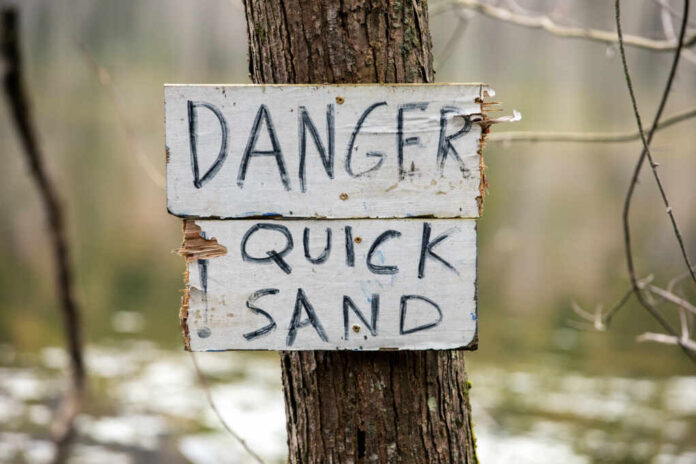
A man trapped in quicksand with only his chest, head, and one arm visible above the surface was dramatically rescued by emergency crews, highlighting the deadly reality of natural hazards that government officials often downplay while wasting taxpayer resources on frivolous programs instead of essential safety education.
Story Highlights
- Emergency crews successfully rescued a man nearly completely submerged in quicksand
- Only the victim’s chest, head, and one arm remained visible above the surface
- Incident demonstrates critical need for better public safety education in high-risk areas
- Rescue showcases the value of well-trained first responders and emergency services
Life-Threatening Quicksand Encounter
Emergency services responded to a dire situation where a man became trapped in quicksand, sinking so deeply that only his chest, head, and one arm protruded above the treacherous surface. The victim’s precarious position required immediate specialized rescue techniques to prevent a potentially fatal outcome. Fire crews, coastguard personnel, and ambulance teams coordinated their efforts to extract the man safely from the semi-liquid trap that threatened his life.
Understanding Quicksand’s Deadly Mechanics
Quicksand forms when water becomes trapped between particles of sand, clay, or silt, creating a semi-liquid state that can immobilize victims within minutes. While Hollywood often exaggerates quicksand’s lethality, the reality remains genuinely dangerous, especially in coastal areas, riverbanks, and marshes where unsuspecting individuals can become trapped. The mixture’s consistency prevents normal movement, and struggling often worsens the situation by causing deeper submersion, making professional rescue intervention essential for survival.
Emergency Response Protocols Save Lives
Professional rescue teams employ specialized techniques when extracting quicksand victims, emphasizing weight distribution and gradual extraction methods to prevent injury. The rescued man was immediately handed over to ambulance crews for medical assessment, following established protocols designed to address potential complications like hypothermia or circulation issues from prolonged entrapment. Emergency services regularly train for such scenarios, understanding that public safety depends on their readiness to respond to natural hazard emergencies.
This incident underscores the importance of supporting our first responders who risk their lives daily while bureaucrats waste money on ineffective programs that do nothing to protect American families from real dangers. HM Coastguard and fire services continue issuing safety warnings about mud and quicksand risks, particularly during peak visitor seasons when recreational activity increases in coastal and estuarine environments.
Critical Safety Lessons for Americans
Experts emphasize that surviving quicksand requires remaining calm, spreading body weight to increase surface area, and immediately calling for professional help rather than attempting self-rescue. The Morecambe Bay tragedy serves as a sobering reminder of tidal mud dangers, where emergency services played crucial roles in preventing additional casualties. This successful rescue demonstrates how proper training and equipment can mean the difference between life and death when Americans venture into natural environments.
Read "Man with just ‘chest, head and one arm’ poking out from quicksand rescued by emergency crews" on SmartNews: https://t.co/5k6PXhyHlx
— #primalscreamgrammy (@mary_swilling) October 26, 2025
While this rescue ended successfully, it highlights how government priorities often focus on ideological agendas rather than practical safety education that could prevent such emergencies. Americans deserve leaders who prioritize real public safety over political theater, ensuring our communities receive the resources and information necessary to protect families from genuine environmental hazards.
Sources:
Adventure Travel Emergency: How to Escape Quicksand
Lancashire Fire and Rescue Service: Mud and Sand Safety Module
HM Coastguard: Visiting the Coast – Don’t Become Stuck in Mud
HM Coastguard: Ready to Respond – Skills Save Lives on the Coast