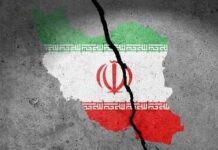

Iran’s rulers are accelerating executions and silencing evidence so aggressively that even major protest massacres and mass hangings struggle to break through the global news fog.
Story Snapshot
- NGOs say Iran executed at least 1,639 people in 2025, the highest total reported since 1989, with more hangings feared amid war and unrest.
- After January 2026 protests and a sweeping crackdown, reports describe rushed proceedings, torture allegations, and state-TV “confessions.”
- Internet blackouts and equipment seizures have limited independent verification, leaving large gaps and competing death-toll estimates.
- Iran’s judiciary has publicly signaled “no mercy,” while rights groups warn executions are being used as a tool to deter dissent.
A Record Execution Pace Collides With a Global Attention Deficit
Iran Human Rights and ECPM reported at least 1,639 executions in 2025, a sharp jump from 2024 and a level not seen since the early years after the Islamic Revolution. Nearly half were tied to drug charges, according to the same reporting, and public hangings reportedly increased as well. Those numbers matter because they point to state power being used at industrial scale—while war, protests, and media saturation make it easier for repression to fade from view.
Separate reporting and analysis from early 2026 described a crackdown following major nationwide protests, with thousands arrested and the government restricting communications. Death-toll claims vary dramatically depending on the source, with official figures lower than outside estimates—an uncertainty driven in part by information controls. For American readers who distrust “managed narratives,” the pattern is familiar: when a regime controls the courts, the cameras, and the internet, outside audiences are left debating the numbers instead of confronting the policy.
How the Post-Protest Crackdown Shapes the Courts
Amnesty International’s reporting on the January 2026 crackdown described heavily militarized tactics and efforts to conceal protest massacres, including severe restrictions that complicate documentation. The same body of research cites allegations of unfair or secretive legal processes and confessions obtained under coercion. Even when every individual case cannot be independently verified from outside Iran, the broader picture is consistent across multiple rights monitors: speed, secrecy, and intimidation are features, not bugs, of the system.
That is why specific cases draw attention as markers of a wider trend. Death Penalty Information Center reported that three men—Saleh Mohammadi, Saeed Davodi, and Mehdi Ghasemi—were executed in March 2026, described as the first executions tied to the December 2025–January 2026 protest period. Human rights trackers also warned of additional, unconfirmed executions during 2025, underscoring how fog-of-war conditions and internal censorship can hide the true scale until long after the fact.
“No Mercy” Messaging and the Use of Fear as Governance
Policy signals from Tehran have been blunt. Analysis published in late January 2026 described Iranian officials rejecting claims that executions had stopped and pairing that denial with rhetoric indicating harsh punishment ahead. When a government frames dissent as terrorism and pairs that with rapid executions, it creates a chilling effect that reaches far beyond the individuals on trial. From a limited-government, pro-liberty perspective, this is the clearest warning sign: the state is asserting total power over life, speech, and assembly.
Why Coverage Stays Muted: Blackouts, Verification Gaps, and Competing Crises
One reason the story is difficult to sustain in Western headlines is practical: reporting from inside Iran is constrained by internet shutdowns, fear of retaliation, and limits on independent access. UN human rights officials have described an “unprecedented” execution spree and also cited large numbers of killings during unrest, but even those statements can’t resolve every discrepancy when the underlying evidence is deliberately obstructed. The result is a slow-drip catastrophe—big enough to matter, hard enough to document that it gets crowded out.
Executions Continue in Iran – Why Aren't We Hearing More About It? https://t.co/Pb6GKvl6q5
— Richard Lowe (@RPL29) April 16, 2026
The unanswered question for Americans in 2026 is not whether Iran’s regime is harsh—years of documentation already establish that. The question is what the free world does when repression scales up during war and protest waves at the exact moment verification becomes hardest. Conservatives tend to focus on sovereignty and national interest, while many on the left focus on human rights norms; both camps can agree on at least this: when information is strangled and courts become instruments of politics, ordinary people pay the price.
Sources:
Iran executed at least 1,639 in 2025, more hangings feared: NGOs
Iran’s Executions Have Not Stopped
Iran: Authorities unleash heavily militarized clampdown to hide protest massacres
UN experts appalled by unprecedented execution spree in Iran, with over 1000 killed in nine months