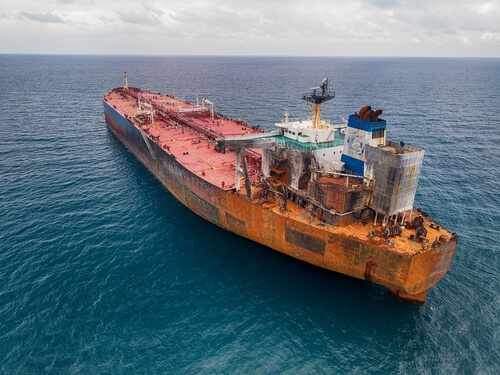
Iran’s attacks in the Strait of Hormuz are forcing a hard reality back onto Washington: when global energy routes get threatened, America’s oil production becomes the world’s emergency backstop.
At a Glance
- President Trump says “empty” tankers are heading to U.S. ports to load light, “sweet” American crude as Hormuz shipping stalls.
- The Strait of Hormuz handles about one-fifth of global oil flows, so disruptions quickly ripple into U.S. gas prices and broader inflation pressure.
- The International Energy Agency agreed to a coordinated stockpile release, while Trump authorized a major draw from the U.S. Strategic Petroleum Reserve.
- Markets rallied after Trump delayed a Hormuz-related deadline tied to negotiations, but analysts warn the disruption risk remains unresolved.
Hormuz Disruption Puts U.S. Energy Capacity Back at the Center
President Trump has framed the current spike in global crude demand as proof that U.S. energy supply still matters when the world gets unstable. The immediate driver is the Strait of Hormuz, a chokepoint that carries roughly 20% of global oil flows. With Iranian attacks disrupting shipping and commercial tankers avoiding the route, traders have looked for alternative barrels, and U.S. light sweet crude has become a prime substitute.
The practical issue for American households is that overseas supply shocks rarely stay overseas. The research points to higher gasoline prices—reported as up sharply over the past month—along with elevated benchmark crude prices that remain volatile even after short-term dips. When fuel rises, shipping costs rise, and the cost of everyday goods follows. That’s why energy security has become a kitchen-table concern again, not just a foreign-policy headline.
SPR and IEA Releases Offer Short-Term Relief, Not a Full Fix
The administration’s near-term response relies on strategic stockpiles rather than immediate new production. Trump authorized a release of 172 million barrels from the U.S. Strategic Petroleum Reserve to be delivered over about 120 days, alongside an announced coordinated release of up to 400 million barrels from International Energy Agency members. Those steps can cushion price spikes and buy time, but they do not reopen sea lanes or eliminate geopolitical risk.
One constraint is arithmetic: the SPR is not unlimited. The research indicates the reserve sits around 415 million barrels, far below its maximum capacity of 714 million barrels, after major prior drawdowns. Strategic inventories are designed for emergencies, but repeated reliance also raises questions about how quickly the reserve could be replenished and under what price conditions. For voters already frustrated by inflation, the idea of “temporary relief” can feel like another round of Washington patchwork.
Negotiations Calm Markets, but Tanker Owners Still See Danger
Trump’s decision to postpone a deadline tied to the Hormuz crisis—citing “good and productive” talks—helped trigger a market relief rally, according to the research. That reaction underscores how much the energy market is trading on expectations about de-escalation rather than on restored shipping volume. The same research also notes that a “fragile” détente can reverse quickly if attacks continue or expand, keeping a risk premium in prices.
Security measures have limits as well. The U.S. Navy has offered tanker escorts, but ship owners have still reportedly avoided the strait, reflecting insurance costs, crew safety concerns, and the possibility that escorts cannot guarantee uninterrupted commerce. That gap between official assurances and private-sector risk calculations is one reason energy disruptions can persist even when governments declare they are “addressing” the problem.
Why the “Empty Tankers” Narrative Resonates at Home
The “empty tankers” heading to America storyline hits a political nerve because it suggests U.S. resources are being pulled into a crisis Americans did not choose, while Washington debates how to manage the fallout. Conservatives tend to see this as validation of domestic production and infrastructure—pipelines, refineries, ports—over policies that constrain supply. Many liberals focus more on price pain and distributional impacts, worrying that volatility widens the gap between those who can absorb higher costs and those who cannot.
What both sides increasingly share is frustration with a federal government that often looks reactive instead of prepared. The research highlights how quickly officials turn to emergency measures—strategic stockpile releases, naval escorts, deadlines, and negotiations—when a single chokepoint wobbles. Whether the crisis eases or escalates, the lesson is the same: America’s energy posture is not an abstract ideology fight; it is a resilience test that shows up in fuel receipts, inflation expectations, and national leverage abroad.
Trump Gushes About 'Empty Oil Tankers' Coming To Get 'Sweetest' US Crude For War-Choked Global Market https://t.co/SF8KBMvJWd
— Mediaite (@Mediaite) April 11, 2026
For the Trump administration and a GOP-controlled Congress, the immediate question is how to keep U.S. prices from spiking while protecting long-term capacity. The available research does not specify new legislative steps beyond the SPR action and allied coordination, so the next phase will likely hinge on whether shipping conditions in Hormuz improve. Until they do, U.S. production strength may be a strategic advantage—but American consumers will still be exposed to the same global shocks Washington says it can manage.
Sources:
Trump Taps Strategic Petroleum Reserve in Response to Iran Shipping Attacks
Trump complete war narrative fails resolve oil disruption risk; trade hidden chokepoint threat
What Trump’s Venezuela oil blockade means for Maduro—and the world
If Trump strikes Iran: Mapping oil disruption scenarios