Trump’s America First warning to Europe is clear: the era of U.S. taxpayers bankrolling NATO free‑riders is ending.
Story Snapshot
- Trump’s America First national security strategy bluntly tells Europe its “freeloading days are over.”
- The administration links NATO burden-sharing to basic fairness for U.S. taxpayers and national security.
- In his second term, Trump has pushed allies toward dramatically higher defense spending commitments.
- Conservatives see this as a long-overdue correction to decades of globalist appeasement of Europe.
Trump’s America First Strategy Calls Out European Dependence
President Trump’s America First national security strategy directly confronts a reality many in Washington ignored for decades: wealthy European nations enjoying U.S. protection while underfunding their own defense. The White House message that Europe can either reform or decay reflects frustration among American taxpayers watching their dollars fund NATO while EU leaders lecture the United States on climate, migration, and social policy. The declaration that Europe’s “freeloading days are over” crystallizes this deeper strategic and financial dispute.
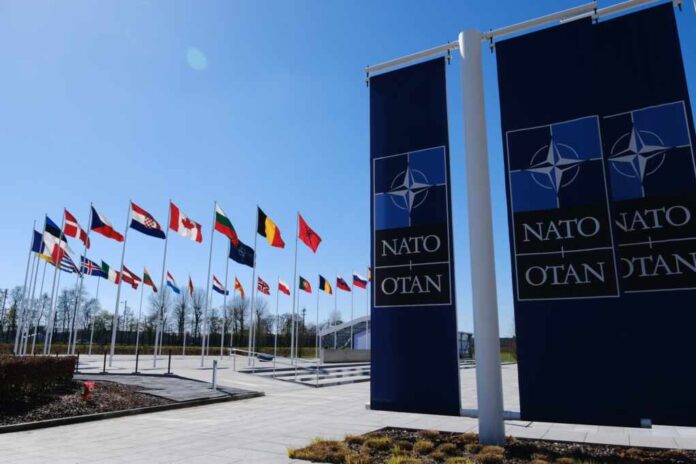
The strategy document frames NATO not as a charity project but as a mutual-defense pact that only works when all members carry real weight. For years, U.S. presidents complained quietly about low European defense spending; Trump converted that complaint into an explicit condition for future cooperation. By tying military guarantees to measurable commitments, Trump signaled that American lives and treasure would no longer subsidize governments that prefer welfare expansion and green utopian projects over their own security obligations.
From Quiet Grumbling to Concrete NATO Burden-Sharing Demands
During his presidencies, Trump moved beyond rhetoric by pressing NATO members to raise defense outlays, arguing that chronically low European spending effectively shifted costs onto U.S. workers and retirees. Earlier administrations accepted vague promises and minimal increases; Trump insisted on specific targets and timelines. In his second term, the White House highlighted a historic agreement for NATO members to dramatically increase defense budgets as proof that firm pressure works, validating long-standing conservative complaints about transatlantic burden imbalances.
These changes align with the America First principle that alliances must serve clear U.S. interests rather than globalist abstractions. When European governments maintain generous social programs while allowing their militaries to stagnate, American voters effectively underwrite that choice through higher U.S. defense budgets. Trump’s team presents corrected burden-sharing as both a security upgrade and a fairness issue, arguing that NATO must reflect partnership among equals, not a one-way pipeline of American money and hardware to governments unwilling to match the commitment.
Globalism, Fiscal Reality, and U.S. Taxpayer Frustration
Conservative voters who endured years of inflation, rising debt, and stagnant wages under prior leadership view European underpayment as part of a wider globalist pattern. Political elites shipped jobs overseas, signed lopsided trade deals, and then spent billions defending countries that refused to defend themselves. Trump’s America First doctrine responds to that anger by demanding that allies invest in their own militaries before expecting additional U.S. guarantees. This approach treats defense policy like any other contract: contributions must track benefits.
By challenging European dependence, the administration also pushes back on moralizing from Brussels and other capitals that routinely attack U.S. border enforcement, energy production, and gun rights while quietly relying on American security. The national security strategy’s blunt language reflects skepticism that such governments will reform without pressure. For many conservatives, forcing Europe to shoulder more responsibility is not isolationism but common sense stewardship of American strength, ensuring resources are available to secure the homeland, control the border, and rebuild the middle class.
Strategic Risks, Alliance Health, and Conservative Priorities
Critics of Trump’s approach warn that tough rhetoric could strain alliances or embolden adversaries, but the administration points to increased spending pledges as evidence that clarity strengthens rather than weakens NATO. When expectations are explicit, allies can plan, adjust budgets, and modernize forces instead of relying on American patience. Conservatives argue that a more capable Europe deters aggression from hostile regimes while reducing the burden on U.S. troops, whose deployments and families have carried the cost of decades of open-ended commitments.
Trump Smacks EU with Official Declaration Saying Their Freeloading Days 'Are Over' https://t.co/OUYlT9njiT
— coastalparty2 (@anydazeaol59897) December 8, 2025
For Trump supporters frustrated by Washington’s habit of writing blank checks overseas, the message that “freeloading days are over” represents a rare moment of accountability in foreign policy. The America First framework treats American sovereignty, fiscal sanity, and secure borders as non-negotiable, and it expects partners to respect those priorities. Whether Europe fully changes course remains uncertain, but the warning has been issued: U.S. security guarantees are no longer automatic entitlements for governments that refuse to defend themselves.
Sources:
The Trump Administration’s Framing of Europe as “ …
News Analysis: Trump Has Long Disdained Europe’s Elites …
Trump’s ultimatum for NATO’s ‘Freeloaders,’ Says U.S. won’t …