An Ebola outbreak tied to a new Bundibugyo strain is racing ahead while officials and media cannot even agree how deadly it is.
Story Snapshot
- World Health Organization (WHO) has declared the Bundibugyo Ebola outbreak in Congo and Uganda a global health emergency.
- United States Centers for Disease Control and Prevention (CDC) reports 1,708 confirmed cases and 580 deaths, while some media claim 600 deaths and “fastest-growing on record.”
- Testing and contact tracing have expanded quickly, but armed conflict and money gaps are slowing the response.
- A first-ever treatment trial is underway, yet no approved drugs or vaccines exist for this strain.
What the numbers really say so far
As of early July, the United States Centers for Disease Control and Prevention reports 1,708 confirmed Ebola cases and 580 confirmed deaths in the Democratic Republic of the Congo, plus 20 cases and 2 deaths in Uganda. Some posts and headlines now cite “600 deaths” and “over 1,750 cases,” but those figures likely fold in suspected or probable infections that labs have not yet confirmed. This 20-death and 42-case gap shows why people across the political spectrum often doubt official numbers and media spin.
World Health Organization officials have not publicly backed the “600 deaths” number in a clear document, and the most recent data tables from the United States Centers for Disease Control and Prevention and the European Centre for Disease Prevention and Control point to 580 confirmed deaths. A World Health Organization representative even said they “cannot say” the outbreak is stabilizing yet, warning that the crisis remains active and uncertain. That lack of clarity feeds fears that powerful institutions are managing headlines, not just disease trends.
Global emergency, but missing proof for “fastest-growing on record”
The World Health Organization declared this Bundibugyo Ebola outbreak a Public Health Emergency of International Concern on May 17, 2026, a move reserved for events that can threaten many countries and need strong global action. This label is serious, yet no World Health Organization or United States Centers for Disease Control and Prevention paper has published hard data proving this is the “fastest-growing on record.” Past West Africa outbreaks reached tens of thousands of cases, with over 28,000 infections and more than 11,000 deaths from 2014 to 2016. Without clear growth-rate charts, “fastest-growing” sounds more like a media frame than a measured fact.
Researchers who study Ebola coverage have shown that news outlets often use words like “unprecedented” and highlight scary mutation and contagion angles even when data are still rough. This pattern matches what many Americans already suspect in 2026: that crises are sometimes exaggerated to boost attention, funding, or control, while regular people are left sorting out which numbers they can trust. When headlines race ahead of the science, both conservatives and liberals see one more example of elite messaging outpacing honest reporting.
On-the-ground response: real progress and real limits
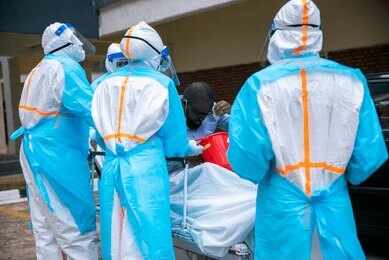
Inside Congo, there are serious efforts to fight the virus. Testing capacity has jumped from only about 30 daily tests to more than 2,000 each day across 10 labs spread out across the country, which means doctors can confirm cases faster and track spread more closely. Contact tracing teams now reach about 80 percent of known contacts of sick patients, a key step to break chains of transmission. These gains show that local workers and international teams are not standing still, even if global institutions communicate clumsily.
The same outbreak, however, has moved from Ituri province into North Kivu and South Kivu, areas torn by armed conflict. Attacks on health centers and general insecurity make it dangerous for staff to move, test, and treat people. Doctors Without Borders notes that Bundibugyo virus behaves differently than better-known Ebola strains, and existing monoclonal antibody drugs do not work against it. So frontline workers face a double squeeze: a new virus variant with no proven tools, and violence that blocks even basic care.
First Bundibugyo treatment trial and the money gap
On July 2, the World Health Organization helped launch the first randomized clinical trial for Bundibugyo Ebola disease, called PARTNERS, which aims to test treatments like MBP134 and Remdesivir and track deaths at 28 days. The same day, the World Health Organization added the first molecular diagnostic test for Bundibugyo virus to its Emergency Use Listing, allowing faster and more reliable detection. These steps matter because they start to build a path toward real therapies, not just isolation and supportive care.
The UK has pledged to support the response to the Ebola outbreak caused by Bundibugyo virus in eastern DRC. Funding will strengthen surveillance, support frontline healthcare workers and help affected communities access lifesaving care. Read more: https://t.co/BxfNmNDBgc #UKHSA pic.twitter.com/LCHG7IqqUj
— National Collection of Pathogenic Viruses (@NCPV) July 9, 2026
Despite this progress, researchers have flagged a roughly 18 million dollar funding gap for Bundibugyo studies and the PARTNERS trial. If that shortfall drags on, trial results could be delayed, leaving doctors with limited evidence while the virus spreads. For many Americans who already feel global and national agencies waste money yet never have enough for core work, this is a familiar story: plenty of talk, slow delivery, and citizens wondering who is accountable when lives hang in the balance.
Why this outbreak echoes deeper trust problems
Across earlier Ebola crises, including major outbreaks in West Africa and Congo, scholars found that media framing strongly shapes how people view risk and authority. Some coverage leans into panic, while other pieces downplay long-term survivor struggles. In the current Bundibugyo outbreak, unclear claims like “fastest-growing on record” and fuzzy death counts risk deepening a sense that elites manage narratives more than facts. That mistrust does not stay overseas; it spills into how Americans judge their own health agencies.
For conservatives wary of global health bodies and liberals upset by weak safety nets, this story hits the same nerve: ordinary people deal with the sickness and fear, while distant institutions argue about labels and funding. The Bundibugyo Ebola crisis is real and deadly, but it is also a fresh test of whether leaders can share straight numbers, admit uncertainty, and focus on solutions instead of spin. Many citizens will watch what happens next to see if anyone in power has truly learned from past failures.
Sources:
insiderpaper.com, who.int, cdc.gov, reliefweb.int, ecdc.europa.eu, sciencedirect.com, pmc.ncbi.nlm.nih.gov