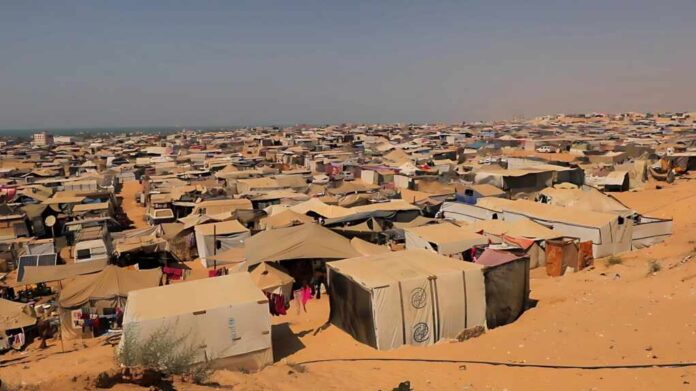
The ongoing humanitarian crisis in Gaza City, fueled by Israel’s military offensive, highlights the devastating impact on displaced Palestinians and challenges the international community’s response.
Story Highlights
- Massive displacement of Palestinians as Israel’s ground offensive continues in Gaza City.
- International condemnation grows over alleged humanitarian law violations.
- Humanitarian crisis deepens with severe shortages of basic needs.
- Questions arise about the long-term implications for Gaza’s future governance.
Mass Displacement Amid Military Offensive
Since the launch of Operation Gideon’s Chariots in August 2025, the Israeli Defense Forces (IDF) have been engaged in a major ground offensive targeting Hamas in Gaza City. This operation has led to the mass displacement of hundreds of thousands of Palestinians, who are fleeing in search of safety amidst the chaos. The offensive, which began on August 20, has seen Israeli forces enter Gaza City after intensive airstrikes, resulting in widespread destruction of civilian infrastructure.
Gaza City, the largest urban center in the Strip, is now a focal point of conflict, with the IDF occupying significant portions of the city. This military action, aimed at dismantling Hamas’ control, has sparked international outrage and condemnation. Human rights organizations and the United Nations have voiced concerns over potential violations of humanitarian law, as the offensive has severely impacted civilian populations, leading to shortages of food, water, and medical supplies.
International Response and Humanitarian Concerns
The international community has been vocal in its condemnation of the ongoing offensive, with calls for ceasefire and humanitarian access echoing across global platforms. The United States, while supporting Israel’s security objectives, has urged a swift conclusion to the operation to mitigate the humanitarian crisis. Meanwhile, the UN and other human rights groups have labeled the offensive as ethnic cleansing, demanding accountability and immediate relief for the displaced populations.
The humanitarian crisis in Gaza has reached alarming levels, with over 300,000 Palestinians forced to flee their homes. The destruction of high-rise buildings and essential infrastructure has compounded the challenges faced by local aid organizations, struggling to provide relief in an increasingly volatile environment. As the conflict continues, the prospects for a peaceful resolution and future governance of Gaza remain uncertain.
Long-term Implications and Regional Stability
The ongoing occupation of Gaza City by Israeli forces raises critical questions about the long-term implications for the region. The potential for demographic changes and the loss of Palestinian property and heritage are significant concerns, alongside the immediate humanitarian needs. As the conflict persists, the political ramifications extend beyond Gaza, affecting Israeli leadership, Hamas, and regional dynamics.
'Left with nothing': Palestinians flee Israel's offensive in Gaza City https://t.co/IHmqvFGiwI
— #TuckFrump (@realTuckFrumper) September 24, 2025
The economic and social impacts of the offensive are profound, with Gaza facing an economic collapse due to the destruction and blockade. Social fragmentation and trauma among the displaced populations further challenge the area’s stability. As international legal and diplomatic sectors engage in accountability debates, the need for a sustainable and humane resolution becomes increasingly urgent.
Sources:
May 2025 Gaza offensive
Israel Gaza City occupation ground offensive
Timeline of the Gaza war (20 August 2025 – present)
Gaza after two years: Israel expands control and sows chaos, Hamas adapts to survive